






































DTF Gang Sheets & Transfer Sheets for Custom Printing
DTF Gang Sheets & Transfer Sheets for Custom Printing offer a practical way to organise multiple designs and streamline custom apparel production.

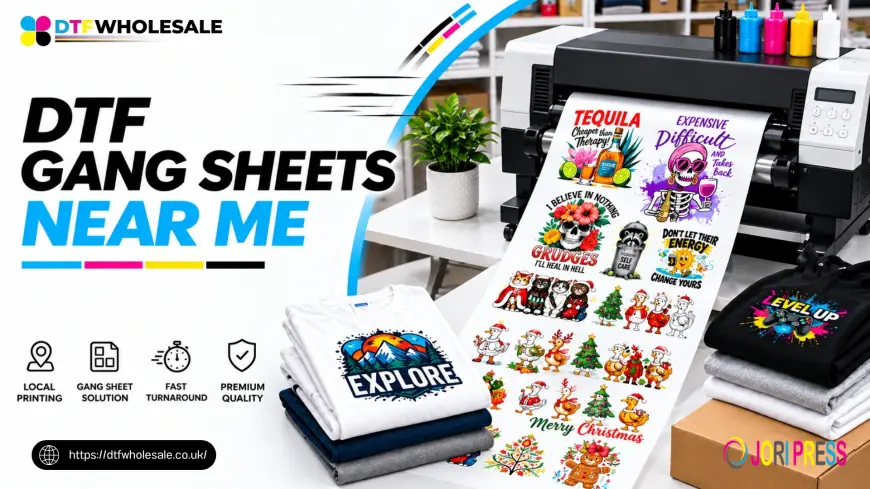
A DTF Sheet can contain one design or several different designs arranged together. When multiple designs are placed efficiently on the same sheet, it becomes a DTF gang sheet. This method is particularly useful for clothing brands, print shops, sportswear suppliers, Etsy sellers and businesses handling personalised apparel.
The quality of the final garment, however, depends on more than simply filling a sheet. Artwork preparation, sizing, spacing, transfer quality, pressing conditions and garment selection all affect the result.
What Is a DTF Sheet?
A DTF sheet is a specialised film used to carry printed artwork before it is transferred onto fabric. The DTF process normally involves printing artwork onto film, applying hot-melt adhesive powder, curing the powder and then transferring the finished design onto a garment with a heat press.
This makes the process useful for logos, photographs, illustrations, typography and other complex graphics.
A well-prepared sheet should have:
-
Correctly sized artwork
-
Suitable spacing between designs
-
Clean edges
-
Properly prepared artwork files
-
Efficient use of available film
-
Consistent print quality
The objective is not simply to put as many designs as possible onto the film. The goal is to use the available space efficiently while keeping each transfer easy to cut, handle and apply.
What Are DTF Gang Sheets?
DTF gang sheets are sheets containing multiple designs arranged together for printing and transfer. The designs can be identical or completely different depending on the order.
For example, a clothing business might place:
-
Ten small left-chest logos
-
Five large front graphics
-
Several sleeve designs
-
Customer names
-
Different colour variations
on one sheet.
This approach makes sense when an order contains multiple designs or print locations. Industry guidance also highlights gang sheets as a way to group different designs on a sheet and make better use of available transfer space.
Why Use a Gang Sheet?
The biggest advantage is space efficiency.
Instead of producing every graphic on a separate piece of film, you can arrange several graphics together. Better organisation can reduce unused areas and make handling multiple designs more convenient.
Gang sheets can also help businesses manage mixed orders. A print shop might have several customers requiring only a few pieces each. Combining suitable designs can make production more practical than treating every small order as a completely separate print job.
How DTF Transfer Sheets Work
A DTF transfer sheet follows a straightforward production process.
1. Prepare the Artwork
Start with high-quality artwork at the required dimensions. Check resolution, transparency, colours, fine details and background removal before placing the design into the gang sheet.
Artwork quality matters because printing cannot fully correct poor source material. STAHLS' artwork guidance specifically recommends paying attention to raster and vector artwork, text preparation and avoiding problematic soft or transparent edges.
2. Arrange the Designs
Place the graphics onto your sheet while considering their final application sizes.
Leave enough space between designs so they can be separated without damaging nearby artwork. Avoid creating unnecessary gaps, but do not push designs so close together that cutting becomes difficult.
3. Print the Transfer
The prepared artwork is printed onto specialised DTF film. Modern DTF systems commonly use CMYK and white ink to produce vibrant artwork and maintain visibility on different garment colours.
4. Apply and Cure Adhesive Powder
After printing, hot-melt powder is applied to the printed area. The powder is then heated so it bonds correctly with the printed ink layer. The exact workflow depends on the equipment and materials being used.
5. Heat Press the Transfer
The finished transfer is positioned on the garment and applied using the recommended heat, pressure and time for the specific transfer system.
Following supplier instructions is important. There is no universal setting that should automatically be used for every film, powder, garment and transfer combination.
DTF Transfer Sheets vs Single DTF Transfers
A single DTF transfer contains one prepared design, while a gang sheet can contain multiple graphics.
A single transfer may be more convenient when you repeatedly produce one particular logo or design. A gang sheet becomes more useful when you have several graphics that need to be produced together.
How to Create an Effective DTF Gang Sheet
Creating a good gang sheet requires more than filling every available space.
Start With the Most Important Designs
Place larger graphics first. Once the main designs are positioned, use the remaining areas for smaller logos, names and other artwork.
Maintain Practical Spacing
Do not sacrifice handling for maximum density. Designs need enough separation to be cut and positioned easily.
Keep Sizes Consistent
If several customers require the same logo, make sure each version has the correct dimensions. A small sizing mistake repeated across an entire sheet can create unnecessary waste.
Check Artwork Before Production
Inspect the entire sheet at 100% before sending it to production. Look for:
-
Missing artwork
-
Incorrect spelling
-
Poor transparency
-
Wrong dimensions
-
Unwanted backgrounds
-
Low-resolution images
-
Incorrect colours
-
Designs placed too close together
A final pre-production check can prevent an entire sheet from being wasted.
DTF Sheet Size and Layout Matter
The best sheet size depends on your printer, supplier, garment requirements and order volume.
There is no single gang-sheet size that is ideal for every business. Commercial transfer providers offer different sheet dimensions, and some systems support considerably larger formats.
Before creating your layout, confirm:
-
Maximum printable width
-
Available sheet lengths
-
Artwork requirements
-
Minimum spacing
-
Cutting requirements
-
Transfer application method
If you order ready-made transfers, always check the supplier's specifications before preparing your artwork.
Common DTF Gang Sheet Mistakes
Even a technically good design can fail because of poor preparation.
Overcrowding the Sheet
Trying to fit too many graphics onto one sheet can make cutting and application frustrating.
Using Low-Quality Artwork
Low-resolution images can produce soft edges and disappointing details. Start with the best artwork available.
Ignoring Small Details
Tiny text, thin lines and intricate graphics should be checked at their actual print size. A design that looks excellent on a large monitor may not work equally well when reduced.
Forgetting the Final Garment Size
Always consider where the transfer will go. A design intended for a chest print needs a different working size from a full front graphic.
Assuming One Press Setting Works Everywhere
Garments and transfer systems vary. Use the recommended application settings and test unfamiliar combinations before a large production run.
DTF Gang Sheets for Clothing Businesses
Gang sheets can be particularly useful for businesses producing custom apparel in small batches.
DTF also supports detailed, full-colour artwork across a range of apparel applications, including cotton, polyester and blends, although the correct application settings should always be confirmed for the specific transfer and garment.
How to Get Better Results From DTF Transfer Sheets
Professional results start before the heat press.
Prepare the artwork carefully. Make sure dimensions, resolution and transparency are correct.
Choose suitable garments. Fabric composition, colour, texture and finish can affect the application.
Follow transfer instructions. Use the recommended temperature, pressure, pressing time and peel procedure.
Test unfamiliar materials. Before producing a large order, test the actual transfer and garment combination.
Inspect the finished garment. Look for incomplete adhesion, lifting edges, unwanted marks or other visible problems.
Keeping a record of successful artwork and pressing settings can also make repeat production more consistent.
Are DTF Gang Sheets Worth Using?
For businesses handling multiple designs, they can be a highly practical part of a DTF workflow.
The main value comes from combining better space utilisation, organised production and flexible order handling. They are especially useful when customers order different designs in relatively small quantities.
Final Thoughts
DTF Gang Sheets & Transfer Sheets for Custom Printing offer a practical way to organise multiple designs and streamline custom apparel production.
The strongest results come from combining efficient layout planning with quality artwork, appropriate transfer materials and correct heat-press application. DTF technology is capable of producing detailed, colourful graphics, but consistency depends on controlling each stage of the workflow.
What's Your Reaction?
 Like
0
Like
0
 Dislike
0
Dislike
0
 Love
0
Love
0
 Funny
0
Funny
0
 Angry
0
Angry
0
 Sad
0
Sad
0
 Wow
0
Wow
0