







































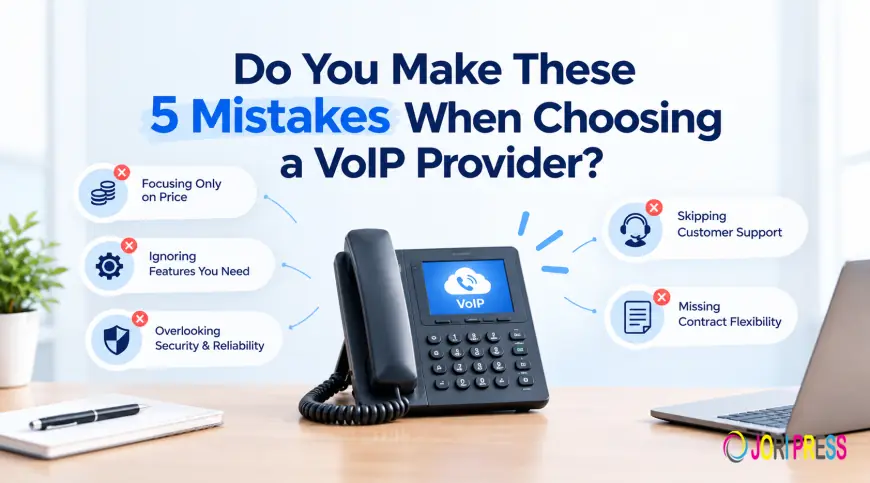
Do You Make These 5 Mistakes When Choosing a VoIP Provider?

Switching to VoIP should be one of the easiest wins for your business. Lower costs, more flexibility, better features. Yet plenty of companies sign a contract, go live, and within six months find themselves stuck with choppy calls, surprise fees and a support line that never picks up.
The problem usually isn’t VoIP itself. It’s how the provider was chosen.
After years of watching businesses make this decision, I’ve noticed the same handful of mistakes come up again and again. The good news is that every one of them is easy to avoid once you know what to look for. Here are the five most common, and how to sidestep each one.
Mistake #1: Choosing Based on Price Alone
It’s tempting. You line up three quotes, see one that’s noticeably cheaper per user, and sign. Who doesn’t want to save money?
But the monthly price on the quote rarely tells the whole story. Some providers advertise a low base rate and then charge separately for features most businesses consider standard: call recording, auto attendants, voicemail transcription, extra phone numbers, even basic setup. Others lock you into long contracts with steep early termination fees.
Before you compare prices, compare what’s actually included. A slightly higher rate that covers everything often costs less than a bargain plan loaded with extras. Ask whether faxing is part of the package, too. If your office still sends or receives faxes, Fax to Email Communication Software can replace a dedicated fax line entirely, but only if your provider offers it. Otherwise you’ll keep paying for that old line on the side.
A smarter question than “what’s the cheapest plan?” is “what will my total cost be over three years, including every feature my team needs?”
Mistake #2: Ignoring Call Quality and Reliability
A phone system that drops calls or makes customers sound like they’re underwater isn’t saving you anything. It’s costing you credibility.
Call quality depends on two things: the provider’s network and your own internet connection. Many businesses only think about the first and forget the second.
On the provider side, ask about uptime guarantees. Reputable providers typically commit to 99.99 percent uptime in their service level agreement and back it with redundant data centers. If a provider gets vague when you ask about this, take that as a warning sign.
On your side, check your bandwidth before switching. Each concurrent call needs a modest amount of upload and download capacity, and the busier your office, the more you’ll need. A good provider will help you assess your network rather than leaving you to discover problems after launch.
Also ask what happens during an outage. Can calls automatically reroute to mobile phones? Can employees keep working from the app if the office internet goes down? Strong Business Phone Systems are designed with these failover options from the start, so a power cut or storm doesn’t take your business offline.
Mistake #3: Overlooking Integration With Tools You Already Use
Here’s a scenario I see constantly. A company pays for Microsoft 365, uses Teams for chat and meetings every single day, and then buys a separate phone system that doesn’t connect to any of it. Staff end up switching between apps all day, and the business pays twice for communication.
Your phone system should fit into the way your team already works, not force them into a new routine.
If Teams is central to your business, look specifically for Microsoft Teams Integration. With it, employees can make and receive regular phone calls directly inside Teams, using the same window they already use for chat and meetings. It’s simpler for staff and usually cheaper than running two separate platforms.
Worried the setup sounds complicated? It’s more straightforward than most people expect. This Guide to Microsoft Teams Integration walks through the whole process step by step, so you’ll know exactly what’s involved before you commit.
Beyond Teams, think about your CRM, helpdesk software and calendar tools. The more your phone system talks to them, the less time your people waste copying information from one screen to another.
Mistake #4: Buying for Today Instead of Planning for Growth
Many businesses choose a provider based on what they need right now: a certain number of lines, basic calling, maybe voicemail. Then the company grows, opens a second location or shifts to hybrid work, and suddenly the system can’t keep up.
Ask yourself where your business will be in two or three years. Will you hire remote employees? Expand into new cities? Need video meetings with clients? A provider that can’t grow with you will eventually force another painful migration.
Video is a good test. If your team meets clients online, shares screens or runs webinars, you want Web & Video Collaboration tools that work alongside your calling, rather than another separate subscription to manage.
The strongest long term option is usually a platform that brings voice, video, messaging and presence together in one place. Unified Communications Solutions give you exactly that: one platform, one bill and one support team, with room to add users and features whenever you need them.
Geography matters too. If you’re expanding into new markets, local numbers help customers trust you. For example, a business using VoIP Phone Services Florida can hold local numbers across multiple Florida cities without opening an office in each one. That kind of flexibility is hard to get from a provider built only for single location setups.
Mistake #5: Treating Security and Support as Afterthoughts
Security is the mistake that can cost the most, and it’s often the last thing businesses ask about.
VoIP runs over the internet, which means it faces internet risks. Toll fraud, where hackers hijack your system to make expensive international calls, can rack up thousands of dollars in charges over a single weekend. Call interception and unauthorized account access are real threats as well.
A trustworthy provider will happily explain how they protect you. Ask about call encryption, fraud monitoring, firewall protection and multi factor authentication for admin accounts. Then make sure your own team follows good habits. These VoIP Security Best Practices cover what both you and your provider should be doing to keep your system locked down.
Support deserves the same attention. When something goes wrong, how quickly can you reach a real person? Is support available around the clock or only during business hours? Will you get a dedicated account manager, or a ticket number and a long wait?
One simple test: call the provider’s support line before you sign. How long did you wait? Was the person helpful? That experience is a fair preview of what you’ll get as a customer.
A Quick Checklist Before You Sign
Before committing to any VoIP provider, make sure you can answer yes to these questions:
Do I know my total cost? You’ve compared complete pricing, including features, setup fees and contract terms, not just the headline rate.
Is my network ready? Your internet connection can handle your expected call volume, and the provider has explained their uptime guarantee and failover options.
Will it work with my tools? The system connects with Teams, your CRM or whatever platforms your team depends on daily.
Can it grow with me? The provider offers video, collaboration and unified communications options for when your needs expand.
Am I protected? Security measures are clearly explained, and support is responsive when you test it.
Can I keep my numbers? Number porting is included so customers never notice the switch.
The Bottom Line
Choosing a VoIP provider isn’t just a purchasing decision. It shapes how your team communicates and how your customers experience your business every single day. Rushing it, or focusing only on price, almost always leads to regret.
Take the time to look past the quote. Ask hard questions about reliability, integration, growth and security. Test the support line. Read the contract carefully.
Do that, and you won’t just avoid these five mistakes. You’ll end up with a phone system that saves money, keeps your team connected and grows right alongside your business for years to come.
What's Your Reaction?
 Like
0
 Dislike
0
 Love
0
 Funny
0
 Angry
0
 Sad
0
 Wow
0