








































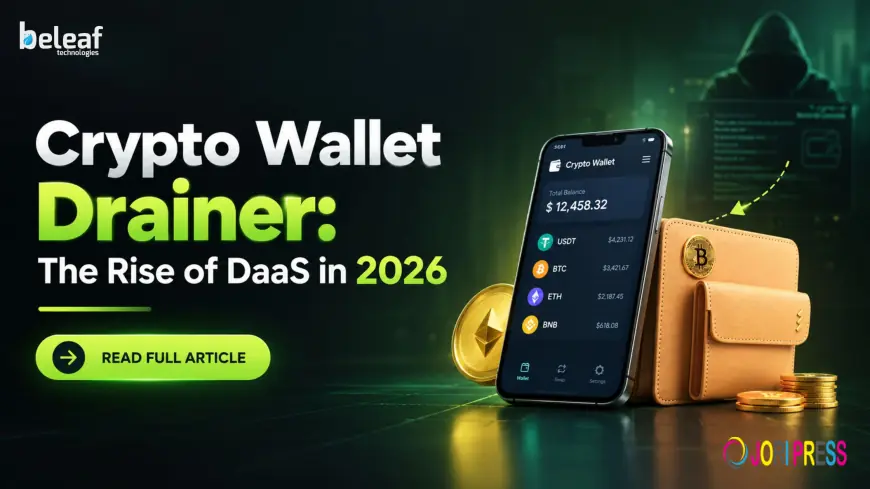
Crypto Wallet Drainer: The Rise of DaaS in 2026
A Crypto Wallet Drainer is a category of malicious software or smart-contract-based infrastructure associated with unauthorized cryptocurrency asset transfers.

The Web3 ecosystem has grown rapidly, bringing decentralized applications, smart contracts, NFTs, DeFi platforms, and blockchain-based financial services into everyday digital experiences. As this ecosystem becomes more sophisticated, the security challenges surrounding crypto wallets have also evolved.
One term that frequently appears in Web3 security discussions is Crypto Wallet Drainer. These malicious systems are designed to facilitate unauthorized transfers of digital assets through wallet interactions. In recent years, this activity has also become associated with a broader model known as DaaS, or Drainer-as-a-Service. Understanding this model from an educational and security perspective can help users, developers, and Web3 businesses better understand the changing blockchain threat landscape.
What Is a Crypto Wallet Drainer?
A Crypto Wallet Drainer is a category of malicious software or smart-contract-based infrastructure associated with unauthorized cryptocurrency asset transfers. The underlying concept is connected to how Web3 wallets interact with decentralized applications. When users interact with a DApp, they may be asked to connect their wallet, approve a token action, sign a message, or confirm a blockchain transaction.
A malicious application can attempt to manipulate these interactions so that an authorization results in assets being transferred from the connected wallet. The important point is that a wallet drainer does not change the blockchain itself. Instead, it abuses legitimate blockchain functionality, such as transactions, token approvals, signatures, or smart-contract interactions.
What Does DaaS Mean?
DaaS in this context stands for Drainer-as-a-Service. The term describes a service-based model in which malicious infrastructure or tooling is made available to other individuals rather than being developed independently by every operator. This concept follows a broader trend seen across the technology industry: complex capabilities can be packaged into services that reduce the technical knowledge required by the end user. In the context of wallet drainers, DaaS represents the commercialization and distribution of malicious Web3 infrastructure. Researchers and security teams study this model because it can make blockchain-based threats more scalable and accessible to a wider group of malicious actors.
Why Has the DaaS Model Emerged?
The growth of DaaS can be understood through the wider development of the Web3 ecosystem. Blockchain applications increasingly rely on reusable smart-contract components, wallet connections, token standards, and Web3 interfaces. These technologies make legitimate applications easier to develop and integrate. Unfortunately, the same ecosystem can also provide building blocks that malicious actors attempt to misuse. A service-based model can further reduce the technical barrier for people attempting to conduct harmful activities.
How Wallet Interactions Become Relevant
Crypto wallets act as an important connection point between users and decentralized applications. A typical Web3 interaction may involve:
-
Connecting a wallet to an application
-
Reviewing a transaction request
-
Signing a blockchain message
-
Approving token spending
-
Interacting with a smart contract
-
Waiting for blockchain confirmation
Each action has a specific technical purpose. Understanding these individual steps is useful because malicious applications may attempt to disguise or manipulate what users are being asked to authorize. For developers, understanding these interactions helps create clearer interfaces and stronger security controls.
Why Token Approvals Matter
Token standards often include mechanisms that allow users to authorize another address or contract to spend tokens on their behalf. This functionality is useful for decentralized applications. For example, a DApp may require permission to interact with a user's tokens as part of a legitimate blockchain operation. However, permissions need to be understood carefully because an authorization can provide specific capabilities to another blockchain address or smart contract. For developers, clear permission design and transparent transaction information can help users understand what they are approving.
The Business Structure Behind DaaS
The “as-a-service” concept is not unique to blockchain. Traditional technology has already seen many services offered through subscription, licensing, infrastructure, and platform models. DaaS applies a similar service-oriented structure to malicious tooling. Instead of focusing on technical implementation details, researchers generally examine the model through several broader components:
Infrastructure: Systems that support malicious activity.
Distribution: Methods used to make the service available to users.
Accessibility: The reduction of technical knowledge required to use the infrastructure.
Monetization: The financial incentives surrounding the service.
Adaptation: Changes made as blockchain platforms, wallets, and security systems evolve.
Why Developers Need to Understand This Trend
For Web3 developers, learning about Crypto Wallet Drainers is not about building such systems. It is about understanding how legitimate blockchain features can be abused. Development teams can use this knowledge when designing wallet connection flows, transaction interfaces, smart contracts, and token approval systems. Security testing can also examine how an application behaves when users interact with unexpected contracts, unusual transaction requests, or suspicious permission patterns. Security researchers can additionally analyze blockchain transactions to identify relationships between addresses, contracts, and asset movements.
What Could Change in 2026?
The Web3 security landscape continues to evolve alongside blockchain technology. Wallet providers are improving transaction visibility, developers are adopting stronger security practices, and blockchain analytics are becoming increasingly sophisticated. At the same time, malicious actors continue looking for ways to adapt existing techniques to new applications and networks. This creates an ongoing cycle between technological innovation and security research. Understanding trends such as DaaS allows the industry to study not only individual malicious tools but also the larger ecosystem that supports them.
Final Thoughts
The Crypto Wallet Drainer has become an important subject in Web3 security research, while DaaS, or Drainer-as-a-Service, represents a broader service-based model surrounding malicious blockchain infrastructure. The topic demonstrates how legitimate technologies such as wallets, token approvals, smart contracts, and decentralized applications can be misused when security controls are inadequate.
For users and developers, understanding these concepts provides valuable Web3 knowledge. For security researchers and blockchain companies, studying the evolution of DaaS can help identify emerging patterns and strengthen defensive technologies. As the blockchain ecosystem continues developing in 2026, understanding how wallet interactions and emerging threat models work will remain an important part of building a more security-conscious Web3 environment.
What's Your Reaction?
 Like
0
Like
0
 Dislike
0
Dislike
0
 Love
0
Love
0
 Funny
0
Funny
0
 Angry
0
Angry
0
 Sad
0
Sad
0
 Wow
0
Wow
0