






































CNC Milling Too: Types and Applications
Explore CNC milling tools, their types, applications, and buying tips. Learn how the right CNC tool improves machining accuracy and productivity.

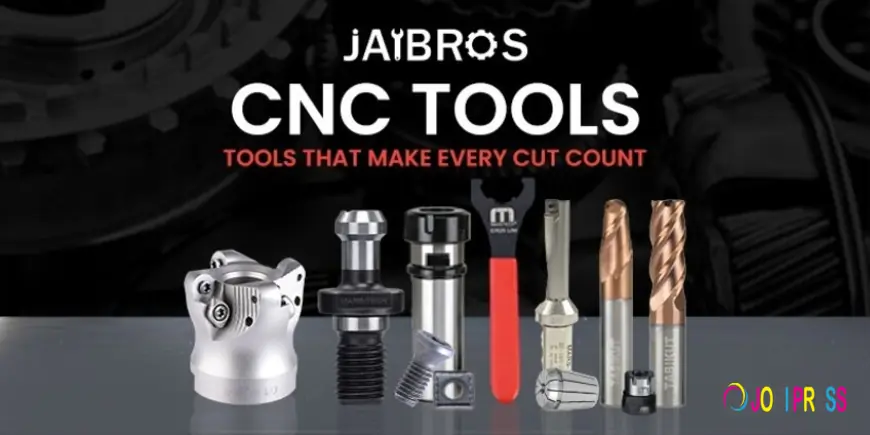
CNC Milling Tools: Types, Applications & Buying Guide
CNC milling has become one of the most important machining processes in modern manufacturing. From producing complex aerospace components to creating precision automotive parts, CNC milling ensures accuracy, speed, and repeatability. At the heart of every successful milling operation is the right CNC tool, which directly impacts machining quality, productivity, and overall manufacturing costs.
With industries demanding tighter tolerances and faster production, manufacturers are constantly investing in advanced cutting tools and high-performance machining equipment. Understanding different milling tools and their applications can help businesses improve efficiency while reducing tool wear and machining errors.
What Are CNC Milling Tools?
CNC milling tools are precision cutting instruments used in CNC milling machines to remove material from a workpiece. These tools rotate at high speed while the machine controls their movement along multiple axes, allowing manufacturers to create complex shapes with exceptional precision.
Every CNC tool is designed for a specific machining operation. Selecting the proper tool depends on factors such as material type, cutting speed, surface finish, and production volume.
Modern CNC milling tools are manufactured using high-strength materials such as carbide and are often coated to improve wear resistance and heat management.
How CNC Milling Works
CNC milling uses computer-controlled instructions to guide rotating cutting tools through a workpiece. Unlike manual machining, CNC systems execute programmed operations with remarkable consistency.
The milling process generally involves:
-
Creating a CAD design
-
Converting it into CNC programming (G-code)
-
Loading the workpiece
-
Selecting appropriate cutting tools
-
Performing roughing and finishing operations
-
Inspecting the finished component
Because the machine follows programmed paths, manufacturers achieve excellent repeatability even during high-volume production.
Common Types of CNC Milling Tools
Different machining operations require different cutting tools. Choosing the correct tooling improves machining performance and extends tool life.
End Mills
End mills are among the most widely used milling cutters. They are capable of side cutting, slotting, contouring, and profiling operations.
Depending on the application, end mills are available in:
-
Flat end mills
-
Ball nose end mills
-
Corner radius end mills
-
Roughing end mills
These tools are commonly used across automotive, aerospace, mold-making, and general engineering industries.
Face Mills
Face mills are designed for machining large flat surfaces. Multiple cutting inserts remove material efficiently while producing an excellent surface finish.
Face milling is commonly used for:
-
Surface finishing
-
Squaring workpieces
-
Removing large amounts of material
Slot Drills
Slot drills are specially designed to create slots and pockets with high precision. They are capable of plunging directly into the material before beginning side cutting operations.
Chamfer Mills
Chamfer milling tools create beveled edges that improve assembly and remove sharp corners from machined components.
Applications include:
-
Edge finishing
-
Deburring
-
Countersinking
Fly Cutters
Fly cutters use a single cutting edge to machine wide flat surfaces. Although slower than face mills, they often produce an exceptional surface finish.
Specialized Cutting Tools Used Alongside Milling
Modern CNC machining often combines milling with drilling and threading operations.
A carbide drill is frequently used to create highly accurate holes before milling operations continue. Carbide drills provide excellent wear resistance and maintain precision even at high cutting speeds.
Similarly, a thread mill allows manufacturers to produce precise internal and external threads using CNC interpolation. Compared to traditional tapping, thread milling offers better flexibility and reduced risk of tool breakage, especially in harder materials.
Choosing the Right Milling Tool
Selecting the correct CNC tool depends on several important factors.
Workpiece Material
Different materials require different cutting geometries.
For example:
-
Aluminum requires sharp cutting edges.
-
Stainless steel benefits from heat-resistant coatings.
-
Titanium requires strong carbide tooling.
Cutting Speed
Higher cutting speeds demand premium-quality tooling capable of handling increased heat generation.
Using poor-quality tools at high speeds often results in premature wear and poor surface finish.
Tool Coating
Modern coatings improve performance significantly.
Popular coatings include:
-
TiN (Titanium Nitride)
-
TiAlN (Titanium Aluminum Nitride)
-
AlCrN (Aluminum Chromium Nitride)
These coatings reduce friction while extending tool life.
Number of Flutes
The number of flutes affects chip evacuation and surface finish.
Generally:
-
Two-flute cutters work well for aluminum.
-
Four-flute tools are suitable for steel.
-
Multiple flutes improve finishing performance.
Types of CNC Machines Used for Milling
Understanding the various types of CNC machine helps manufacturers select suitable tooling and machining strategies.
Vertical CNC Milling Machines
These are the most common machines found in manufacturing facilities. Their spindle is positioned vertically, making them ideal for general-purpose machining.
Applications include:
-
Mold making
-
Prototype manufacturing
-
Precision components
Horizontal CNC Milling Machines
Horizontal machines are preferred for heavy material removal and high-volume production.
Advantages include:
-
Better chip evacuation
-
Higher productivity
-
Improved rigidity
Multi-Axis CNC Machines
Modern 4-axis and 5-axis machining centers allow manufacturers to machine highly complex components in fewer setups.
Benefits include:
-
Greater precision
-
Faster production
-
Reduced setup time
-
Improved surface quality
Why Precision Measurement Matters
Machining accuracy does not depend only on cutting tools.
Quality inspection is equally important.
A digital caliper vernier remains one of the most widely used measuring instruments in machine shops. It allows operators to accurately measure outside dimensions, inside diameters, hole depths, and component thickness.
Regular inspection helps maintain dimensional accuracy and prevents defective parts from reaching customers.
How Better Tooling Improves Productivity
Using premium tooling offers several manufacturing advantages.
Manufacturers investing in the best CNC tools often experience:
-
Longer tool life
-
Faster machining cycles
-
Better surface finish
-
Lower production costs
-
Reduced machine downtime
Although premium tools may have a higher purchase price, they generally deliver better long-term value through increased productivity and lower replacement frequency.
Applications of CNC Milling Tools Across Industries
CNC milling tools are used in almost every manufacturing sector because of their ability to produce precise and repeatable components. Choosing the right CNC tool for each application helps improve productivity while maintaining strict quality standards.
Automotive Industry
Automobile manufacturers use CNC milling for engine blocks, transmission housings, brake components, suspension parts, and custom performance components. High-speed machining enables manufacturers to produce thousands of identical parts with consistent quality.
Aerospace Industry
Aircraft components demand extremely tight tolerances and lightweight materials. CNC milling is widely used for machining aluminum, titanium, and composite parts used in aircraft structures, engine components, and landing gear.
Medical Industry
Medical equipment manufacturers rely on CNC milling to produce surgical instruments, orthopedic implants, dental components, and precision medical devices. Accuracy is essential because even the smallest dimensional error can affect patient safety.
Electronics Industry
Modern electronic products require miniature, highly accurate components. CNC milling produces heat sinks, aluminum enclosures, connectors, and custom housings used in consumer electronics and industrial equipment.
Mold and Die Manufacturing
Mold makers use CNC milling to manufacture plastic injection molds, stamping dies, and casting molds with exceptional surface finishes. Multi-axis machining allows complex cavities to be produced with fewer setups.
Factors That Affect CNC Milling Performance
Even the most advanced machine cannot deliver excellent results without proper machining practices. Several factors influence milling performance.
Tool Material
Solid carbide tools are widely preferred because they offer excellent hardness, heat resistance, and long service life compared to high-speed steel tools.
Cutting Parameters
Proper spindle speed, feed rate, and depth of cut improve machining efficiency while reducing excessive tool wear.
Coolant Selection
Using the correct coolant helps reduce heat generation, improve chip evacuation, and extend tool life during long machining cycles.
Machine Rigidity
A rigid machine minimizes vibration, resulting in better surface finish and higher dimensional accuracy.
Where to Buy CNC Milling Tools
Today, manufacturers have multiple purchasing options depending on their requirements.
Many businesses prefer buying CNC tools online because online suppliers provide detailed product specifications, competitive pricing, and convenient delivery. Online purchasing also allows buyers to compare different brands before making a decision.
Others search for CNC tools near me when they require immediate availability or technical support from local distributors. Local suppliers often provide faster delivery, after-sales assistance, and recommendations based on specific machining needs.
Whether purchasing online or locally, always choose trusted suppliers that offer genuine products and reliable customer service.
Future Trends in CNC Milling Technology
Manufacturing technology continues to evolve rapidly, and CNC milling is becoming smarter every year.
Some emerging trends include:
-
AI-powered machining optimization
-
Smart tool monitoring systems
-
Automated tool changers
-
Digital twins for machine simulation
-
Industry 4.0 connectivity
-
Predictive maintenance using machine learning
These innovations help manufacturers improve efficiency, reduce downtime, and maximize production output while maintaining exceptional quality.
As factories become more connected, intelligent machining systems will continue transforming modern manufacturing.
Tips for Choosing the Best CNC Milling Tools
Selecting the right tooling can significantly improve machining performance. Keep these points in mind before purchasing milling tools:
-
Match the tool material with the workpiece material.
-
Select the correct coating for your machining application.
-
Consider spindle speed and feed rate requirements.
-
Buy tools from reliable manufacturers.
-
Inspect tools regularly for wear and damage.
-
Use proper measuring equipment to maintain dimensional accuracy.
-
Invest in premium-quality tools for long-term cost savings.
Following these practices helps manufacturers achieve better machining consistency and lower production costs.
Conclusion
CNC milling continues to shape the future of precision manufacturing by delivering exceptional accuracy, repeatability, and production efficiency. From aerospace and automotive industries to medical and electronics manufacturing, advanced milling tools enable businesses to produce complex components with confidence. Choosing the right CNC tool, maintaining proper machining practices, and investing in quality tooling solutions can significantly improve productivity while reducing operational costs.
If you're looking for reliable industrial cutting tools and machining solutions, Jaibros is your trusted partner. Jaibros offers a wide range of premium CNC cutting tools, drilling solutions, threading tools, and precision measuring instruments designed to meet the needs of modern manufacturing industries. With a strong commitment to quality and performance, Jaibros helps businesses achieve greater machining efficiency and long-lasting results.
What's Your Reaction?
 Like
0
Like
0
 Dislike
0
Dislike
0
 Love
0
Love
0
 Funny
0
Funny
0
 Angry
0
Angry
0
 Sad
0
Sad
0
 Wow
0
Wow
0