







































Carbon Fibre Side Boarding Solutions Change How Crews and Guests Move Between Water, Dock, and Deck
Boarding a yacht from the water or a passing tender should take seconds, not minutes. Every extra step lengthens the boarding cycle, and on a busy day with guests moving between swim platform, tender, and main deck, those seconds accumulate into real workflow delays.
Boarding a yacht from the water or a passing tender should take seconds, not minutes. Every extra step lengthens the boarding cycle, and on a busy day with guests moving between swim platform, tender, and main deck, those seconds accumulate into real workflow delays. The boarding equipment that was supposed to make life easier becomes the deck kit everyone complains about.
Boat side boarding ladder design principles that actually matter
A boat side boarding ladder sits differently on the vessel than a transom-mounted swim ladder. Attachment runs along the hull side, deployment covers a longer vertical distance from deck to waterline, and the ladder has to hold a person's full weight without flex that unsettles the climb. That requires a design built around the vessel's actual freeboard rather than a generic pipe assembly bolted to a bracket.
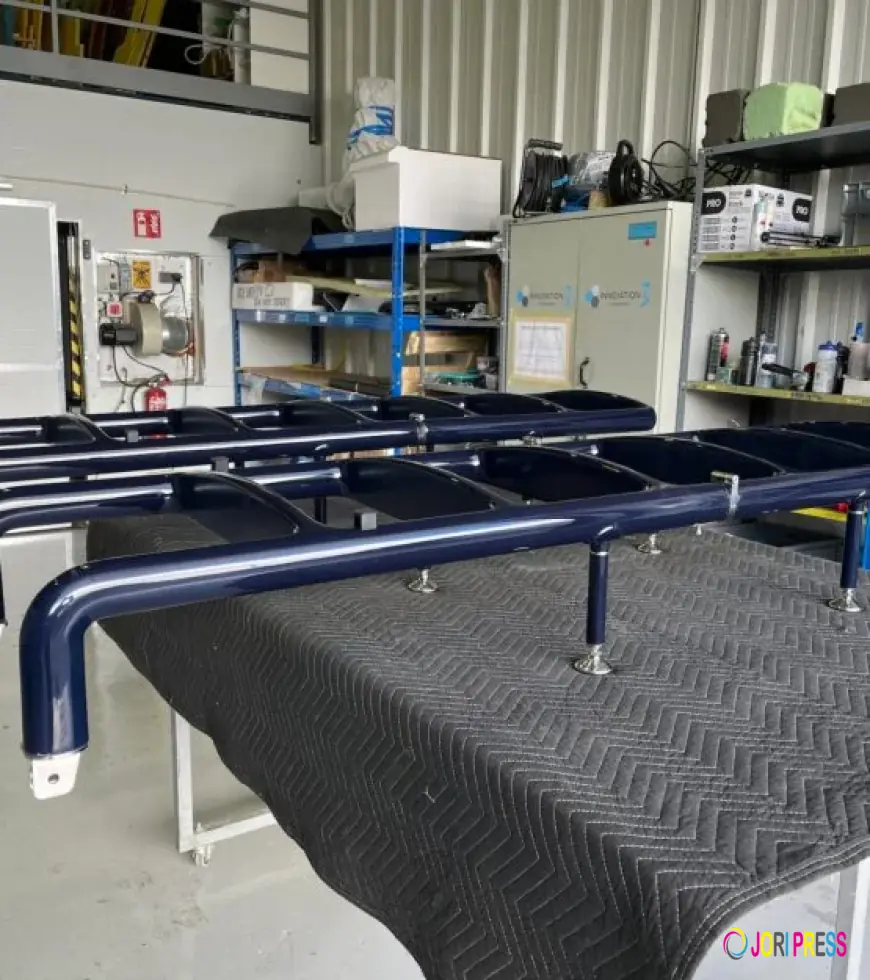
Weight matters most during deployment. A stainless steel equivalent typically requires two crew to move from stowage to boarding position, particularly on larger yachts where the ladder itself runs longer. A boat side boarding ladder in carbon weighs a fraction as much, and one crew member handles deployment without straining or scratching the hull.
Storage design closes the loop on the deployment cycle. A ladder that stows flat against a bulkhead or inside a purpose-built locker keeps the deck line clean when the boarding solution isn't in use. That storage detail matters as much as the deployment feature — a ladder that's technically light but awkward to stow eats time on both ends of every boarding cycle.
Side boarding ladders for yachts — sizing, safety, and finish
Side boarding ladders for yachts vary enormously in size and configuration. A 40-foot sailing tender needs a completely different geometry than a 65-metre motor yacht with several metres of freeboard to bridge. Custom fabrication starting from the vessel's actual dimensions produces a fit that off-the-shelf products can't match — attachment brackets aligned with existing hardware, rung spacing that suits the freeboard, and overall length that matches the deployment position without dragging in the water or stopping short.
Safety features on this class of equipment matter more than aesthetics, though both come standard on properly designed units. Wide, flat rungs handle a wet foot better than round tubing, and non-skid surface treatment on each rung reduces slip risk when guests step off wet from the sea. Handrails on the upper section give the climber a stable grip at the moment when balance matters most — the transition from ladder to deck.
The bespoke finish available on side boarding ladders for yachts matters for both guest experience and vessel presentation. A clear-coat carbon fibre finish suits some interiors and hull colours; a painted finish matches vessels where an exposed weave doesn't fit the aesthetic. Whichever route the owner chooses, the finish quality has to match the rest of the deck fittings — resin marks, uneven weave alignment, or a rough clear coat all undermine the aesthetic value of what should be a premium component.
i3 Composites builds custom carbon fibre boarding solutions from Palma, working with captains, owners, and yacht management teams across superyacht and racing yacht programmes throughout the western Mediterranean.
Visit Website : i3composites.com/portfolio/yacht-single-steps/
Phone : +34 971 254 223
What's Your Reaction?
 Like
0
Like
0
 Dislike
0
Dislike
0
 Love
0
Love
0
 Funny
0
Funny
0
 Angry
0
Angry
0
 Sad
0
Sad
0
 Wow
0
Wow
0