




































Can Varicose Veins Cause Skin Changes?
Learn how varicose veins can cause skin changes, why they occur, and when these changes may indicate the need for medical treatment.

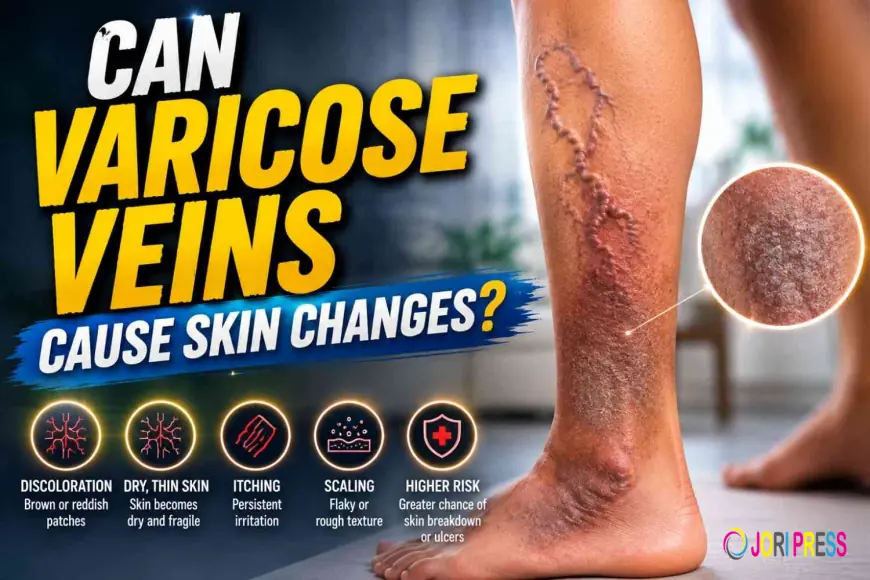
Yes, varicose veins can cause skin changes, especially when the underlying vein disease progresses over time. When damaged vein valves allow blood to pool in the legs, the increased pressure can affect the skin and surrounding tissues. Early changes may include discoloration or dryness, while more advanced venous disease can lead to skin thickening or slow-healing ulcers. Recognising these changes early allows timely treatment and may help prevent complications.
Many people believe varicose veins are only a cosmetic concern, but skin changes often indicate that the condition is affecting more than the visible veins. Understanding varicose veins can help explain why these changes occur and when medical evaluation is recommended.
Why Do Varicose Veins Affect the Skin?
Healthy veins return blood from the legs back to the heart.
When vein valves become damaged:
-
Blood flows backward.
-
Blood pools inside the veins.
-
Pressure inside the veins increases.
-
Fluid leaks into nearby tissues.
-
The skin receives less healthy circulation over time.
These changes gradually affect the appearance and health of the skin.
What Skin Changes Can Occur?
As varicose veins progress, the skin may develop:
-
Brown or reddish discoloration around the ankles
-
Dry or itchy skin
-
Thickened skin
-
Hardened areas beneath the skin
-
Increased skin sensitivity
These changes usually appear gradually rather than suddenly.
Why Does Skin Discoloration Develop?
Long-term venous pressure allows small amounts of blood to leak from tiny blood vessels into the surrounding tissue.
As this blood breaks down, iron-containing pigments are deposited in the skin, leading to:
-
Brown patches
-
Darkened skin near the ankles
-
Uneven skin colour
According to the Society for Vascular Surgery, skin discoloration is a common sign of chronic venous disease.
Can Varicose Veins Cause Itching?
Yes.
Poor venous circulation may irritate the skin and contribute to:
-
Persistent itching
-
Dryness
-
Flaking
-
Venous eczema in some individuals
Scratching the affected skin may increase irritation and the risk of skin injury.
What Happens if Skin Changes Continue?
Without appropriate management, ongoing venous disease may lead to:
-
Progressive skin thickening
-
Hardening of the tissues
-
Slow-healing wounds
-
Venous leg ulcers
Not everyone with varicose veins develops these complications, but early treatment reduces the risk of progression.
How Do Doctors Evaluate Skin Changes?
Doctors usually perform:
-
Medical history
-
Physical examination
A Duplex Ultrasound is commonly recommended to assess:
-
Blood flow
-
Vein valve function
-
Venous reflux
-
The affected veins
-
Severity of venous disease
The ultrasound helps determine whether the skin changes are related to underlying vein problems.
When Should You See a Doctor?
Medical evaluation is recommended if you notice:
-
Brown skin discoloration
-
Persistent itching
-
Skin becoming hard or thick
-
Swelling around the ankles
-
Open sores or wounds
-
Bleeding from a varicose vein
Early assessment allows treatment before more serious complications develop.
What Treatment Options Are Available?
Treatment depends on the severity of the vein disease.
Options may include:
-
Lifestyle modifications
-
Compression stockings
-
Endovenous Laser Treatment (EVLT)
-
Radiofrequency Ablation (RFA)
-
Ultrasound-guided foam sclerotherapy
These minimally invasive treatments close the damaged veins and redirect blood through healthy veins, helping improve circulation and reduce ongoing skin damage.
Can Early Treatment Help Protect the Skin?
Yes.
Treating the underlying venous disease may help:
-
Reduce venous pressure
-
Improve circulation
-
Slow progression of skin changes
-
Lower the risk of venous ulcers
-
Improve overall leg health
The most appropriate treatment depends on the patient's symptoms and Duplex Ultrasound findings.
Conclusion
Varicose veins can cause noticeable skin changes because damaged vein valves allow blood to pool in the legs, increasing pressure on the surrounding tissues. Brown discoloration, itching, dry skin, thickening, and, in advanced cases, venous ulcers are all signs that chronic venous disease may be progressing. Early diagnosis with a physical examination and Duplex Ultrasound allows doctors to identify the underlying problem and recommend timely treatment.
For patients with symptomatic varicose veins, minimally invasive treatments such as Endovenous Laser Treatment (EVLT) can improve blood flow by sealing the damaged veins while preserving healthy circulation. Individuals seeking specialised vein care can consult a best doctor for varicose veins in jaipur to discuss the most appropriate treatment based on their symptoms and ultrasound findings.
Frequently Asked Questions
Can varicose veins change the colour of the skin?
Yes. Varicose veins can cause brown or reddish skin discoloration, particularly around the ankles, because of long-term venous pressure and blood leakage into the surrounding tissues.
Why do varicose veins make the skin itchy?
Poor blood circulation and increased pressure within the veins can irritate the skin, leading to dryness, itching, and sometimes venous eczema.
Can skin changes from varicose veins become serious?
Yes. If left untreated, progressive venous disease may lead to skin thickening, hardening, and slow-healing venous leg ulcers.
How do doctors diagnose skin changes caused by varicose veins?
Doctors use a physical examination and a Duplex Ultrasound to assess blood flow, vein valve function, and the severity of venous disease.
Can treatment improve skin changes caused by varicose veins?
Yes. Minimally invasive treatments such as Endovenous Laser Treatment (EVLT) improve blood circulation by treating the damaged veins, which may help prevent further skin damage and reduce symptoms.
What's Your Reaction?
 Like
0
Like
0
 Dislike
0
Dislike
0
 Love
0
Love
0
 Funny
0
Funny
0
 Angry
0
Angry
0
 Sad
0
Sad
0
 Wow
0
Wow
0