







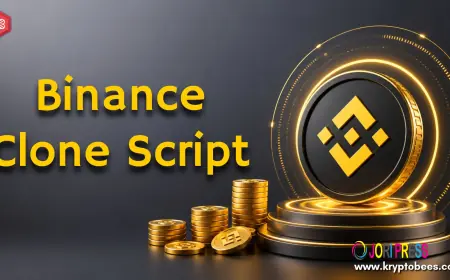






























Binance Clone Script Development for Tokenized Asset Trading
Learn how Binance Clone Script development supports tokenized asset trading through blockchain integration, smart contracts, liquidity management, asset verification, and regulatory compliance for digital asset exchanges.

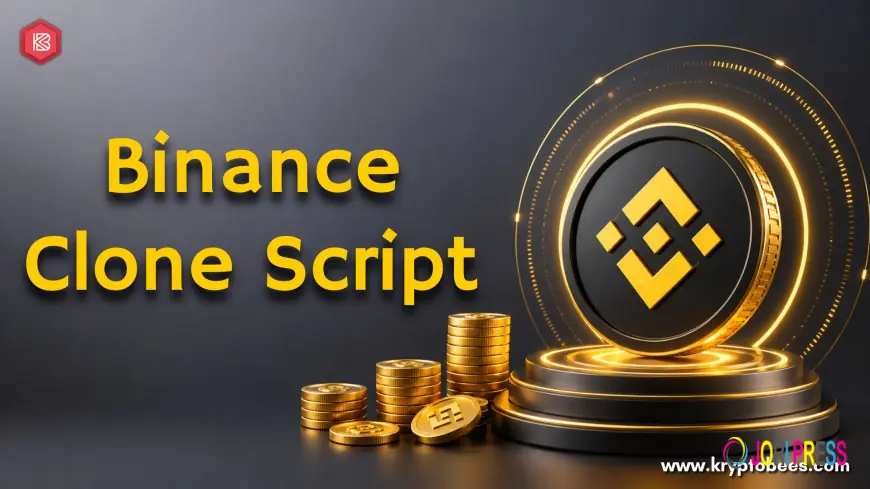
The process of trading tokenized assets is revolutionizing the way in which business is done in the digital market. Real estate, corporate stock, commodities, and investment pools may be tokenized in the digital world via a blockchain, depending on applicable regulations and asset requirements. Tokenization will enable fractional ownership, clear transaction histories, and efficient transfer of the asset.
Businesses that wish to establish a digital asset exchange can use Binance Clone Script development as the basis for building up their trading platform, incorporating suitable functionalities for the tokenized environment. Nevertheless, the support of tokenized assets cannot be achieved through the traditional cryptocurrency trading software alone. Systems for token creation, validation of ownership, valuation of the assets, trading rules, and other elements are required.
Understanding Tokenized Asset Trading
Tokenized assets trading is a process involving token exchange, where tokens embody ownership rights, claims, or interest to some underlying asset. The rights associated with each token depend on the structure of legal ownership or investments and the kind of asset in question.
In the case of commercial real estate, there could be representation through tokens in connection with legally established ownership or investment structure. Investors will trade those tokens in accordance with certain market rules, which a platform must provide.
Before implementing tokenized assets, a business should consider the following components:
- Representation of assets: It is required to decide what is represented by the token, be it ownership rights, contractual claims, or investment interest in a certain asset.
- Standards of tokens: Decide on the use of blockchain standards depending on the structure of the asset, e.g., ERC-20 for fungible assets and ERC-721 for non-fungible.
- Restrictions on transfer: Decide on who is allowed to own, transfer, and trade each particular token.
- Asset valuation: Decide on how the price is formed and how the updated valuation will be provided to investors.
Exchange Architecture for Tokenized Markets
A tokenized assets exchange needs various systems to facilitate transactions and keep records updated. A Binance Clone Script can help create a basis for trade platforms, order execution, accounts management, and exchange management, whereas other modules will cater to asset-specific needs.
Order Matching and Liquidity Management
The matching engine matches buy and sell orders based on the execution policies chosen by the exchange. Order books must be kept updated, and prices and times are used for priority if set, as well as updating balance sheets after trade completion.
Tokenized assets may experience smaller trading volumes compared to the large cryptocurrencies. It is hence important that companies consider factors like market depth, minimum order volume, the number of trading pairs, as well as how liquidity providers will interact with their markets before setting up a new one.
Blockchain Integration and Smart Contracts
The integration of the blockchain links the exchange to the networks where the accepted tokens operate. The smart contract can govern the process of token transfer, restrictions, and other functions that are determined by the characteristics of the asset.
Moreover, the platform has to consider such processes as network confirmation, failure of transactions, gas fees, and even reorganization of the blockchain. If the trade takes place not directly on the blockchain but inside the platform, then the reconciliation mechanism has to be developed.
Compliance and Asset Verification
Tokenized assets can be considered either securities, investments, properties, or something else regulated by financial laws depending on the specific jurisdiction and associated rights of tokens. Companies have to determine which regulatory regime is relevant before they make their assets tradable.
Verification of identity, anti-money laundering controls, eligibility screening of investors, and transaction monitoring might be necessary. There could also be restrictions on token transfers to ineligible parties in certain jurisdictions.
It could be useful to create a Binance App Clone or a binance exchange clone to give users a similar interface for accounts and trading. However, neither of them excludes the necessity of implementing token-related controls and custody of assets.
Security and Transaction Reconciliation
Security is especially crucial when dealing with the management of assets that have both off-chain legal documentation and on-chain representation. Any inconsistency with this documentation might lead to problems on many levels.
Role-based access control, multi-factor authentication, key protection and monitoring of any suspicious activity in accounts should be considered. Before deploying smart contracts, they should pass security audit with an emphasis on transfer and administrative permissions.
Reconciliation should be performed in order to match balances, custodian documentation and blockchain operations. Procedures for handling compromised accounts, failed transfers and any suspicious activity should be defined in the incident response plan.
Conclusion
Asset tokenization requires an exchange architecture, which will link transaction processes, blockchain technology, asset validation, compliance rules, and proper registration of the asset owner. It is vital for businesses to outline the rights related to a particular token before choosing technical solutions.
Taking into account proper architecture and security and legal analysis, Binance Clone Script development can be used as a basis for building an exchange, which is capable of handling tokenized assets. The end result must be based on the business’s needs for the particular asset classes, jurisdictions, custody system, and trading processes.
What's Your Reaction?
 Like
0
 Dislike
0
 Love
0
 Funny
0
 Angry
0
 Sad
0
 Wow
0