

































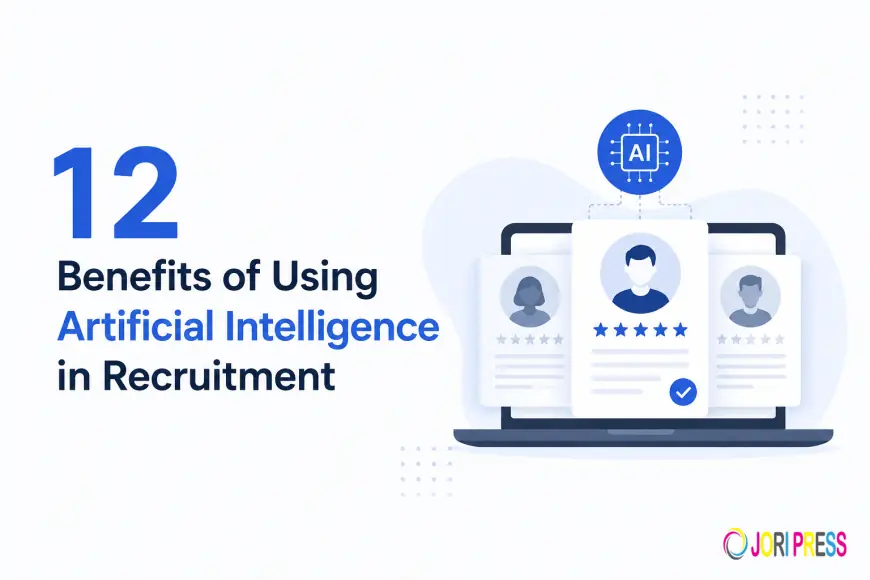
12 Benefits of Using Artificial Intelligence in Recruitment
Discover 12 key benefits of artificial intelligence in recruitment, from faster resume screening and candidate matching to better hiring decisions and efficiency

12 Benefits of Using Artificial Intelligence in Recruitment
Imagine a recruiter with 500 resumes waiting to be reviewed, dozens of emails to answer, and interviews to schedule. By the end of the day, there is barely enough time left to speak with the best candidates.
This is where artificial intelligence in recruitment can make a real difference. AI can handle repetitive hiring tasks, help recruiters find suitable candidates faster, and give hiring teams more time to focus on people.
According to LinkedIn’s 2025 Future of Recruiting report, recruiters using or experimenting with generative AI reported saving about 20% of their workweek on average.
For companies such as Rubixe, this shift shows how AI can support recruiters while keeping human judgment at the center of hiring.
What is artificial intelligence in recruitment?
Artificial intelligence in recruitment means using AI systems to support different stages of hiring, from finding candidates to screening resumes and communicating with applicants.
An AI recruitment tool can quickly process large amounts of information and identify patterns that may take a human recruiter much longer to find.
Common uses include:
-
Resume screening
-
Candidate sourcing
-
Job description creation
-
Interview scheduling
-
Candidate communication
-
Skills matching
-
Recruitment analytics
The goal is not to replace recruiters. The goal is to help them spend less time on repetitive work and more time making thoughtful hiring decisions.
How does AI make recruitment faster?
The biggest benefit of artificial intelligence in recruitment is speed. AI can automate repetitive tasks that often consume hours of a recruiter's day.
For example, an AI recruitment tool can scan hundreds of resumes, compare skills with job requirements, organize candidates, and highlight profiles that deserve attention.
LinkedIn reports that improving hiring efficiency is the top expected benefit among recruiting teams using generative AI.
|
Recruitment task |
Traditional approach |
AI supported approach |
|
Resume review |
Manual screening |
Automated matching |
|
Candidate search |
Keyword searches |
Skills and profile matching |
|
Scheduling |
Back and forth emails |
Automated scheduling |
|
Candidate questions |
Manual replies |
AI assisted responses |
|
Hiring reports |
Manual analysis |
Automated insights |
This does not mean every hiring decision should be automated. Recruiters still need to review important decisions and understand the context behind each candidate.
What are the 12 benefits of using AI in recruitment?
Artificial intelligence in recruitment offers benefits across the entire hiring journey. Here are 12 of the most important ones.
1. Faster resume screening
An AI recruitment tool can review resumes much faster than a person working through them one by one.
It can identify relevant skills, experience, education, and other job related information. Recruiters can then focus their attention on the most relevant applicants.
2. Better candidate matching
AI can compare candidate profiles with the skills and requirements of a role.
Instead of looking only for exact words, modern systems can understand related skills and experience. This can help recruiters discover candidates who may otherwise be overlooked.
3. Reduced repetitive work
Recruiters spend a lot of time writing emails, sorting applications, scheduling interviews, and updating records.
AI can automate many of these tasks. LinkedIn found that recruiting professionals using generative AI save about one fifth of their workweek on average.
4. Wider talent search
AI can help recruiters search larger talent pools and identify people with relevant skills.
This is especially useful for difficult roles where qualified candidates may not use the exact keywords found in a job description.
5. Improved candidate experience
Candidates do not want to wait several days just to receive a basic response.
An ai recruiting agent can answer common questions, provide application updates, and guide candidates through simple steps at any time.
This creates a smoother experience without requiring recruiters to respond manually to every basic question.
6. Easier interview scheduling
Scheduling can become surprisingly time consuming when several people are involved.
AI can coordinate calendars, identify suitable time slots, and send reminders. Recruiters can spend that saved time preparing for interviews and speaking with candidates.
7. More consistent screening
Human decisions can sometimes vary from one recruiter to another.
An AI recruitment tool can apply the same defined screening criteria across a large group of applications. This can improve consistency when the system is designed and monitored properly.
8. Better skills based hiring
Artificial intelligence in recruitment can help organizations focus more on what candidates can actually do.
LinkedIn reports that 93% of talent professionals believe accurately assessing candidate skills is important for improving quality of hire.
AI can help identify skills from resumes, profiles, assessments, and other permitted information.
9. Useful recruitment insights
Recruitment teams generate a lot of data, but turning that data into useful information can be difficult.
AI can help identify patterns such as where strong candidates come from, which roles take longer to fill, and where candidates leave the hiring process.
These insights can help hiring teams improve future recruitment strategies.
10. Better communication at scale
Large hiring campaigns may involve hundreds or thousands of applicants.
An ai recruiting agent can support personalized communication, answer frequently asked questions, and keep candidates informed. Human recruiters can then step in when conversations require empathy, judgment, or detailed discussion.
11. Support for more objective decisions
AI can support structured hiring by applying consistent criteria to candidates.
However, AI does not automatically remove bias. Poor training data or badly designed rules can create unfair outcomes. The EEOC has warned that AI systems can potentially create or continue discriminatory barriers in recruitment and hiring.
That is why organizations should regularly test AI systems, review their criteria, and keep human oversight.
12. More time for strategic recruiting
Perhaps the most valuable benefit is simple: recruiters get more time to be recruiters.
Instead of spending most of the day sorting resumes or answering routine questions, they can build relationships, understand hiring needs, interview candidates, and advise managers.
LinkedIn also reports that recruiters are increasingly using time saved by AI for candidate screening and skills assessment.
Can AI replace human recruiters?
No, AI works best as a support system rather than a complete replacement for recruiters.
Hiring involves more than matching skills to a job description. Recruiters need to understand motivation, communication, culture, career goals, and many other human factors.
A good ai recruiting agent can handle routine conversations, but a human should remain involved in important hiring decisions.
This human and AI combination is likely to be more useful than relying entirely on either one.
What should companies consider before using AI for recruitment?
Artificial intelligence in recruitment can deliver strong results, but companies should introduce it carefully.
Before choosing an AI recruitment tool, consider:
• What recruitment problem are you trying to solve?
• What candidate information will the system process?
• Can recruiters understand how recommendations are produced?
• How will the system be tested for unfair outcomes?
• Where will human review remain necessary?
• Does the tool protect candidate privacy and data?
The EEOC recommends careful attention to discrimination risks when technology is used in employment decisions.
A small pilot can also be a smart starting point. Companies can test one hiring process, measure results, collect recruiter feedback, and improve the system before expanding its use.
What does the future of AI recruitment look like?
AI recruitment is moving from simple automation toward more intelligent assistance.
Future systems are likely to help recruiters understand skills, identify suitable candidates, personalize communication, and analyze hiring outcomes.
LinkedIn reported that 37% of organizations were already experimenting with or actively integrating generative AI into recruitment in its 2025 research.
The real opportunity is not simply doing recruitment faster. It is creating a hiring process that is more organized, responsive, skills focused, and useful for both recruiters and candidates.
Frequently asked questions about AI in recruitment
What is artificial intelligence in recruitment?
It is the use of AI technologies to support hiring activities such as sourcing, resume screening, candidate matching, communication, scheduling, and recruitment analysis.
What is an AI recruitment tool?
An AI recruitment tool is software that uses artificial intelligence to automate or support specific hiring tasks, such as screening resumes or matching candidates with jobs.
What is an ai recruiting agent?
An ai recruiting agent is an AI powered assistant that can handle recruitment tasks such as answering candidate questions, sharing information, and supporting communication.
Can AI remove bias from hiring?
AI can support more consistent hiring processes, but it cannot guarantee unbiased decisions. Training data, system design, and screening criteria must be reviewed regularly.
Should companies completely automate recruitment?
No. AI is most effective when it supports recruiters while humans remain responsible for important decisions, candidate relationships, and final hiring choices.
How can businesses use AI effectively in recruitment?
The future of hiring is not about choosing between technology and people. It is about using technology to help people do better work.
Artificial intelligence in recruitment can save time, improve candidate matching, support communication, and provide useful hiring insights. But responsible implementation matters just as much as the technology itself.
Rubixe helps businesses explore practical AI solutions that align technology with real business needs. If your organization is considering AI for hiring, start with one clear recruitment challenge, measure the results, and build from there.
What's Your Reaction?
 Like
0
Like
0
 Dislike
0
Dislike
0
 Love
0
Love
0
 Funny
0
Funny
0
 Angry
0
Angry
0
 Sad
0
Sad
0
 Wow
0
Wow
0