































Adobe Journey Optimizer vs Braze Pricing: What Should Enterprises Consider?
Compare Adobe Journey Optimizer vs Braze pricing, implementation costs, integrations, data requirements, support and total cost of ownership for enterprises.

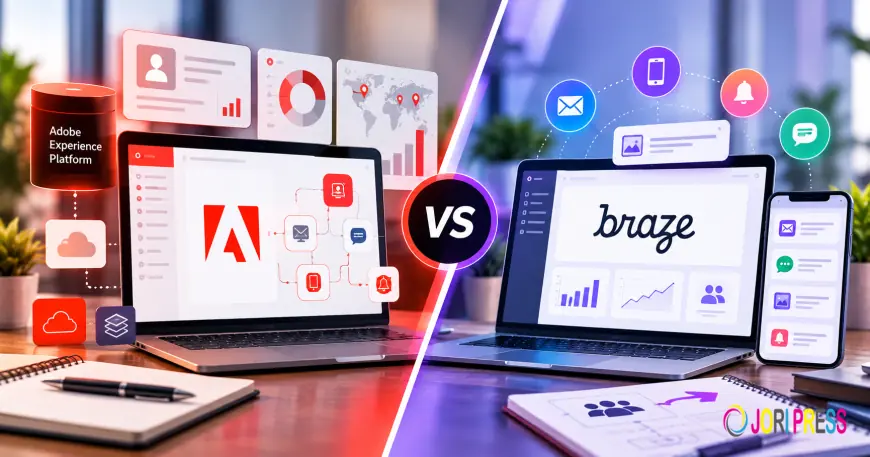
Enterprise organizations evaluating customer engagement platforms need to consider more than the advertised software subscription. Licensing, customer data volumes, communication channels, implementation, integrations, personalization, support, and internal resources can all influence the overall investment.
This makes an Adobe Journey Optimizer vs Braze pricing comparison particularly important for organizations evaluating enterprise customer engagement technology. Adobe Journey Optimizer and Braze address overlapping customer engagement requirements, but their pricing and deployment considerations should be assessed within the context of each company's technology architecture and business requirements.
Understanding Adobe Journey Optimizer Pricing
Adobe Journey Optimizer pricing is generally determined within an enterprise licensing model rather than a single universal public subscription price.
Organizations evaluating how much does Adobe Journey Optimizer cost should first establish their expected implementation scope. Factors that can influence the overall investment include customer profiles, data requirements, journey volume, channels, personalization, decisioning, integrations, and related Adobe Experience Platform capabilities.
Adobe Journey Optimizer is designed to work with Adobe Experience Platform capabilities including customer profiles, identities, audiences, events, and decisioning. Therefore, enterprises should evaluate the platform as part of their broader Adobe technology environment rather than considering the journey platform in isolation.
For companies already using Adobe Experience Cloud technologies, existing infrastructure and licensing arrangements may influence the overall business case.
Understanding Braze Pricing
Braze pricing follows a platform-based model with different editions and capabilities. Braze publicly presents offerings including Braze Go, Braze Select, and Braze Pro, with capabilities varying according to the selected edition.
When evaluating how much does Braze cost, enterprises should consider factors such as:
-
Number of active customer profiles
-
Message volume
-
Communication channels
-
Journey complexity
-
Personalization requirements
-
Data integrations
-
Security requirements
-
Analytics and reporting needs
-
Enterprise support
The final commercial arrangement can therefore vary according to organizational requirements.
Customer Engagement Platform Pricing
Customer engagement platform pricing should be evaluated using a total-cost model.
The software license represents only one part of the investment.
A practical enterprise cost model can include:
Platform license + implementation + integration + data + development + training + support + ongoing optimization
This approach is particularly relevant when comparing enterprise marketing technologies because implementation requirements can vary substantially between organizations.
For example, an organization with a relatively simple customer database and two communication channels may require considerably less implementation work than a global company operating multiple brands, markets, customer databases, websites, applications, and communication channels.
Marketing Automation Pricing
Marketing automation pricing is also influenced by the complexity of the automation strategy.
A basic automation program might contain:
-
Welcome campaigns
-
Scheduled emails
-
Simple audience segments
-
Basic reporting
An enterprise implementation may include:
-
Real-time events
-
Behavioral segmentation
-
Multi-step journeys
-
Cross-channel communication
-
Dynamic personalization
-
Decisioning
-
Multiple business units
-
Complex data integrations
Consequently, comparing software prices without considering the implementation model can provide an incomplete picture.
Adobe Journey Optimizer Pricing for Enterprise
Adobe Journey Optimizer pricing for enterprise should be considered alongside Adobe Experience Platform requirements.
Enterprises should document:
-
Number of customer profiles
-
Number of business units
-
Number of brands
-
Required channels
-
Expected event volume
-
Personalization requirements
-
Decisioning requirements
-
Data integrations
-
Analytics requirements
-
Governance requirements
The resulting requirements can then be used to obtain a more relevant commercial estimate.
Braze Pricing for Enterprise Companies
Braze pricing for enterprise companies similarly needs to be evaluated according to scale and functionality.
A global organization may require capabilities that differ from those needed by a smaller company. Enterprise requirements can include advanced orchestration, security, personalization, integrations, and governance.
Braze's public pricing structure provides different editions, but businesses should evaluate the capabilities included in the specific commercial package being considered.
Adobe Journey Optimizer vs Braze Total Cost
The Adobe Journey Optimizer vs Braze total cost should include direct and indirect expenses.
| Cost Component | Considerations |
|---|---|
| Software | Licensing or subscription |
| Implementation | Configuration and development |
| Integration | CRM, CDP, ERP and other systems |
| Data | Customer profiles and event data |
| Channels | Email, SMS, push and other channels |
| Personalization | Content and decisioning requirements |
| Migration | Existing customer and campaign data |
| Training | Marketing and technical teams |
| Support | Vendor and implementation support |
| Maintenance | Ongoing development and optimization |
This approach creates a more meaningful enterprise comparison.
Implementation Cost
Implementation can become a significant component of the overall cost.
A company migrating from an existing customer engagement platform may need to rebuild:
-
Customer segments
-
Campaigns
-
Journeys
-
Templates
-
Personalization rules
-
Integrations
-
Reporting
-
Tracking
-
Governance processes
The complexity of the existing technology environment therefore matters.
Three-Year Cost Analysis
A three-year model can provide greater visibility than comparing first-year license costs.
Year One
Software + implementation + integration + migration + training
Year Two
Software + support + optimization + development
Year Three
Software + support + optimization + development
Enterprises can then compare the cumulative investment rather than focusing only on initial licensing.
Questions to Ask Vendors
Before making a purchasing decision, procurement and marketing teams should ask:
-
What is included in the license?
-
How is usage measured?
-
Are customer profiles included?
-
Are additional channels priced separately?
-
What implementation services are required?
-
What integrations are supported?
-
What support model is included?
-
Are advanced personalization features included?
-
How are additional business units handled?
-
What costs could increase as usage grows?
These questions help create a more accurate Adobe Journey Optimizer vs Braze pricing comparison.
Conclusion
The Adobe Journey Optimizer vs Braze pricing decision should be based on the organization's complete technology and operating requirements.
Adobe Journey Optimizer pricing should be evaluated within the Adobe Experience Platform ecosystem and the organization's existing Adobe investment. Braze pricing should be evaluated according to the selected platform edition, customer engagement requirements, usage, channels, and enterprise capabilities.
For procurement teams, the most useful measure is not simply the initial subscription price. The Adobe Journey Optimizer vs Braze total cost should include implementation, integration, data, support, development, and ongoing optimization.
A structured three-year or five-year TCO model can provide a more meaningful basis for enterprise technology planning.
What's Your Reaction?
 Like
0
Like
0
 Dislike
0
Dislike
0
 Love
0
Love
0
 Funny
0
Funny
0
 Angry
0
Angry
0
 Sad
0
Sad
0
 Wow
0
Wow
0