







































A Fantasy Novel for Readers Who Like Their Villains in the Shadows

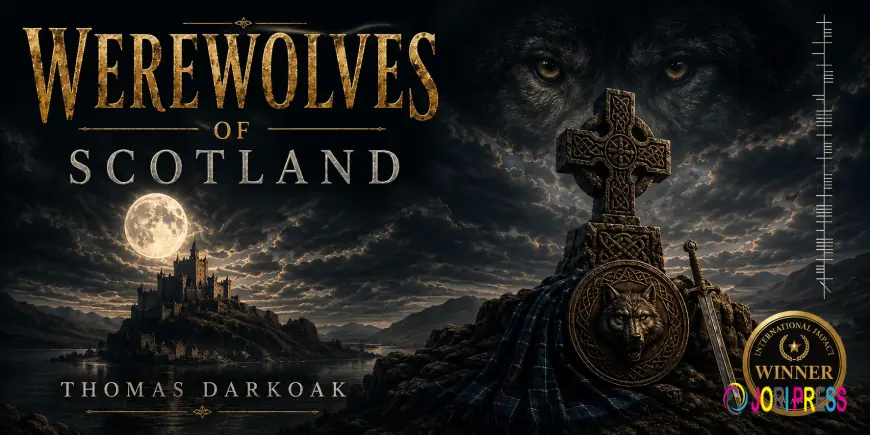
The most unsettling threat in a story is not always the monster you can see. Sometimes it is the hand moving pieces from another room. The rumor that arrives before the enemy. The road that suddenly feels watched. The sense that danger has been patient longer than anyone realized.
Werewolves of Scotland understands that kind of suspense.
Thomas Darkoak gives readers wolves, clans, sacred oaths, and Highland atmosphere, but he also builds a world where threat does not always announce itself. Danger gathers through shadows, ambition, old grudges, and the desire to claim what should not be touched. That gives the novel a tension that feels wider than a single chase or fight.
A weaker fantasy might make danger simple. A beast attacks. A hero responds. The moment ends. Darkoak’s world has more layers than that. The land itself has a watchful quality. The old roads, passes, forests, and strongholds suggest movement beyond the reader’s immediate view. There is always the feeling that something may be approaching, even when the page is quiet.
That is excellent for retention.
Readers keep going because they are not only asking, “What happens next?” They are asking, “What is already happening that I do not fully understand yet?” That second question is powerful. It turns a fantasy adventure into a story of pressure.
The Highland setting makes the suspense even stronger. Isolated places naturally create uncertainty. A forest can hide more than animals. A road can bring strangers. A mountain pass can become a vulnerability. A village can hold judgment as easily as shelter. Darkoak uses these spaces to make the world feel exposed in some places and dangerously enclosed in others.
The third-edition map adds another layer to that experience. Once readers can see the roads, passes, forests, and locations tied to Clan Wolf, the story gains a strategic feel. Geography becomes part of the tension. The reader can imagine how danger moves across the land, how distance matters, and why certain places are worth guarding.
The book also treats evil with a seriousness that suits mythic fantasy. The threats are not only physical. There is moral danger too. Pride, fear, control, betrayal, and the corruption of sacred things all sit near the edges of the story. That kind of danger feels more adult because it cannot always be defeated with strength alone.
It must be recognized.
That is one of the reasons Werewolves of Scotland is appealing to readers who enjoy darker fantasy without wanting empty brutality. The story has shadows, but they are not there simply to make the book grim. They help define what is worth protecting. They make loyalty matter. They make oaths feel necessary rather than ornamental.
Readers who enjoy slow-building threats, hidden enemies, ancient conflicts, and fantasy suspense will find a great deal to enjoy here. The book offers the pleasure of unease. Not every answer arrives when the reader wants it. Not every danger steps into the light at once. That patience keeps the pages alive.
And then there are the wolves.
In another book, the wolves might be the thing to fear most. In Werewolves of Scotland, the more interesting question is whether the wolves are warning us about something worse.
Buy Werewolves of Scotland by Thomas Darkoak and enter a Highland fantasy where danger moves through mist, old roads, and shadowed places long before it shows its face.
What's Your Reaction?
 Like
0
Like
0
 Dislike
0
Dislike
0
 Love
0
Love
0
 Funny
0
Funny
0
 Angry
0
Angry
0
 Sad
0
Sad
0
 Wow
0
Wow
0