








































Why Equity Market Neutral Strategies Are Gaining Attention Among Professional Stock Traders
Learn why equity market neutral strategies are gaining attention among professional traders. Explore long-short trading, pair trading, risk management, relative value strategies, and market-neutral investing techniques across global markets.

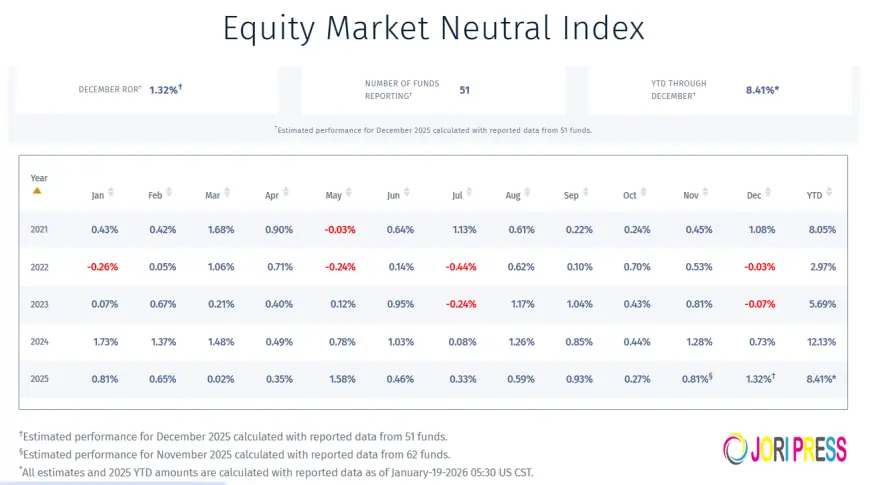
Professional stock traders have always looked for ways to reduce unnecessary market exposure while still finding repeatable sources of return. In that context, equity market neutral strategies are attracting renewed interest because they aim to isolate stock selection skill rather than rely on broad market direction. For traders working across the US, UK, Australia, Canada, and the EU, this approach offers a disciplined framework that can be useful in both rising and falling markets.
The appeal is straightforward. Instead of taking a large directional bet on whether an index will rise or fall, market neutral traders pair long and short positions so that gains and losses from the overall market are reduced. What remains is the spread between securities, which can be driven by valuation gaps, earnings surprises, sector rotations, or temporary pricing inefficiencies. In a trading environment shaped by volatility, higher rates, and uneven sector performance, that kind of focus has become increasingly valuable.
Key points
- Equity market neutral strategies seek to reduce exposure to overall market movements.
- They are built around relative value, often using long and short stock pairs.
- Professional traders value them for diversification, risk control, and consistent process.
- Success depends on research quality, execution discipline, and careful risk management.
- They can be adapted across regions, sectors, and different market conditions.
What Equity Market Neutral Means
At its core, an equity market neutral strategy tries to balance long and short positions so that the portfolio has little or no net market bias. For example, a trader might buy one company expected to outperform while shorting a similar company expected to underperform. If both stocks fall because the broader market weakens, the short position may offset much of the loss on the long position. If the long idea performs better than the short, the trader can profit from the spread.
This does not mean the portfolio is risk free. It still carries exposure to sector shocks, stock-specific news, borrowing costs, liquidity constraints, and execution slippage. However, it is designed to be less dependent on the direction of the market index and more dependent on the trader’s ability to identify relative mispricing.
Why Professionals Are Paying More Attention
1. Reduced dependence on market direction
Traditional long-only strategies can struggle when indexes are choppy or when leadership changes quickly. Market neutral trading gives professionals a way to pursue returns without needing to predict whether the S&P 500, FTSE 100, ASX 200, TSX, or STOXX 600 will move sharply in one direction. This makes it especially attractive in periods when macro conditions are uncertain.
2. Better fit for volatile environments
Rising interest rates, inflation shifts, geopolitical tension, and earnings dispersion can all create unstable market conditions. In such settings, individual stocks may move very differently even within the same sector. Market neutral traders can take advantage of that dispersion by focusing on relative performance rather than trying to call the market as a whole.
3. Stronger emphasis on process
Professional traders often value strategies that can be tested, measured, and refined. Equity market neutral approaches tend to reward structured research, such as valuation comparisons, earnings revisions, balance sheet strength, momentum signals, and sector analysis. Because the trades are usually built from paired ideas, the logic behind each position can be clearer than a simple directional trade.
How the Strategy Is Typically Built
Pair trading and spread analysis
The most familiar form of market neutral trading is pair trading. A trader identifies two related stocks, such as companies in the same industry with similar business models. One stock may appear undervalued while the other looks expensive. The trader buys the cheaper name and shorts the richer one, expecting the gap between them to narrow.
For example, if two consumer staples companies have similar revenue trends but one is trading at a much higher earnings multiple without stronger fundamentals, a trader may see an opportunity. If the expensive stock rerates downward or the cheaper stock improves, the spread may move in the trader’s favour.
Factor balancing
More advanced market neutral portfolios often balance exposures to common factors such as size, value, momentum, quality, and volatility. The goal is to ensure that returns come from stock selection rather than accidental tilts toward a particular factor. This matters because a portfolio can look neutral on the surface while still being heavily exposed to hidden risks.
Portfolio construction discipline
Because long and short books must be managed together, position sizing is critical. Traders often monitor net exposure, gross exposure, sector concentration, beta, and correlation. A portfolio may be market neutral in theory, but poor construction can leave it vulnerable to unexpected moves. This is why professionals place significant emphasis on hedging ratios and ongoing rebalancing.
Why It Appeals to Different Market Participants
Hedge fund and proprietary desk use
Institutional traders often prefer strategies that can scale and that are less tied to broad market trends. Market neutral approaches can be attractive because they fit a research-driven environment and allow teams to monetise relative value ideas across many sectors and regions.
Independent professional traders
Experienced traders who operate independently often like the strategy because it can be systematic and repeatable. It may also help reduce emotional decision-making, since the trade thesis is built around a comparison rather than a simple bullish or bearish view.
Global market application
The concept is not limited to one region. A trader in London, New York, Sydney, Toronto, or Frankfurt can apply the same framework to local equities, cross-listed names, sector peers, or global industry leaders. This flexibility is one reason the strategy continues to gain attention across major financial centres.
Risks and Limitations
Although the term market neutral sounds reassuring, these strategies carry real risks. One common issue is that correlations can change quickly during periods of stress, causing both sides of a trade to move in unexpected ways. Another risk is short borrowing costs, which can rise sharply if the shorted stock becomes crowded. Liquidity can also be a problem, especially in smaller names or during earnings announcements.
There is also model risk. If a trader relies too heavily on historical relationships, a pair that once moved together may stop doing so. Structural changes in a business, new regulation, mergers, or major macro shifts can break assumptions that once seemed reliable. For that reason, professionals usually combine quantitative analysis with fundamental judgment.
What Makes the Approach Hard to Copy
At first glance, market neutral trading can appear simple: buy one stock and short another. In practice, the edge often comes from research depth, execution quality, and risk control. The best traders do not merely find two related stocks. They ask whether the relationship is temporary, whether the valuation gap is justified, whether catalysts exist, and whether the trade has enough time to work.
Transaction costs matter as well. Because many market neutral strategies generate smaller returns per trade than outright directional bets, costs can consume performance if turnover is too high. Slippage, financing charges, and taxes all affect outcomes. This is why professionals tend to focus on careful trade selection and disciplined portfolio turnover.
Practical Takeaways for Traders
- Focus on relative value rather than market prediction.
- Use clear entry and exit rules for both the long and short sides.
- Monitor exposure to sectors, factors, and liquidity.
- Test whether the relationship between two stocks is stable over time.
- Include borrowing costs and transaction costs in every trade idea.
- Review performance by spread behaviour, not just by headline profit and loss.
Conclusion
Equity market neutral strategies are gaining attention because they offer something many professional traders want more of: a way to pursue returns with less dependence on the direction of the overall market. In uncertain conditions, that can be especially valuable. The strategy is not simple, and it is certainly not risk free, but it rewards careful analysis, disciplined execution, and strong risk management.
For traders across the US, UK, Australia, Canada, and the EU, the growing interest in this approach reflects a broader shift toward precision. Rather than making a large bet on the market as a whole, market neutral traders aim to capture the differences between securities. In a world where those differences can be meaningful, that focus is likely to remain relevant.
FAQ
What is an equity market neutral strategy?
It is a trading approach that combines long and short stock positions to reduce exposure to overall market movement and focus instead on relative performance between securities.
Is market neutral trading completely risk free?
No. It reduces directional market risk, but it still involves stock-specific risk, factor risk, liquidity risk, borrowing costs, and execution risk.
Why do professionals use market neutral strategies?
Professionals use them to pursue returns in uncertain markets, diversify their trading methods, and rely more on research and relative value than on broad market direction.
How are pairs chosen?
Pairs are usually selected based on industry similarity, business model overlap, valuation differences, historical correlation, and potential catalysts that could close the spread.
Can retail traders use this approach?
Yes, but it requires access to short selling, solid risk controls, and a good understanding of costs and position sizing. It is often more complex than straightforward long-only trading.
What is the main challenge in market neutral trading?
The main challenge is maintaining a genuine balance between long and short exposure while still finding enough edge to overcome costs and changes in market relationships.
What's Your Reaction?
 Like
0
Like
0
 Dislike
0
Dislike
0
 Love
0
Love
0
 Funny
0
Funny
0
 Angry
0
Angry
0
 Sad
0
Sad
0
 Wow
0
Wow
0