






































What Sets Reliable Concrete Contractors New York Apart
A guide to vetting concrete contractors in New York, covering residential and commercial projects, durability factors, maintenance, and what to expect.
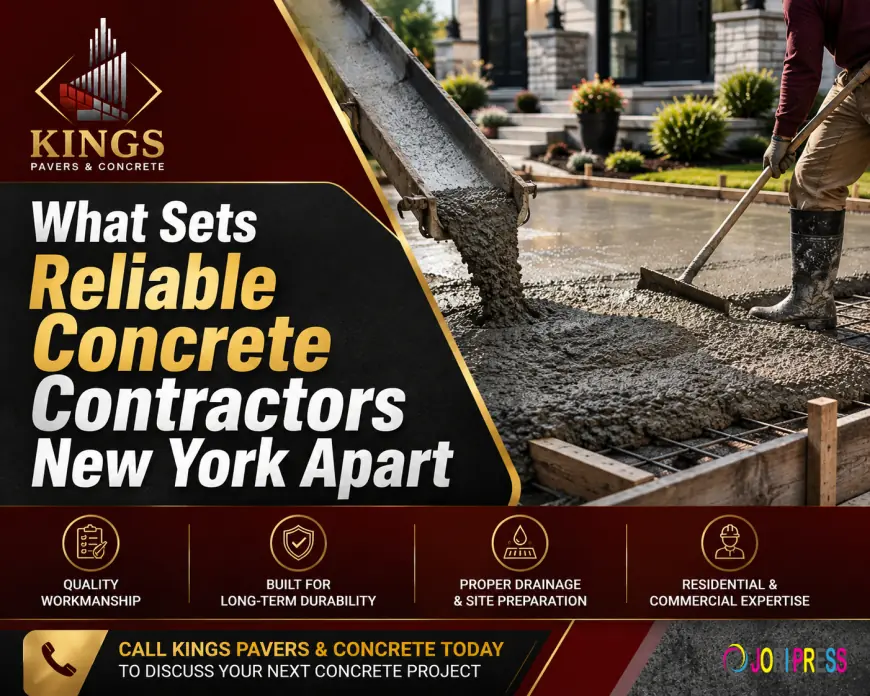
Ask any property owner who's dealt with a cracked driveway or a settling slab, and they'll tell you the mistake usually traces back to who was hired, not what material was used. Concrete itself is a proven, durable product. The variable is workmanship: how the site was graded, how the mix was reinforced, how carefully the pour was cured. That variability is exactly why so many homeowners and businesses spend time comparing concrete contractors in New York before committing to a project, rather than accepting the first estimate that comes in.
This guide walks through what separates dependable concrete work from the kind that needs to be redone within a few years, along with what to expect once a project actually gets underway.
How to Choose Reliable Concrete Contractors in New York
The easiest way to separate serious concrete specialists from less experienced crews is to ask how they approach the parts of the job that aren't visible in the finished product. Site evaluation, subgrade compaction, reinforcement placement, and curing time all happen before or during the pour, yet they determine almost everything about how the slab performs over the following decade.
A professional concrete company should be able to explain, in plain terms, why a given project needs a particular slab thickness or reinforcement pattern. If a contractor can't answer that without deflecting to "that's just how we do it," it's worth asking more questions before signing anything. Licensing, active insurance, and a portfolio of completed projects similar in scale to yours are the baseline, not bonus features.
Local construction standards vary depending on the municipality and property type, so contractors with a track record across different New York jurisdictions tend to navigate permitting and inspection requirements more smoothly than those working outside their usual territory.
Residential and Commercial Concrete Services
Concrete work splits fairly cleanly into two categories, and the expectations for each are different:
●Residential concrete contractors typically handle driveways, walkways, patios, steps, and garage slabs, where day-to-day durability and finished appearance are the main concerns for homeowners.
●Commercial concrete contractors take on parking structures, warehouse floors, loading areas, and building foundations, where load-bearing capacity, code compliance, and performance under constant heavy use matter more than surface aesthetics.
A crew experienced in both understands that a driveway and a warehouse floor may look similar once finished, but the engineering behind them is not remotely the same.
Popular Concrete Applications for Homes and Businesses
Concrete remains the default material for so many property types because of how adaptable it is:
● Concrete driveway installation for single-family homes, multi-unit buildings, and commercial entrances that need a long-lasting, low-maintenance surface.
● Concrete sidewalk installation, which often has to meet specific municipal requirements for slope, width, and accessibility.
● Concrete patio installation for an outdoor space that holds up through New York's full range of seasonal temperature swings.
● Stamped concrete and decorative concrete options that replicate the look of pavers, brick, or natural stone at a lower long-term maintenance cost.
● Concrete slabs and concrete foundations supporting additions, garages, and new commercial or residential construction.
Each of these applications requires different formwork, jointing, and finishing decisions, which is why an accurate scope of work matters more than a low headline price.
Benefits of Professional Concrete Installation
The advantages of hiring an experienced crew rarely show up in year one; they show up in years five, ten, and fifteen. Professionally installed concrete typically delivers:
● Controlled curing that limits surface cracking, scaling, and discoloration.
● Properly spaced control joints that manage shrinkage cracking in a predictable, less visible way.
● Compacted base preparation that prevents the uneven settling responsible for tripping hazards.
● Reinforcement sized to the expected load rather than a one-size-fits-all approach.
● A finish selected for its purpose, whether that's slip resistance on a walkway or a decorative pattern for curb appeal.
None of these details are obvious from a walk-through after the job is done, which is exactly why they're worth asking about beforehand.
Factors Affecting Concrete Durability and Lifespan
New York's weather is genuinely hard on concrete. Freeze-thaw cycles push moisture that's seeped into small surface cracks through repeated expansion and contraction, which gradually pries those cracks wider each winter. Add heavy pedestrian and vehicle traffic across both residential streets and commercial districts, and poorly executed concrete work can fail well ahead of schedule.
The factors that most influence long-term performance include:
● Site preparation and grading, which control how well water drains away from the slab instead of pooling against it.
● Curing conditions: Concrete that cures too quickly in extreme heat or cold is significantly more prone to early cracking.
● Mix design, matched appropriately to whether the surface is a driveway, sidewalk, or heavy-use commercial floor.
● Reinforced concrete placement, which resists cracking under both load and temperature stress.
● Consistent upkeep, including sealing and prompt repair of minor surface damage before it spreads.
Property owners who understand these factors are far better positioned to tell the difference between two quotes that look similar on paper but produce very different results over time.
Common Mistakes Property Owners Make When Hiring Concrete Contractors
Even careful property owners can fall into a few predictable traps:
● Awarding the job to the lowest bidder without asking about mix design, reinforcement, or curing schedule.
● Skipping a proper site evaluation and assuming every project needs an identical slab thickness.
● Not confirming licensing, insurance, or references from projects of comparable scope.
● Focusing on finished appearance while overlooking drainage and grading.
● Moving forward without a written scope covering material specifications and curing timeline.
Contractors with genuine, long-standing experience in New York tend to have a better handle on regional soil conditions and the freeze-thaw patterns that cause so many premature failures elsewhere.
Maintenance Tips to Extend the Life of Concrete Surfaces
Even a well-installed slab benefits from a bit of routine upkeep:
● Reseal exterior concrete every few years to guard against moisture penetration and winter deicing salt damage.
● Handle hairline cracks early through concrete repair services rather than letting water intrusion widen them.
● Keep gutters, drains, and grading clear so water isn't sitting against slabs or foundations.
● Skip harsh chemical deicers, which can accelerate scaling on driveways and sidewalks.
● Inspect surfaces after particularly harsh winters to catch small problems before they escalate into full concrete replacement.
Routine maintenance is consistently cheaper than reactive repair, and it protects the structural elements beneath the visible surface as much as the surface itself.
How Quality Concrete Work Improves Safety, Functionality, and Property Value
Well-executed concrete work does more than look good. Smooth, properly graded surfaces reduce trip-and-fall risk and improve drainage near entrances, walkways, and loading areas. Decorative finishes can noticeably boost curb appeal, while properly reinforced foundations and slabs protect the structural integrity of the building above them.
For commercial properties, dependable concrete paving solutions in parking areas and loading zones translate into fewer liability concerns and less disruption from unplanned repairs. For homeowners, a well-executed driveway or patio remains one of the most visible ways to add value to a property.
What to Expect During a Professional Concrete Installation Project
A properly managed concrete project moves through a predictable sequence: site evaluation and grading, formwork and reinforcement, the pour, finishing, and a curing period before full use begins. A contractor worth hiring will walk through each stage in advance, including realistic timelines for when the surface can handle normal traffic.
Companies such as Kingspaver and Concrete have built their standing in the New York market by giving every phase of that sequence equal attention, rather than rushing toward a surface that looks finished before it has actually cured. Asking a prospective contractor to explain this process before signing anything is one of the more reliable ways to gauge their experience.
In the end, the concrete contractors New York property owners keep coming back to are the ones who treat each project as infrastructure meant to last, not a cosmetic fix. That mindset is visible in the base preparation, the curing schedule, and how the finished surface holds up through its first several New York winters.
Conclusion
Concrete is easy to overlook until it fails, and by then the repair almost always costs more than doing it right the first time would have. Between seasonal freeze-thaw stress, constant pedestrian and vehicle traffic, and varying local construction standards, New York properties need concrete installed with genuine attention to grading, reinforcement, and curing. Property owners who take the time to compare concrete contractors, New York professionals recommend evaluating site preparation practices, mix design, and long-term maintenance guidance, and end up with surfaces built to perform for decades rather than needing early rework.
FAQ Section
How long should a properly installed concrete driveway last in New York?
With correct installation, curing, and routine maintenance, a concrete driveway typically lasts 25 to 30 years, though harsh winters and deicing salt can shorten that timeline without regular sealing.
What separates residential from commercial concrete work?
Residential concrete contractors focus on driveways, patios, and walkways where appearance and everyday durability matter most, while commercial concrete contractors must account for heavier loads, stricter code compliance, and continuous daily use.
Why is curing time so important for concrete strength?
Concrete develops most of its strength over the first several weeks after pouring, and curing too quickly in extreme heat or cold raises the risk of cracking, scaling, and reduced long-term durability.
Does stamped or decorative concrete hold up in New York's climate?
Yes, when sealed and maintained on a regular schedule, stamped and decorative concrete performs comparably to standard concrete, though consistent sealing is especially important against freeze-thaw and salt exposure.
What should I ask before starting a concrete project?
Ask about their site evaluation and drainage process, the mix design and reinforcement planned for your project, expected curing time before normal use, and references from similarly scoped residential or commercial jobs.
What's Your Reaction?
 Like
0
Like
0
 Dislike
0
Dislike
0
 Love
0
Love
0
 Funny
0
Funny
0
 Angry
0
Angry
0
 Sad
0
Sad
0
 Wow
0
Wow
0