









































Hellstar: The Secret Behind Its Rising Hype
Shop Hellstar at Official Clothing Shop. Explore Hellstar Hoodie, Hellstar shirt, and more Hellstar Collections at Sale Price !

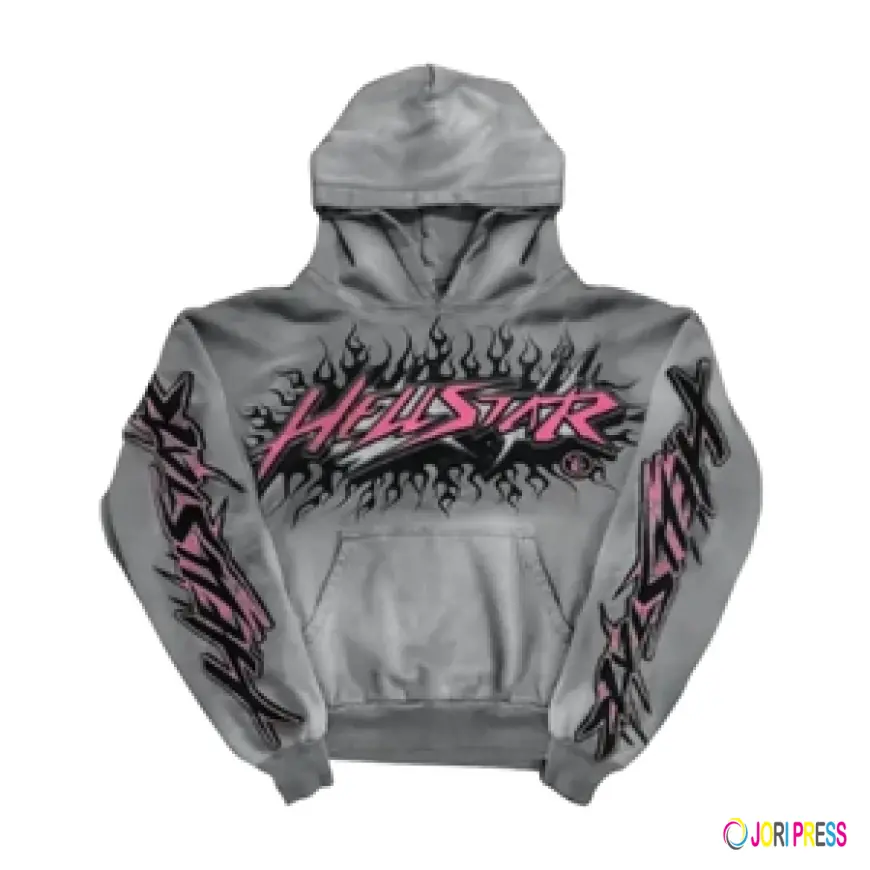
Hellstar has become one of the most talked-about names in modern streetwear. What began as a small Los Angeles clothing project in 2020 has developed into a label with a serious cultural footprint. Its hoodies, graphic tees, sweatpants, shorts, and tracksuits regularly appear across social media, resale platforms, music circles, and streetwear communities.
But what actually makes Hellstar so popular?
The answer is not simply celebrity attention or limited releases. Hellstar has constructed an identifiable visual language around flames, celestial imagery, distorted graphics, spiritual themes, oversized silhouettes, and an intentionally rebellious attitude. That combination gives the clothing an immediate presence. You can often recognize a Hellstar piece before seeing the label.
Recent coverage from Complex describes the brand's growth from a two-person operation into a larger Los Angeles business with collaborations involving names such as adidas, Avirex, and WWE. That trajectory helps explain why Hellstar's rise feels bigger than an ordinary fashion trend.
Hellstar’s Sudden Rise in Streetwear
Streetwear moves quickly. A brand can appear almost overnight, become unavoidable on Instagram and TikTok, dominate resale platforms, and then disappear just as rapidly.
Hellstar has taken a different route.
The label has maintained a recognizable identity while gradually expanding its audience. Its growth accelerated after early attention from figures connected to music and internet culture. Later, major collaborations and increasingly ambitious collections pushed the brand into a much larger conversation.
One of the most significant moments came with Capsule 10 in 2023. According to Complex, the collection generated approximately $2 million in sales within 30 minutes. That kind of launch does more than generate revenue. It creates mythology.
People begin talking about the release even if they could not purchase anything.
That is an important part of Hellstar's appeal. The brand does not merely sell garments. Its releases often become events.
Where Hellstar Came From
Hellstar was founded in Los Angeles in 2020 by Sean “Seanie” Holland and Joseph “Juice” Pendleton. The two had known each other since high school, and their interest in street culture eventually developed into a clothing project.
The timing was unusual. Hellstar emerged during the pandemic, when much of fashion was being pushed toward online communities and digital discovery.
Holland focused heavily on graphics, while Pendleton contributed to production. Rather than building a conventional fashion company with a large initial infrastructure, they started small and concentrated on creating something visually memorable.
That decision mattered.
The early Hellstar pieces did not attempt to blend into the streetwear landscape. They leaned into exaggerated artwork and expressive graphics. The result was a label that looked different from the minimalist logos dominating portions of the market at the time.
According to Complex, early designs and support from figures such as Young Thug helped bring additional attention to the brand.
The Meaning Behind the Hellstar Identity
The word “Hellstar” sounds provocative, and that is part of its magnetism.
Yet the concept behind the name is more nuanced than the title might suggest. Hellstar's identity has been associated with the idea of finding light within darkness. adidas describes the brand's philosophy through the phrase “We Are All Stars, Even In Hell.”
That contrast gives the brand an unusual emotional register.
Darkness and light. Heaven and hell. Destruction and hope.
These opposites repeatedly appear throughout the visual world surrounding Hellstar. The imagery can look aggressive at first glance, but there is often a deeper spiritual or philosophical undertone behind it.
That ambiguity is useful in fashion because it leaves room for interpretation. One person may see a Hellstar graphic as rebellious. Another may see it as spiritual. Someone else may simply appreciate the artwork.
The clothing does not require everyone to interpret it in exactly the same way.
Why Hellstar’s Graphics Stand Out
Graphics are probably the most recognizable part of Hellstar's aesthetic.
Instead of depending on a tiny chest logo, the brand frequently uses large-scale artwork that occupies significant portions of the garment. Flames, stars, celestial motifs, distressed typography, religious references, racing-inspired elements, and surreal compositions all contribute to the visual vocabulary.
This approach gives Hellstar clothing a theatrical quality.
A Hellstar hoodie is rarely just another hoodie.
The same applies to its T-shirts and sweatpants. Washed finishes and oversized proportions can make relatively familiar silhouettes feel more distinctive. GOAT describes Hellstar as being known for energetic graphics, striking aesthetics, and oversized fits across categories including hoodies, T-shirts, pants, and shorts.
The artwork also photographs well.
That matters enormously in an era where fashion discovery happens through screens. A graphic that looks immediately recognizable in a photograph has a natural advantage on social platforms.
Limited Drops and the Scarcity Effect
Scarcity is one of the strongest forces behind Hellstar's hype.
When customers know that a collection may not remain available for long, the purchasing decision becomes more urgent. Waiting can mean missing the release entirely.
Hellstar has leaned into limited-run collections and drop culture rather than making every product permanently available.
This creates a psychological shift.
A regular sweatshirt is something someone can buy next month. A limited Hellstar release can feel like an opportunity that exists for only a short window.
That distinction changes the perceived value of the garment.
It also encourages people to follow release announcements, join online conversations, watch social media closely, and monitor resale platforms. The scarcity becomes part of the experience.
Hellstar's 2023 Capsule 10 release illustrates how powerful this strategy became. The collection reportedly generated $2 million in only 30 minutes, turning the release itself into a piece of streetwear lore.
Music, Celebrities, and Cultural Influence
Music has always had an unusually strong relationship with streetwear.
Artists influence what people wear, and clothing can become part of an artist's public identity. Hellstar benefited from this relationship early in its development.
The brand received attention from figures connected to hip-hop and internet culture, helping move it beyond a small group of fashion enthusiasts. That exposure gave the clothing a sense of cultural relevance before the label had the infrastructure of a traditional major fashion company.
But celebrity visibility alone cannot sustain a brand indefinitely.
There has to be something worth wearing.
Hellstar's designs gave those public appearances an identifiable visual signature. When a recognizable artist appeared wearing a flame-covered Hellstar hoodie or graphic tee, people could identify the garment almost immediately.
That is powerful branding.
It transforms clothing into visual shorthand.
The Power of Hellstar Hoodies, Tees, and Tracksuits
Hellstar has built much of its popularity around familiar streetwear categories.
Hoodies remain particularly important because they provide a large canvas for the brand's graphics. Oversized proportions also fit naturally into contemporary streetwear styling.
T-shirts offer another major entry point. They are easier to layer and can carry large graphics without requiring complicated construction. Hellstar's graphic tees have become some of its most recognizable pieces.
Sweatpants and tracksuits expand the same visual language into complete outfits.
The result is a wardrobe system rather than a collection of disconnected products.
A customer can wear a Hellstar graphic tee with denim, pair a hoodie with sweatpants, or build a full tracksuit look around the brand. This flexibility helps explain why Hellstar can appeal to people with different personal styles while retaining a coherent identity.
The brand's product range has continued expanding beyond basic streetwear as well. Recent coverage points toward greater experimentation with cut-and-sew pieces, leather jackets, embellished denim, and other more developed garments.
Why Hellstar Became a Resale Favorite
When demand exceeds supply, resale markets usually notice.
Hellstar's limited releases created conditions that were particularly favorable for secondary-market activity. Once a sought-after piece sold out, customers who missed the original release had to look elsewhere.
That created another layer of visibility.
A hoodie being sold on a resale platform for substantially more than its original retail price can make people even more curious about the brand. The garment becomes an object of desire rather than simply an item of clothing.
GOAT's current Hellstar marketplace includes hundreds of products spanning hoodies, tees, sweatpants, shorts, and other apparel, demonstrating the breadth of the secondary-market ecosystem around the label.
However, resale popularity comes with a downside: counterfeits.
Complex reports that the rapid growth of Hellstar has led to a substantial counterfeit problem, with the brand working on authenticity measures to distinguish genuine products from fakes.
That problem is an unfortunate consequence of strong demand.
Hellstar’s Collaborations Changed the Game
Collaborations can provide a young brand with credibility that would otherwise take years to build.
Hellstar has used collaborations strategically rather than relying entirely on its own releases. Its work with Avirex and WWE expanded the brand into different cultural spaces, while its relationship with adidas provided an even larger platform.
The adidas partnership is particularly significant.
In October 2026, adidas announced an expanded Hellstar Megaride FW26 collection that moved beyond footwear into a broader apparel offering. The Hellstar Megaride S2 incorporated flame-inspired graphics and contrasting black and red treatments, while the collection was positioned around ideas of heat, transformation, and energy.
That collaboration changes the perception of Hellstar.
A relatively young independent streetwear label working with a global sportswear company signals that its design language has moved beyond a niche audience.
How Social Media Keeps the Hype Alive
Hellstar fits naturally into social media culture.
The garments are visually loud. They photograph well. They are easy to identify. And limited drops create natural reasons for people to post.
Someone who secures a rare hoodie may share it online. Someone who misses a drop may complain about it. A celebrity appearance may trigger another wave of discussion. A new collaboration can create thousands of reactions before the product even reaches customers.
This creates a self-reinforcing cycle.
Drop → scarcity → discussion → social visibility → increased demand → resale activity → more discussion.
The cycle becomes especially powerful when the brand has a distinctive visual identity.
Hellstar does not need to explain what it is every time someone sees a piece. The graphics frequently do that work.
Is Hellstar More Than Just Hype?
This is probably the most interesting question.
Hype can create attention, but it cannot easily manufacture longevity.
Hellstar has now been operating since 2020, and its cultural presence has continued growing rather than disappearing after one viral collection. Complex's 2026 profile describes the company as having expanded from two people into a 20-plus-person operation with two Los Angeles factories and relationships with major retail and collaboration partners.
That suggests something more substantial is happening.
The brand has also expanded its ambitions. Cut-and-sew clothing, sports initiatives, major collaborations, and fashion-industry presentations indicate that Hellstar is trying to become more than a graphic-tee phenomenon.
Its challenge will be maintaining the rebellious character that created its following while continuing to evolve.
That balance is difficult.
Grow too quickly, and the underground appeal can disappear. Stay too small, and the brand may struggle to develop beyond its original formula.
What Makes Hellstar’s Future Interesting?
Hellstar's future may depend on how successfully it expands without diluting its identity.
The brand has already demonstrated that its visual language can work across T-shirts, hoodies, sweatpants, shorts, outerwear, footwear, and collaborative collections. The adidas partnership gives it access to an enormous global audience, while its continued connection to music and youth culture keeps the brand rooted in the environment where it first flourished.
There is also an obvious appetite for more experimental streetwear.
Minimalism will always have a place in fashion, but Hellstar represents another direction: louder graphics, stronger symbolism, distressed finishes, oversized shapes, and clothing that feels deliberately confrontational.
That is perhaps the real secret behind its rising hype.
Hellstar does not try to look like everyone else.
It created a visual universe, attached meaning to that universe, limited access to many releases, and allowed music, social media, collaborations, and street culture to amplify the message.
The result is a brand that feels larger than the garments themselves.
Hellstar's rise is therefore not simply a story about hoodies or graphic T-shirts. It is a story about identity, scarcity, cultural timing, and the ability of a strong visual concept to travel rapidly through modern streetwear.
And as the brand continues pushing into new categories and collaborations, the most interesting question may no longer be why Hellstar became popular.
What's Your Reaction?
 Like
0
 Dislike
0
 Love
0
 Funny
0
 Angry
0
 Sad
0
 Wow
0