





































Expert Strategies for Maintaining a Lush Lawn in Abbotsford Homes
Luxury property owners often overlook the chemistry of their ground. If your turf feels spongy or looks thin despite regular watering, you likely have a pH imbalance.

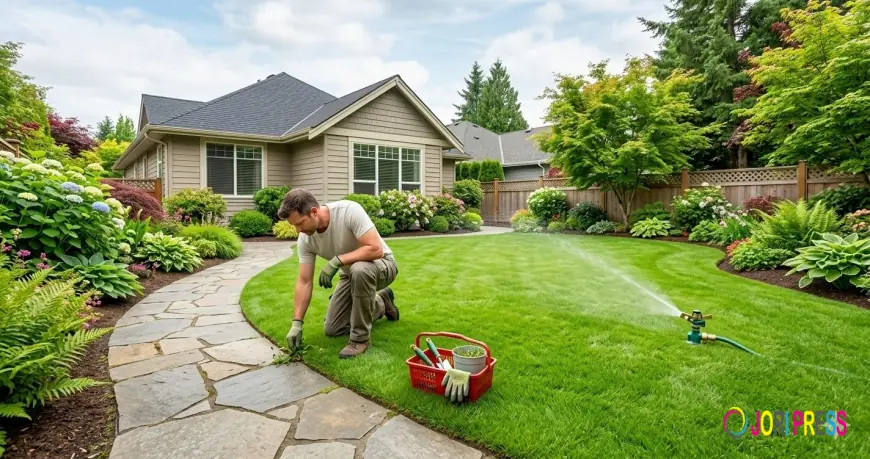
Achieving a vibrant, resilient yard in the Fraser Valley requires more than a standard weekend mower. Between the persistent moss growth driven by Pacific Northwest rain and the sudden intensity of summer heatwaves, homeowners and property managers face a unique set of horticultural challenges. Whether you are managing a sprawling estate in Upper Sumas or a commercial landscape near the City Centre, creating that deep-green "golf course" aesthetic requires a strategy tailored to our specific British Columbia climate.
Professional lawn care abbotsford involves a forensic understanding of soil acidity, local drainage patterns, and the specific grass species that thrive in the shadows of Mt. Baker. This guide breaks down the advanced approach to turf management, ensuring your property remains a high-value asset rather than a seasonal chore.
Understanding the Fraser Valley Soil Profile
The foundation of a premium lawn exists entirely beneath the surface. In Abbotsford and the surrounding Surrey area, soil frequently leans toward the acidic side due to high annual rainfall leaching minerals. When soil pH drops too low, grass plants struggle to uptake essential nutrients, regardless of how much fertilizer you apply.
Soil Testing and pH Balancing
Luxury property owners often overlook the chemistry of their ground. If your turf feels spongy or looks thin despite regular watering, you likely have a pH imbalance. Applying calcitic lime in the early spring or late fall helps neutralize acidity, creating an environment where Kentucky Bluegrass and Perennial Ryegrass can actually compete with native moss.
Compaction and Aeration Strategies
Heavy clay deposits common in the Fraser Valley lead to severe soil compaction over time. This physical barrier prevents oxygen, water, and nutrients from reaching the root zone.
-
Core Aeration: This is a non-negotiable requirement for high-traffic enterprise properties. By removing small plugs of soil, you allow the ground to "breathe."
-
Timing: The ideal window for this in BC is during the peak growth phases of April or September.
-
Top-Dressing: Following aeration with a thin layer of organic compost or a sand-mix helps improve soil structure for the long term.
Grass Varieties That Thrive in British Columbia
Choosing the right seed is the difference between a lawn that stays green year-round and one that turns brown at the first sign of frost or drought stress.
Cool-Season Turf Selection
Most successful lawns in our region utilize a blend of cool-season grasses. These varieties are genetically predisposed to handle our damp winters and moderate summers.
-
Perennial Ryegrass: Known for its rapid germination and the iconic "striped" look when mown professionally.
-
Tall Fescue: This is the "utility player" for Abbotsford homes. It possesses deep roots that provide excellent drought resistance during the dry July and August months.
-
Fine Fescue: The primary choice for shaded properties under heavy tree canopies.
The Problem with Monocultures
High-end estates often make the mistake of planting a single grass type. A diverse blend is significantly more resilient against local pests like the European Chafer Beetle. A mixed lawn can better withstand the localized stressors of the Surrey climate, ensuring that if one species struggles, the others fill the gaps and maintain a uniform appearance.
Advanced Irrigation and Water Management
Watering in the Fraser Valley is a delicate balance. We deal with torrential rains for eight months and strict water restrictions for the other four.
Deep Watering vs. Frequent Misting
Many homeowners make the mistake of watering for ten minutes every night. This encourages shallow root systems that wither the moment a heatwave hits. Instead, aim for one inch of water per week, delivered in one or two deep sessions. This forces roots to grow deeper into the soil in search of moisture, making the turf much more durable.
Smart Systems for Enterprise Properties
For commercial sites and luxury estates, manual watering is rarely efficient or accurate. Investing in smart irrigation controllers that adjust based on real-time local weather data can reduce water waste by up to 30%. These systems ensure you stay compliant with local municipal water bylaws while keeping the landscape lush and vibrant.
Precision Cutting and Edging Techniques
The visual difference between a "mowed" lawn and a professionally manicured landscape lies in the precision of the finish.
The One-Third Rule
Never remove more than one-third of the grass blade in a single cutting. If the grass has grown long, take it down in stages over several days. Scalping the lawn stresses the plant, making it vulnerable to disease and weed invasion. For most Abbotsford properties, maintaining a height of 2.5 to 3 inches is ideal for both aesthetics and plant health.
Professional Finishing Touches
Clean lines along walkways, driveways, and garden beds define the architecture of your landscape. Utilizing expert lawn trimming services ensures that the edges are crisp and the grass doesn't encroach on your hardscaping or garden beds. This level of detail is particularly vital for commercial storefronts and enterprise headquarters where first impressions are everything.
Seasonal Nutrient Programs and Pest Control
Fertilization isn't just about making the grass green; it’s about building a robust immune system for the plant.
The Seasonal Fertilizer Calendar
-
Early Spring: A nitrogen-rich boost to wake the lawn up from winter dormancy.
-
Late Spring: A balanced slow-release formula to prep for summer heat.
-
Fall: A high-potassium "winterizer" to strengthen roots against frost and snow mold.
Managing the European Chafer Beetle
This invasive pest has devastated many lawns across British Columbia. The larvae feast on grass roots, and the secondary damage from crows and skunks digging for the grubs can ruin a lawn overnight. To prevent lawn pest damage effectively, consider preventative biological treatments like nematodes in July, coupled with maintaining a thick, healthy lawn that naturally discourages beetle egg-laying.
DIY vs. Professional Management: A Comparison
Many property owners debate whether to handle their own maintenance or hire a dedicated crew.
|
Feature |
DIY Maintenance |
Professional Service |
|
Equipment Cost |
High (Mowers, blowers, spreaders) |
Included in service fee |
|
Expertise |
Trial and error |
Agronomic specialists |
|
Time Commitment |
2–5 hours per week |
Zero hours |
|
Consistency |
Weather and schedule dependent |
Guaranteed weekly schedule |
|
Results |
Variable |
High-end, uniform aesthetic |
For luxury property owners, the value of time usually outweighs the cost of a professional team. Furthermore, pros have access to commercial-grade fertilizers and equipment that produce a superior finish compared to standard consumer-grade tools.
What is the best grass for shade in Abbotsford?
Fine Fescues are the most shade-tolerant varieties for our region. They require less sunlight and can handle the damp, cool conditions found under large cedar or maple trees common in BC.
How do I get rid of moss in my lawn?
Moss thrives in acidic, compacted, and shady soil. To fix it, you must improve drainage through aeration, raise the soil pH with lime, and use a ferrous sulfate-based moss killer. Simply raking it out without fixing the underlying soil issues will only result in the moss returning.
When should I start my spring lawn care?
Usually, once the soil temperature consistently hits $10^\circ\text{C}$ (around late March or early April in the Fraser Valley). This is the time to rake away winter debris and apply your first round of nutrients to stimulate growth.
Is power raking necessary every year?
Not necessarily. Power raking is used to remove excessive thatch (the layer of dead organic matter between the grass and soil). A half-inch of thatch is actually healthy; only when it exceeds an inch should you consider a heavy power rake or dethatching session.
How do I stop weeds without using harsh chemicals?
The best weed defense is a thick lawn. By over-seeding in the spring and fall and maintaining a higher mowing height, you shade out weed seeds and prevent them from germinating. Healthy turf leaves no room for invaders.
Long-Term Value for Luxury and Enterprise Assets
A well-maintained landscape is a functional investment. For enterprise properties, it signals professionalism and attention to detail. For luxury homeowners, it provides a private sanctuary and significantly boosts curb appeal. In the competitive Abbotsford real estate market, a pristine lawn is often the first thing a visitor or potential buyer notices.
By focusing on soil health, proper species selection, and precision maintenance, you can overcome the challenges of the Pacific Northwest climate. Consistency is the secret. A lawn doesn't become "perfect" in a week; it is the result of a disciplined, year-round approach to horticultural excellence.
If you are ready to elevate your property's exterior, the team at Harry’s Lawn Care provides the specialized expertise required for the unique Surrey and Abbotsford landscape. From precision mowing to comprehensive turf health programs, we ensure your outdoor space remains a masterpiece.
What's Your Reaction?
 Like
0
Like
0
 Dislike
0
Dislike
0
 Love
0
Love
0
 Funny
0
Funny
0
 Angry
0
Angry
0
 Sad
0
Sad
0
 Wow
0
Wow
0