










































Deformed Bar Steel: Understanding Its Uses, Benefits, and Applications

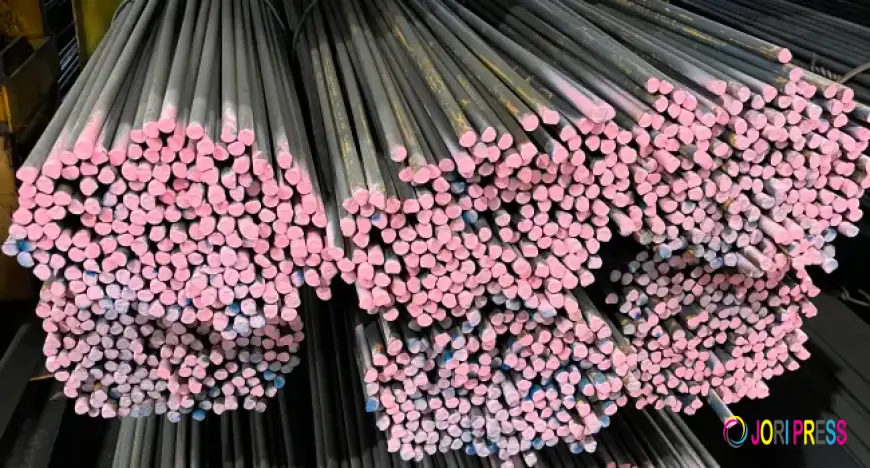
Steel reinforcement plays an important role in modern construction, particularly in concrete structures that need additional tensile strength. Among the commonly used reinforcement products, deformed bar steel is widely used in residential, commercial, industrial, and infrastructure projects. Its raised surface pattern helps create a mechanical connection with surrounding concrete, allowing the steel and concrete to work together as a reinforced structural system. Understanding its characteristics, applications, grades, and handling requirements can help construction professionals select suitable reinforcement materials.
What Is Deformed Bar Steel?
Deformed bar steel is a type of reinforcing steel bar manufactured with raised ribs or patterns along its surface. These deformations are designed to improve the bond between the steel bar and concrete. Unlike plain round bars, deformed bars provide greater mechanical interlocking within the concrete.
The bars are manufactured in different diameters and grades to suit various structural requirements. Selection generally depends on engineering specifications, design loads, structural application, and applicable construction standards.
Why Surface Deformations Matter
The raised ribs on a deformed bar are an important feature of its design. When concrete surrounds the reinforcement, the ribs create mechanical interlock between the steel and the concrete. This helps transfer forces between the two materials.
Concrete performs well under compression but has comparatively limited tensile strength. Reinforcing steel helps address this limitation by providing tensile capacity within reinforced concrete elements. The interaction between concrete and reinforcement is therefore an important part of structural design.
Common Applications of Deformed Bars
Deformed bar steel is used in many types of reinforced concrete construction. Common applications include foundations, footings, slabs, beams, columns, retaining walls, bridges, tunnels, and other structural components.
In residential construction, reinforcement may be incorporated into house slabs, footings, driveways, retaining structures, and other concrete elements. Larger commercial and infrastructure projects can require significant quantities of reinforcing bars according to detailed engineering designs.
Different Sizes and Grades
Deformed bars are available in different diameters and material grades. The required size and grade should be determined according to the structural drawings and engineering specifications rather than selected solely based on general application.
A larger diameter does not automatically mean that a particular bar is suitable for every project. Engineers consider factors such as structural loads, spacing, concrete strength, environmental conditions, and design requirements when specifying reinforcement.
Benefits of Deformed Bar Steel
One of the primary advantages of deformed reinforcement is its ability to bond effectively with concrete. The ribbed surface helps improve mechanical interlocking compared with a smooth bar.
Steel reinforcement also provides high strength relative to its size and can be incorporated into many different concrete structures. Its predictable mechanical properties make it suitable for engineered applications where reinforcement requirements are calculated in advance.
Properly specified and installed reinforcement can contribute to the strength, stability, and service performance of reinforced concrete structures.
Deformed Bars in Reinforced Concrete
Concrete and reinforcing steel are commonly used together because their properties complement one another. Concrete provides compressive strength and protects embedded reinforcement, while steel contributes tensile strength.
During construction, reinforcement is positioned according to engineering drawings before concrete is poured. Correct placement, spacing, lap lengths, cover, and support are important because changes to reinforcement arrangements can affect the designed structural performance.
Handling and Storage
Proper handling and storage are important for maintaining reinforcement materials before installation. Steel bars should be stored in a way that keeps them organised and accessible while reducing unnecessary contamination or damage.
Bars should be identified according to their size, grade, and intended use. Keeping reinforcement separated by specification can help reduce the risk of using the wrong material during construction.
Any significant surface contamination, damage, or other issue should be assessed before the material is incorporated into a structural element.
Cutting and Bending
Deformed bars may need to be cut and bent to match the reinforcement details shown in engineering drawings. These operations should be carried out using appropriate equipment and procedures.
The dimensions, bending radii, hooks, laps, and other details should follow the relevant project specifications. Improvised changes to reinforcement can affect the intended design, so modifications should be discussed with the responsible engineer where necessary.
Quality and Compliance
Quality assurance is an important consideration when purchasing deformed bar steel. Construction projects may specify particular standards, grades, dimensions, and certification requirements.
When ordering reinforcement, buyers should confirm that the supplied products meet the specifications stated in the project documentation. Material certificates and other quality documentation may be required for certain applications.
Using appropriately certified materials can help project teams verify that reinforcement complies with the relevant requirements.
Choosing a Deformed Bar Steel Supplier
When sourcing reinforcing steel, construction businesses can consider product availability, grade and size selection, quality documentation, processing capabilities, and delivery services. Reliable supply can be particularly important when reinforcement is required according to a fixed construction schedule.
It is also useful to provide suppliers with accurate bar sizes, quantities, lengths, bending requirements, and delivery details. Clear information can reduce ordering errors and help materials arrive ready for the intended construction stage.
Conclusion
Deformed bar steel is an important reinforcement material used across a wide range of concrete construction projects. Its ribbed surface helps create a strong mechanical bond with concrete, allowing both materials to contribute to the performance of reinforced structures. From residential slabs and foundations to major infrastructure projects, deformed bars are selected according to engineering requirements, material specifications, and applicable standards. Careful sourcing, storage, handling, and installation are essential for ensuring that reinforcement is used correctly within a construction project.
What's Your Reaction?
 Like
0
Like
0
 Dislike
0
Dislike
0
 Love
0
Love
0
 Funny
0
Funny
0
 Angry
0
Angry
0
 Sad
0
Sad
0
 Wow
0
Wow
0