







































Yoga Beyond Asanas: What Does Yoga Really Include?
Discover yoga beyond physical postures through pranayama, meditation, philosophy, mantra, the eight limbs of yoga, and mindful living.

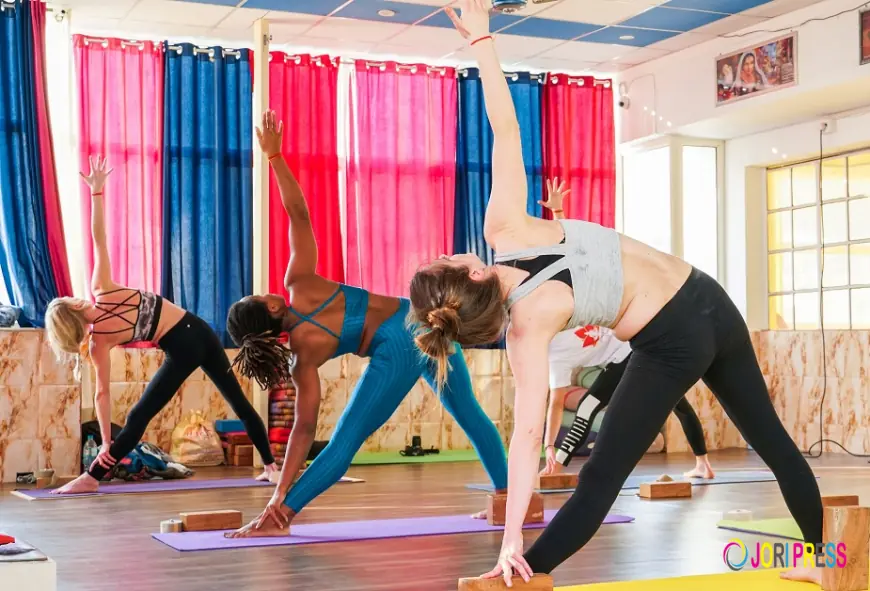
For many people, the first introduction to yoga happens through physical postures. We learn Downward-Facing Dog, Warrior poses, forward bends, twists, and perhaps a few balancing postures.
There is nothing wrong with beginning this way. Asana can make the body stronger, improve mobility, and help us become more aware of how we move.
But yoga was never meant to be limited only to physical exercise.
The more you study it, the more you begin to realise that asana is only one part of a much wider practice involving the body, breath, mind, behaviour, concentration, and self-awareness.
So, if yoga is more than postures, what does it actually include?
Asana Is One Part of Yoga
The Sanskrit word "asana" refers to posture or seat.
Today, the word yoga is often used almost interchangeably with physical yoga practice. Someone may say, "I did yoga this morning," when they mean they practised a series of postures.
Traditional yoga takes a broader view.
Physical practice prepares the body, develops awareness, and can create the stability needed for other practices such as pranayama and meditation.
This changes the purpose of asana slightly.
Instead of always asking, "How deep can I go into this pose?" we begin asking:
Can I remain aware while practising?
Can I breathe comfortably?
Am I forcing the body?
Can I observe what is happening without constantly comparing myself with somebody else?
The posture then becomes a way of studying ourselves, not simply a shape we are trying to achieve.
Pranayama: Learning to Work With the Breath
Breathing happens naturally, so most of us rarely pay attention to it.
Yoga brings the breath into awareness through pranayama.
Pranayama includes different breathing techniques and practices that traditionally work with prana, or vital energy. At a simpler level, it also teaches us to notice the quality and rhythm of our breathing.
You may notice that when you are stressed, your breathing becomes quicker or shallower.
When you feel relaxed, it tends to slow down.
During physical yoga practice, the breath can also tell you a lot. If you suddenly cannot breathe comfortably in a posture, perhaps you are pushing further than necessary.
Pranayama therefore becomes more than learning a collection of breathing exercises. It develops sensitivity toward something that is happening within us all day.
Meditation and Learning to Observe the Mind
Sitting quietly sounds simple until you actually try it.
Within a few moments, the mind may start thinking about work, food, messages, conversations, plans, or something that happened five years ago.
Meditation does not necessarily mean making all of those thoughts disappear.
A large part of the practice is learning to notice them without automatically following every thought.
You sit.
You observe the breath or another point of concentration.
The mind moves away.
You notice.
You return.
Again and again.
Over time, this can teach us something about our mental habits.
We begin to recognise how quickly the mind reacts, worries, compares, remembers, and creates stories.
That awareness is an important part of yoga.
Yoga Philosophy Gives Context to the Practice
If we practise only asanas, many traditional teachings of yoga can remain invisible.
Yoga philosophy explores questions such as:
Why does the mind become disturbed?
What creates suffering?
What is attachment?
How should we relate to other people?
What is discipline?
What does it mean to know ourselves?
Traditional texts such as the Yoga Sutras of Patanjali and the Bhagavad Gita discuss yoga as a way of understanding the mind and our relationship with life.
Some concepts may feel easy to understand, while others may take years of reflection.
That is perfectly fine.
Yoga philosophy is not simply something to memorise for an examination. Its value comes when we begin noticing how these ideas appear in our own behaviour.
The Eight Limbs of Yoga
One of the clearest examples of yoga extending beyond physical practice can be found in Patanjali's eight limbs of yoga.
These are commonly described as:
- Yama – ethical principles in our relationship with others
- Niyama – personal disciplines and observances
- Asana – physical posture
- Pranayama – regulation and awareness of breath or prana
- Pratyahara – turning the senses inward
- Dharana – concentration
- Dhyana – meditation
- Samadhi – deep absorption
Notice that asana is only one of the eight.
This does not make physical yoga unimportant. It simply places it within a larger system.
Someone may have an impressive physical practice but still struggle with patience, honesty, attachment, or concentration.
Yoga encourages us to look at all of these areas.
Yama and Niyama: Yoga in Everyday Behaviour
The yamas and niyamas are especially interesting because they show how yoga can continue after we roll up the mat.
The yamas include principles such as non-violence, truthfulness, non-stealing, moderation, and non-possessiveness.
The niyamas include cleanliness, contentment, discipline, self-study, and surrender or dedication to something greater than ourselves.
These ideas can sound philosophical until we bring them into ordinary life.
How do we speak when we are angry?
Are we constantly comparing ourselves with others?
Can we be content while still working toward improvement?
Do we practise only when we feel motivated?
How aware are we of our habits?
These are also yoga questions.
Mantra and Sound
Mantra is another traditional part of yoga that many students first encounter when they begin studying beyond regular asana classes.
A mantra may be repeated aloud or mentally as a form of concentration.
The purpose is not simply to sing Sanskrit words because they sound spiritual.
Traditional mantra practice uses sound, repetition, attention, and meaning to focus the mind.
Some students connect strongly with mantra, while others may need time to understand it.
Like many areas of yoga, it becomes more meaningful when it is practised with some understanding rather than simply copied.
Kriya and Cleansing Practices
Traditional Hatha Yoga also includes cleansing practices known as shatkriyas or shatkarmas.
These may include practices such as neti and other purification techniques.
They should be learned properly rather than copied randomly from videos, especially more advanced techniques.
Their inclusion reminds us again that classical yoga developed as a broader discipline involving preparation of the body and mind, not only physical flexibility.
Anatomy and Body Awareness
Modern yoga education also gives importance to anatomy.
Anatomy may not be one of the ancient limbs of yoga, but it is very useful for contemporary practitioners and teachers.
Understanding how joints move, how muscles work, and why different people experience the same posture differently can make yoga practice more intelligent.
It also challenges the idea that every student must look identical in an asana.
There is rarely one perfect shape suitable for every body.
Students exploring yoga through a 200 Hour Yoga Teacher Training in Rishikesh often spend time studying anatomy and alignment alongside traditional subjects such as pranayama, meditation, and philosophy.
This combination helps connect traditional practice with practical knowledge needed for modern teaching.
Teaching Is Also a Practice
For someone training to become a yoga teacher, learning to guide other people becomes another important part of the journey.
Teaching requires more than demonstrating difficult poses.
You need to observe students.
You need to explain movement clearly.
You have to understand when someone may need a modification.
You need to manage time, breathing cues, sequencing, and the energy of the class.
Most importantly, teaching requires humility.
You will not know everything.
There will always be another book to read, another teacher to learn from, and another student whose body teaches you something new.
Good teachers remain students.
Yoga Happens Off the Mat Too
Perhaps the most important part of yoga beyond asanas is what happens when practice enters daily life.
Can you notice your breath during a stressful situation?
Can you pause before reacting during an argument?
Can you remain consistent with something even when motivation disappears?
Can you recognise when your ego is pushing you to prove something?
Can you rest without feeling guilty?
These moments may never appear in a yoga photograph, but they are part of practice.
Someone may perform a beautiful handstand and still have much to learn about patience.
Another person may never perform a handstand but may have developed remarkable awareness, discipline, and compassion through years of practice.
Yoga cannot be measured only by physical ability.
Why Exploring Yoga Beyond Asana Matters
Asana is often the doorway.
It brings many people into yoga, and physical practice can continue to be an important part of the journey for years.
But there is much more behind that doorway.
Breath gives us another way to understand ourselves.
Meditation teaches us to observe the mind.
Philosophy helps us question our habits and reactions.
Ethical principles influence how we relate to other people.
Teaching develops responsibility and communication.
Self-study encourages us to keep looking inward.
When these different parts begin working together, yoga becomes less like an activity we do for one hour and more like a practice that influences the way we live.
You do not need to explore everything at once.
Start with asana if that is where you are.
Then become curious about the breath.
Sit quietly for a few minutes.
Read a little philosophy.
Observe your reactions.
Ask questions.
The deeper side of yoga does not necessarily begin with an advanced technique.
Sometimes it begins with simply realising that yoga has always been much bigger than the poses.
What's Your Reaction?
 Like
0
Like
0
 Dislike
0
Dislike
0
 Love
0
Love
0
 Funny
0
Funny
0
 Angry
0
Angry
0
 Sad
0
Sad
0
 Wow
0
Wow
0