







































Why Material Selection Is Important in Hand Tool Manufacturing
Explore how material selection impacts hand tool manufacturing, ensuring better strength, reliability, safety, and longer service life.
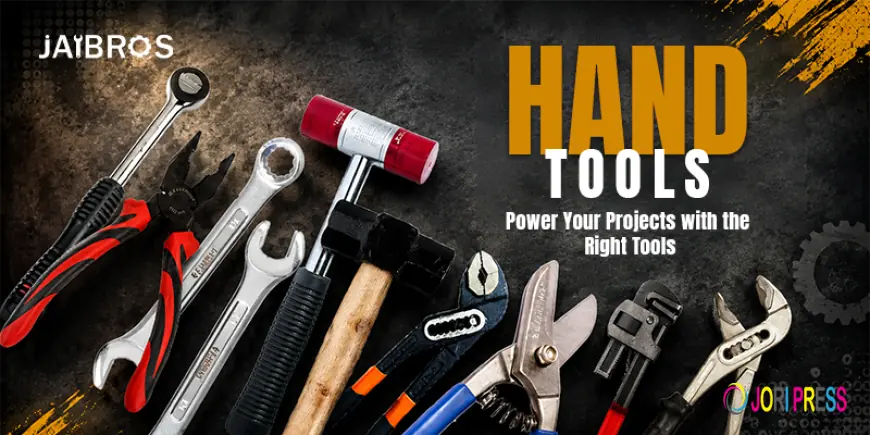
The functionality of a tool starts with the choice of the material used for its production. Prior to being offered for use in workshops, construction, and at home, manufacturers select materials that will be able to provide the desired level of strength, reliability, and durability. The quality of Hand Tools is defined not only by the design features but also by the metal, coatings, and handles used for the creation of the tool. It is because of the correct selection of material that a tool can withstand wear, the impact of forces, and work efficiently for a long time maintaining all its properties.
Nowadays, it is possible to find various hand tools using online services, which makes it easy to compare the quality of different products and make a decision on what to buy. Nevertheless, knowledge about the reasons for selecting a proper material will help users make a choice not by price, but by considering additional advantages that will allow getting a better product. It will provide more safety, efficiency, and durability of the tool. This article is devoted to the question of why it is so important to consider the material used.
Why Material Selection Is the Foundation of Quality
Materials Selection is among the first and most crucial considerations made in the production of goods. Different tools have different purposes and hence need varying mechanical characteristics. For instance, a hammer needs to withstand shock, while a wrench needs to resist torque. Failure to consider the right materials may lead to the failure of even the best designed tool during normal use.
The characteristics considered in choosing materials include durability, tensile strength, corrosion resistance, flexibility, and weight among others. The intention is to develop reliable tools that will continue serving their owners for many years in safety and effectiveness. Proper materials selection saves the owner costs of maintenance and repair.
Key Points
-
Improves overall strength
-
Increases product durability
-
Enhances user safety
-
Reduces maintenance
-
Extends service life
Common Materials Used in Hand Tool Manufacturing
Different types of materials used are selected depending on the application of the tool. Carbon steel is the material most commonly used owing to its high strength and durability coupled with its relatively low cost. This material is mainly used for manufacturing hammers, pliers, chisels, and spanners. Chrome vanadium steel is another material commonly used due to its high toughness and corrosion resistance.
Another material commonly preferred when manufacturing tools exposed to moisture and corrosive environment is stainless steel since this metal is not susceptible to rust. Another material commonly used in case of tough applications requiring fatigue resistance is alloy steel. In order to get the best combination of hardness and flexibility, the manufactures apply special heat treatment to the material.
Key Points
-
Carbon steel offers excellent strength.
-
Chrome vanadium improves toughness.
-
Stainless steel resists corrosion.
-
Alloy steel handles demanding applications.
-
Heat treatment enhances performance.
Why Strength, Hardness and Toughness Matter
Despite being used together, these terms have distinct material properties. Strength is about the capability of the material to endure heavy load without failing. Hardness is about the capacity of the material to resist scratches, abrasions, and other forms of surface damages. Toughness relates to the capacity of the material to absorb shocks without breaking.
The perfect manufacturing material should combine all three. A tool which is very hard but lacks toughness may break when subjected to shock, while a soft tool would wear out fast. This is why heat treatment is strictly controlled by manufacturers.
Key Points
-
Prevents cracking
-
Reduces wear
-
Improves impact resistance
-
Maintains dimensional accuracy
-
Increases tool reliability
Corrosion Resistance and User Comfort
A quality tool should continue performing well even after years of use. Exposure to moisture, chemicals, and changing weather conditions can lead to corrosion, reducing both appearance and performance. To prevent this, manufacturers apply protective finishes such as chrome plating, nickel coating, black oxide treatment, or powder coating.
Apart from the metal itself, handle materials also contribute significantly to tool performance. Modern handles are manufactured using rubber, fiberglass, reinforced nylon, and composite materials to improve grip, reduce vibration, and minimise hand fatigue. Buyers looking for a durable hand tool kit should always consider handle quality along with the metal construction.
Key Points
-
Better rust protection
-
Improved grip
-
Reduced vibration
-
Enhanced comfort
-
Longer product life
Choosing the Right Material for Different Applications
Every working environment demands different tool characteristics. Construction professionals require tools capable of handling continuous impact and heavy loads, while automotive technicians need tools that can withstand high torque without slipping. Electricians often use insulated tools for added safety, and woodworking professionals depend on materials that maintain sharp cutting edges for precision work.
Similarly, industrial hand tools are manufactured using high-performance materials because they are expected to perform continuously under demanding production environments. For homeowners, selecting durable materials is equally important since reliable tools reduce repair costs and last much longer.
People assembling their first hand tool kit should focus on material quality instead of purchasing the cheapest available option. A good-quality tool may have a slightly higher initial cost but usually offers much better long-term value.
Key Points
-
Match material to application.
-
Consider working conditions.
-
Check steel quality.
-
Look for protective coatings.
-
Compare durability before purchasing.
How Material Selection Helps Buyers Make Better Decisions
Understanding manufacturing materials allows buyers to judge quality beyond appearance. Many customers searching for hand tool online compare prices, but technical specifications often reveal far more about product reliability. Steel grade, heat treatment, surface coating, manufacturing standards, and warranty should all be considered before making a purchase.
A reliable hand tools guide usually recommends evaluating these technical factors instead of selecting products solely based on cost. This approach helps users invest in tools that perform consistently and remain dependable for years. For home maintenance projects, quality DIY hand tools provide better comfort and accuracy, while larger construction or fabrication jobs may require a Power tool for increased speed and efficiency. Even then, skilled professionals continue to rely on manual tools for precise finishing work because every Power tool has situations where manual control delivers better results.
Key Points
-
Compare specifications carefully.
-
Focus on long-term value.
-
Check warranty coverage.
-
Prioritise manufacturing quality.
-
Buy tools suited to your work.
Conclusion
The choice of material is fundamental to the manufacturing process of hand tools as it determines their effectiveness and safety. It is important to use quality steel, the correct heat treatments and ergonomic handle materials in order for the tools to be effective in different work settings. It does not matter whether the tool is for professional use or home maintenance; quality material will always improve performance and increase the lifetime of the tools. This information is helpful to customers who can then make wise decisions by purchasing durable tools from quality manufacturers. One of such manufacturers is jaibros.
FAQs
1. Why is material selection important in hand tool manufacturing?
It determines the tool's strength, durability, corrosion resistance, safety, and overall performance.
2. Which material is commonly used for manufacturing hand tools?
Carbon steel, chrome vanadium steel, stainless steel, and alloy steel are the most commonly used materials.
3. Does heat treatment improve tool quality?
Yes. Heat treatment increases hardness, toughness, and wear resistance, helping tools perform better for a longer period.
4. Why should buyers check handle materials?
Good handle materials improve grip, reduce hand fatigue, increase comfort, and provide better control during work.
5. How can I choose a high-quality hand tool?
Check the steel grade, protective coating, manufacturing quality, warranty, and intended application before making your purchase.
What's Your Reaction?
 Like
0
Like
0
 Dislike
0
Dislike
0
 Love
0
Love
0
 Funny
0
Funny
0
 Angry
0
Angry
0
 Sad
0
Sad
0
 Wow
0
Wow
0