


































Project-Based Learning That Fits a Real Bell Schedule
Project-Based Learning That Fits a Real Bell Schedule

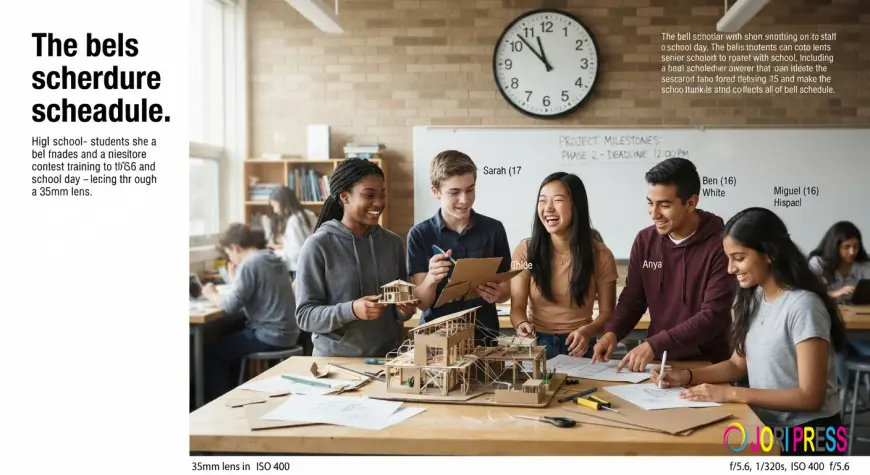
Quick answer: Project-based learning (PBL) is an approach where students learn content by working on an extended question or problem and produce a public product. It fits a normal secondary schedule when projects run about two weeks, start from the standards, keep short direct-instruction lessons, use frequent checkpoints, and grade individuals as well as groups.
Project-based learning has a reputation problem. Teachers picture month-long projects, missed standards, and a gradebook full of group grades nobody can defend. That version exists. It isn't the only one.
PBL done well is structured, standards-driven, and short enough to fit a normal semester.
What is project-based learning?
In project-based learning, students learn content by working on a challenging question or problem over an extended period and produce something public at the end. It isn't the poster you assign after the test. PBLWorks' "Gold Standard PBL" model lists the core design elements: a challenging problem or question, sustained inquiry, authenticity, student voice and choice, reflection, critique and revision, and a public product.
Does project-based learning work?
The evidence is growing. A 2021 randomized study by Nell Duke and colleagues in the American Educational Research Journal found that second graders in high-poverty schools who learned social studies through project-based units made larger gains in social studies and informational reading than a comparison group. Research on older students is more mixed, which is a reason to build projects carefully rather than skip them.
What are five rules for projects that fit a real schedule?
- Two weeks, not two months. Start short. Extend once you trust the routine.
- Standards first. Write the driving question from the standard, not the other way around.
- Direct instruction still happens. Short, targeted lessons when students need the content. Less lecture, not zero lecture.
- Checkpoints every two or three days. Catch the group that's drifting before the deadline.
- Grade individuals, not just groups. Pair a group product with individual evidence of learning.
What does a two-week PBL unit look like?
- Days 1–2: Launch the driving question and plan in teams.
- Days 3–7: Short lessons plus research and building time, with a checkpoint every two days.
- Days 8–9: Peer critique and revision.
- Day 10: Present to an audience beyond the teacher, then reflect.
Where should a teacher start?
Pick a unit you already teach and rewrite it around one question students would want to answer. Keep the same standards and the same test. Change how students get there. For a fuller walkthrough, see this practical project-based learning guide for grades 6–12.
Frequently asked questions
What is the difference between project-based learning and doing projects?
In PBL, the project is how students learn the content. A traditional project usually comes after the content is taught.
Can project-based learning work in high school?
Yes, especially when projects are short, standards-driven, and graded with clear rubrics.
How do you grade project-based learning fairly?
Combine a rubric for the group product with individual checks, such as reflections, quizzes, or presentations.
Sources
- PBLWorks. Gold Standard PBL: Essential project design elements.
- Duke, N. K., Halvorsen, A.-L., Strachan, S. L., Kim, J., & Konstantopoulos, S. (2021). Putting PjBL to the test: The impact of project-based learning on second graders' social studies and literacy learning and motivation in low-SES school settings. American Educational Research Journal, 58(1), 160–200.
- Clay Shumate, M.Ed., is a Class A certified secondary social studies teacher (grades 6–12) and the founder of Elevate the Norm.
What's Your Reaction?
 Like
0
 Dislike
0
 Love
0
 Funny
0
 Angry
0
 Sad
0
 Wow
0