



































Why Building a Perpetual Futures DEX Requires More Than a Trading Interface?
Explore why Perpetual Futures DEX Development requires more than a trading interface, including liquidity, security, execution, risk, UX, and compliance.

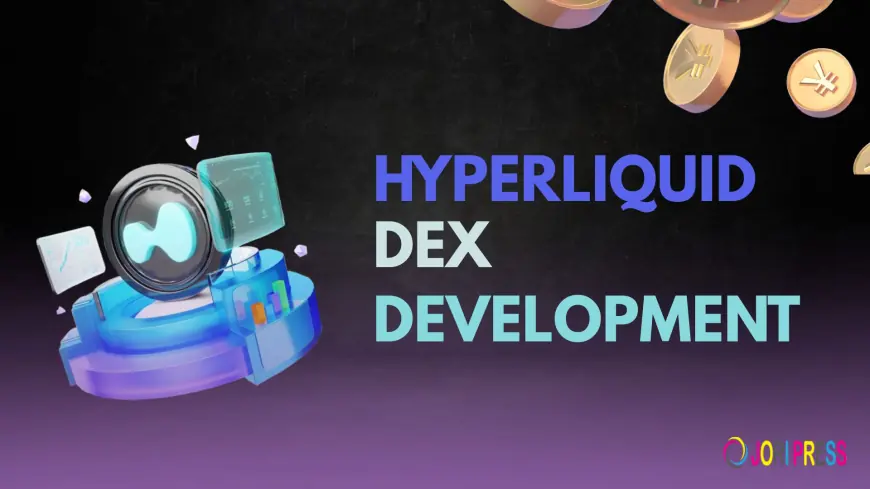
Every perpetual futures DEX looks the same at first glance: a clean dashboard, a few charts, a buy and sell button. WeAlwin, a blockchain and Web3 development firm, says that surface is deceptive. What actually separates a platform that survives its first real trading day from one that does not has almost nothing to do with the interface. Perpetual Futures DEX Development is an infrastructure problem wearing a UI as a costume and founders who treat it as a design project tend to find that out the hard way.
The Trading Screen Is the Easy Part
Behind every order a trader places, a chain of systems has to fire correctly and fast: order processing, trade execution, margin calculations, funding, liquidations. None of it is visible until it fails. The uncomfortable question every founder eventually has to sit with is: the interface looks finished, so what happens when actual volume shows up?
Why Liquidity Has to Be Engineered, Not Assumed
A beautifully designed DEX with no one trading on it is just a very polished ghost town. Liquidity has to be built in market makers, incentive structures, spread management, slippage control and that planning needs to start during development, not get bolted on after launch when the absence of volume is already a problem.
The Matching Engine Is Doing the Hardest Job on the Platform
Underneath the order book sits the matching engine, quietly sorting market, limit, and stop orders, updating the book in real time, and making "instant" actually feel instant. This is the layer that decides whether a platform can hold up under serious derivatives trading volume, and it's where exchange operators and DeFi founders should be asking their most pointed questions.
Security Is Not Just a Wallet Pop-Up
It's easy to think of security as "did we lock the front door." But the front end is rarely where the real damage happens. Smart contract logic, oracle integrity, liquidation mechanics, access controls, a flaw buried in the trading logic itself can be far more expensive than any front-end exploit, and far harder to catch without a real audit process built in from day one.
Accurate Pricing Infrastructure Protects Every Open Position
Perpetual contracts live and die by their pricing data. Oracle feeds, index prices, mark prices get any of it wrong or leave it exposed to manipulation, and positions get liquidated for reasons that have nothing to do with the market. The growing interest in Hyperliquid DEX Development is really interest in this exact problem solved well: high-performance derivatives infrastructure that treats pricing as a first-class engineering challenge, not an afterthought.
Margin, Liquidations, and the Risk Layer That Holds Everything Together
Layered on top is the leverage machinery margin, collateral, funding rates, liquidation thresholds, insurance funds, the part of the platform that decides how gracefully things fail when markets move fast. A gorgeous interface sitting on a shaky risk engine is still a shaky risk engine.
Complexity Should Stay Backstage
None of this needs to reach the trader. Good onboarding, clear P&L, visible liquidation prices, funding rates that make sense at a glance that's the entire job of the front end. The infrastructure can be as complicated as it needs to be, as long as the person using it never has to think about it.
Regulatory Planning for U.S.-Focused Businesses
For businesses targeting U.S. users, the legal groundwork deserves the same early attention as the technical stack: jurisdiction, customer eligibility, KYC/AML, risk disclosures. None of it is one-size-fits-all, and none of it substitutes for qualified legal counsel before launch.
What Hyperliquid-Style Architecture Actually Teaches Founders
Hyperliquid gets cited constantly in these conversations, and for good reason but the lesson isn't "build this." It's "notice what happens when execution, liquidity, UX, and risk infrastructure are all pulling in the same direction." Every business still needs its own architecture, shaped by its own market, model, and compliance reality. Interest in Hyperliquid DEX Development continues to grow among founders looking for a proven performance benchmark rather than a template to copy.
Why Founders Need a Specialized Development Partner
Not "can someone build the interface" almost anyone can. The real question is whether the complete trading infrastructure can support the business model once real users and real money show up. That's the work of a genuine Decentralized Exchange Development Company: architecture, smart contracts, matching systems, oracle integration, risk infrastructure, security testing, and everything that keeps running long after launch day.
CEO, WeAlwin Technologies:
"A perpetual DEX is not simply a trading screen connected to a blockchain. The real engineering challenge is building the infrastructure underneath it where execution, liquidity, pricing, risk, security, and user experience have to work together."
H2: The Interface Is Just the Beginning
What traders see is the dashboard. What determines whether the platform actually works is everything underneath it. Businesses eyeing a Hyperliquid-style build should map that architecture out fully before a single line of front-end code gets written, and Perpetual Futures DEX Development planning should start there.
CTA: Planning a Perpetual Futures DEX? Start With the Infrastructure.
Looking for a Decentralized Exchange Development Company to plan your perpetual trading platform? Talk through your architecture, trading model, and development requirements with our team.
About WeAlwin
WeAlwin is a blockchain and Web3 development company specializing in Perpetual Futures DEX Development, Decentralized Exchange Development, DeFi Development, and Smart Contract Development.
Media Contact
WeAlwin Technologies Pvt Ltd
D 73, Chokkanathar Street, 4th Stop, Thirunagar, Madurai – 625006, Tamil Nadu, India
Email: sales@alwin.io
Phone: +91 9500576642
What's Your Reaction?
 Like
0
Like
0
 Dislike
0
Dislike
0
 Love
0
Love
0
 Funny
0
Funny
0
 Angry
0
Angry
0
 Sad
0
Sad
0
 Wow
0
Wow
0