





































Why a PE Stamp for Solar Plans Speeds Up Project Approvals
Providing custom solar panel design and permit services across the U.S. and India. Fast, compliant, and tailored to your project needs.

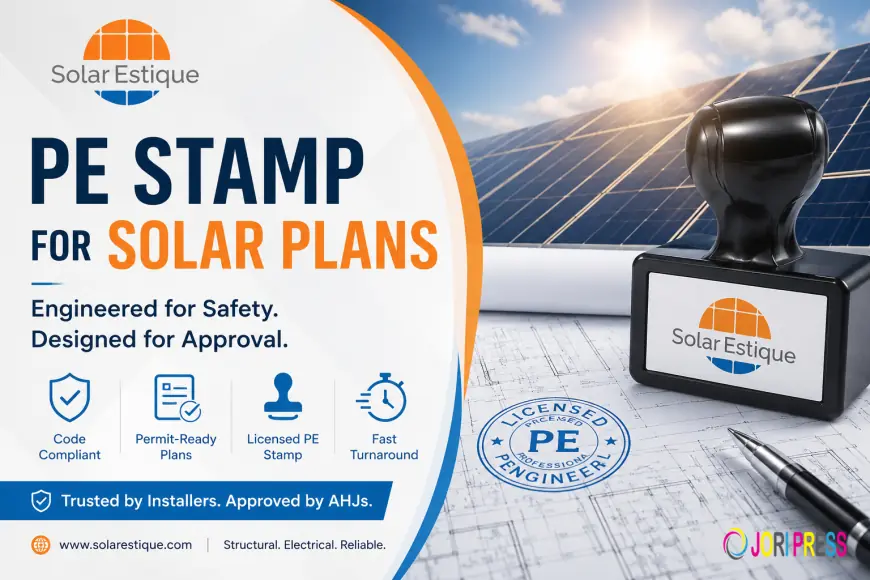
Solar projects move quickly only when every stage of the permitting process is completed accurately. Even a well-designed solar system can face approval delays if the engineering documentation is incomplete or fails to meet local code requirements. One of the most important documents in the permitting process is a PE stamp for solar plans. It confirms that licensed engineers have reviewed the design for structural and electrical compliance, giving Authorities Having Jurisdiction (AHJs) confidence that the project meets applicable safety standards. For installers, EPCs, and design firms, obtaining a professionally reviewed PE stamp is often the difference between a smooth approval process and costly revisions.
Why Is a PE Stamp Required for Solar Projects?
Solar installations involve structural loads, electrical connections, and safety requirements that must comply with national and local regulations. A PE stamp verifies that these engineering aspects have been reviewed by a licensed Professional Engineer before the plans are submitted for permits.
Many jurisdictions require stamped drawings before approving residential, commercial, or utility-scale solar projects. Without proper engineering certification, permit applications may be delayed or rejected, increasing project timelines and overall costs. Solarestique provides licensed structural and electrical PE stamping services with permit-ready documentation for projects across all 50 U.S. states.
Engineering Validation Builds Confidence
A PE stamp is more than a signature on a drawing. It confirms that structural calculations, electrical layouts, and system designs have been evaluated for safety and code compliance. This validation reduces uncertainty during the review process and helps installers submit complete permit packages.
What Does a PE Stamp for Solar Plans Include?
The exact requirements vary depending on the project and jurisdiction, but professional engineering reviews generally cover both structural and electrical aspects of the system.
Structural Engineering Review
Structural engineers verify that the mounting system can safely support the solar array under local environmental conditions. Their review typically includes:
-
Roof load calculations
-
Wind and snow load analysis
-
Mounting system verification
-
Ground mount structural review
-
Permit-ready stamped drawings
These evaluations help ensure long-term system reliability while satisfying local building requirements.
Electrical Engineering Review
Electrical engineers evaluate the system to ensure it complies with the National Electrical Code (NEC) and local utility requirements.
The review commonly includes single-line diagrams, conductor sizing, overcurrent protection, grounding, bonding, and electrical load calculations. Once approved, the plans receive engineering certification that supports permit approval and inspection readiness.
Why Do Permit Delays Happen?
Many permit delays occur because submitted plans are incomplete, contain calculation errors, or do not satisfy local engineering requirements. Every revision requested by an AHJ adds additional time before installation can begin.
Accurate Documentation Reduces Revisions
Working with experienced engineering professionals minimizes unnecessary revisions because calculations and drawings are carefully reviewed before submission. Solarestique follows a structured engineering review process designed to produce permit-ready documents that meet local jurisdiction requirements. Their licensed engineers also provide post-installation certification letters when required for inspections and utility approvals.
How Does Solar Mounting PE Certification Support Safe Installations?
Solar panels place additional weight on rooftops and support structures. Environmental factors such as wind uplift, snow accumulation, and dead loads must also be considered during system design.
Structural Safety Cannot Be Assumed
Every roof has different structural characteristics. A proper Solar mounting PE certification confirms that the selected mounting system can safely support the proposed installation under local design conditions. This certification helps reduce structural risks while giving installers and property owners greater confidence in the finished system.
Why Should Installers Work With Specialized PE Stamping Providers?
Solar permitting involves technical documentation that requires both engineering expertise and knowledge of local approval requirements. Choosing an experienced engineering partner helps simplify this process.
Professional providers understand common AHJ expectations, utility requirements, and evolving building codes. Their experience often reduces unnecessary communication during plan review while helping projects stay on schedule.
Solarestique combines structural engineering, electrical engineering, permit design, and engineering stamping within one workflow. As a result, installers receive coordinated documentation instead of working with multiple independent vendors.
Nationwide Engineering Support
Project developers working across multiple states often face varying permit requirements. Solarestique provides solar PE stamping services nationwide through licensed engineers covering all 50 U.S. states. Their services support residential, commercial, and utility-scale installations with fast turnaround times that are typically completed within 24 to 48 hours for most projects.
Why Full Service Engineering Creates Better Project Outcomes
Many installers prefer working with companies that provide more than engineering certification alone. Design coordination, structural analysis, electrical documentation, shading analysis, and permit preparation all contribute to smoother project execution.
As a trusted Commercial solar PV design firm, Solarestique offers complete engineering support from proposal-ready designs through permit approval. Integrating design expertise with engineering review helps reduce inconsistencies between documentation while improving approval efficiency.
Conclusion
Obtaining a professionally reviewed PE stamp for solar plans helps installers avoid unnecessary permit delays while ensuring structural integrity and electrical compliance. Accurate engineering documentation supports faster approvals, reduces revisions, and keeps projects moving according to schedule. Whether you're managing residential rooftop installations or large commercial developments, partnering with an experienced provider of solar PE stamping services usa ensures your permit packages meet engineering standards and local code requirements from the very first submission.
FAQs
1. What is a PE stamp for solar plans?
A PE stamp is an engineer's certification confirming that the structural and electrical solar design complies with applicable codes and engineering standards required for permit approval.
2. Is a PE stamp required for residential solar projects?
Many jurisdictions require PE-stamped plans for residential installations, especially where structural or electrical reviews are mandatory. Requirements vary by location.
3. What is included in solar PE stamping services?
These services generally include structural calculations, electrical plan review, NEC compliance verification, stamped engineering drawings, and permit-ready documentation.
4. How long does it take to receive a PE stamp?
Solarestique delivers most PE-stamped plans within 24 to 48 hours, depending on project complexity.
5. Why choose Solarestique for solar engineering support?
Solarestique provides licensed structural and electrical engineers, nationwide coverage across all 50 U.S. states, fast turnaround times, permit-ready documentation, and complete solar engineering services from design through approval.
What's Your Reaction?
 Like
0
Like
0
 Dislike
0
Dislike
0
 Love
0
Love
0
 Funny
0
Funny
0
 Angry
0
Angry
0
 Sad
0
Sad
0
 Wow
0
Wow
0