




































White-Label Fiverr Micro Job Marketplace: A Faster Way to Launch
Discover how a white-label Fiverr clone helps founders launch a micro job marketplace quickly, cut development costs, and build a scalable freelance business.

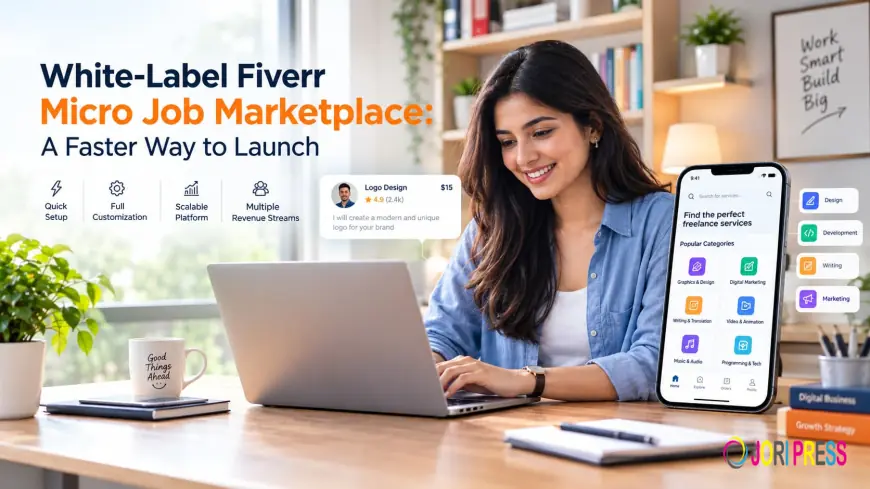
Summary: Building a micro job marketplace from scratch takes months and heavy investment. A white-label Fiverr clone offers founders a proven structure, ready features, and faster market entry. This guide breaks down what the model means, why timing matters, and how to launch smart without sacrificing long-term scalability or ownership.
Freelancing isn't a side hustle anymore. It's how a huge chunk of skilled work actually gets done now, and businesses have gotten used to hiring for a single task instead of a full-time role. That's the demand a Fiverr micro job marketplace taps into.
But here's the thing most founders get wrong when they first look at this space: they assume the hard part is finding demand. It isn't. The hard part is getting a working platform live before someone else does.
Why This Model Keeps Working
Fiverr didn't invent the idea of hiring strangers for small jobs, but it packaged it well enough that the model became a category of its own. Since then, dozens of founders have taken pieces of that playbook and built something narrower, a platform for one country, one industry, one type of skill, and made it work.
The reason this keeps happening isn't luck. A buyer who needs a product description written doesn't want to post a job listing and wait a week for applications. They want to browse, pick someone, and get it done that afternoon. That's the whole appeal, and it hasn't worn off.
If you're building a Fiverr micro job marketplace today, you're not betting on a trend that might fade. You're stepping into a buying habit that's already formed.
What It Actually Costs to Build From Zero
Every founder thinks their custom build will take three months. It almost never does.
Registration and login are the easy part. Then you need seller profiles, gig listings, order tracking, a messaging system that doesn't break, payment processing that handles refunds and disputes, and a review system people actually trust. None of that is exotic, but all of it takes time to get right, and payment integration alone can eat weeks once you factor in compliance checks.
By the time a custom build is stable enough to put in front of real users, six months have usually passed. Sometimes longer. And while that's happening, someone else building on micro job marketplace software that already handles these basics is out there signing up sellers and collecting reviews.
That gap matters more in this business than in most others.
What You're Actually Buying With a White-Label Clone
A white-label Fiverr clone isn't a shortcut that cuts corners. It's a working system, already built and tested, that you configure instead of code from scratch.
The order flow works. The payment gateway is connected. Sellers can create gigs, buyers can browse and checkout, and reviews get attached to completed orders. None of that is something you have to figure out through trial and error after launch, which is usually where custom builds run into trouble.
What you spend your time on instead is the stuff that actually determines whether your business works: what niche you're targeting, how you price your commission, and how you get your first fifty sellers to show up. A good white-label Fiverr clone frees up that time instead of eating it.
Speed Isn't Just Convenient, It's Strategic
Marketplaces run on a loop. Sellers show up because buyers are there, buyers show up because sellers are there. Whoever gets that loop spinning first in a given niche tends to keep it.
This is why launching six weeks earlier can matter more than launching with slightly better features. A platform with 200 active sellers and decent reviews will beat a more polished platform with twelve sellers and no track record, every time.
Getting to market fast also means you find out what's actually working much sooner. Maybe your pricing is off. Maybe buyers want a category you didn't think to include. You'd rather learn that in month two than month eight, and a faster launch is what buys you that runway.
It's More Flexible Than People Assume
There's a misconception that white-label means generic, that you're stuck with someone else's branding wearing your logo. That's not really true anymore, at least not with solutions built properly.
You can usually restructure categories, set your own commission rules, adjust which payment methods show up for your region, and change the language depending on your audience. Fiverr marketplace software built with this kind of flexibility lets you shape the platform around your specific market instead of forcing your market to fit a template.
Say you're targeting freelance voice actors in Southeast Asia. Your category structure, your payment options, even your review criteria probably need to look different than a generalist platform serving the US. Good micro job marketplace software gives you room to make those calls without touching the underlying codebase.
Making Money From It
This part trips people up more than the tech side does. A stable platform doesn't automatically mean a profitable one.
Commission on each transaction is the most common model, usually somewhere between 10 and 20 percent depending on the niche. Some platforms layer in subscription tiers for sellers who want lower fees or better placement in search. Featured listings are another lever, letting sellers pay to show up first for competitive categories. A smaller buyer-side service fee at checkout is common too, separate from what the seller earns.
Most platforms that actually make money aren't relying on just one of these. They're mixing two, maybe three, and adjusting the mix as they learn what their specific users respond to. That kind of testing is a lot easier when your core Fiverr micro job marketplace isn't something you're still debugging.
The Operational Stuff Nobody Warns You About
Getting the platform live is honestly the easy part compared to running it.
Disputes will happen. A buyer thinks the work missed the brief, a seller thinks they delivered exactly what was asked. If you don't have a clear process for handling this before it happens, the first bad dispute becomes a public trust problem instead of a private one.
Seller quality matters more than most founders expect going in. A marketplace full of mediocre sellers loses buyers fast, and buyers don't usually come back to give a platform a second chance. Even basic vetting at signup, checking a portfolio, verifying an identity, reviewing a sample, sets a tone that's hard to establish later.
And payouts need to actually work. Sellers who don't get paid on time stop showing up. Buyers who don't trust their payment is protected until delivery stop buying. This is the trust layer that quietly decides whether a marketplace scales or stalls.
Growing Past the Early Stage
Once transactions are happening consistently, the next question is how far the platform can stretch without needing to be rebuilt. This is where the underlying architecture of your white-label Fiverr clone actually matters, not just at launch, but two years in.
Adding a new category, entering a new country, or opening up enterprise accounts for bigger buyers should be things you can test one at a time, not moves that require rewriting core systems. Founders who try to scale everything simultaneously usually end up managing chaos instead of growth.
The data from your early users is worth paying attention to here. Which categories are actually converting, where buyers abandon checkout, what price points get accepted without pushback, all of that tells you more about where to expand than a competitor analysis would.
So Which Route Makes Sense
If you're working with limited runway and want to be live and testing within weeks rather than months, Fiverr marketplace software built on a white-label foundation is the more sensible starting point for almost every early-stage founder.
Custom development still makes sense in specific cases, mainly if you have real funding behind you and a platform mechanic that genuinely doesn't exist anywhere else yet. For most people entering this space, though, that scenario doesn't apply.
The founders doing well in the micro job marketplace space right now aren't the ones who built the most technically impressive platform. They're the ones who launched, watched what actually happened, and adjusted quickly. A white-label Fiverr clone gives you room to do exactly that.
What's Your Reaction?
 Like
0
Like
0
 Dislike
0
Dislike
0
 Love
0
Love
0
 Funny
0
Funny
0
 Angry
0
Angry
0
 Sad
0
Sad
0
 Wow
0
Wow
0