









































Where to Find the Best Pakistani Karahi in Mississauga
Craving authentic Pakistani karahi in Mississauga? Here's a local's guide to the best halal karahi spots, must-try dishes, and what separates real karahi from the rest.

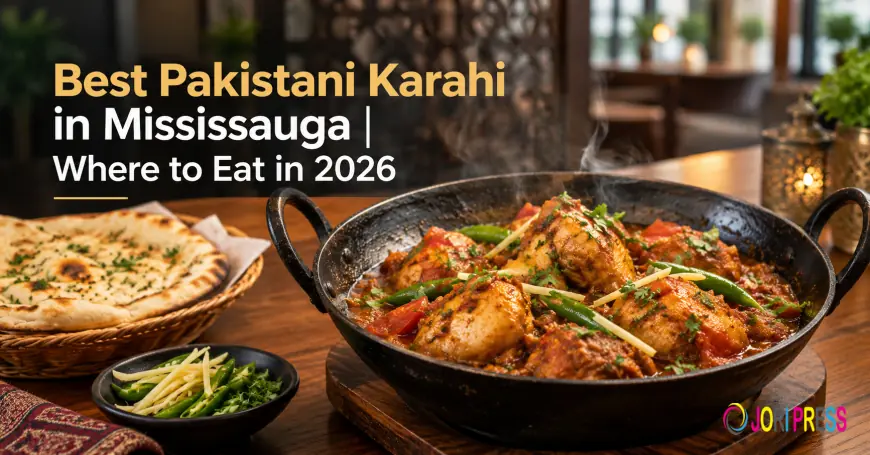
Ask five people in Mississauga where to get good karahi, and you'll probably get five different answers and at least two of them will be wrong. That's not a knock on the city's food scene; it's actually grown into one of the strongest Pakistani food markets in the GTA over the last several years. The problem is that "karahi" has become a menu buzzword. A lot of places slap the name on a bowl of pre-made gravy and call it a day. The best Pakistani karahi in Mississauga still comes from a handful of kitchens that treat it the way it's meant to be cooked: fresh, fast, and fired up in an actual karahi pan. This guide breaks down what real karahi should look and taste like, why this city has become such fertile ground for halal Pakistani food, and how to tell a good kitchen from one just riding the trend.
What Actually Makes a Karahi "Authentic"
Karahi gets its name from the pot it's cooked in a deep, round, wok-style pan made of iron or steel. That pan matters more than people realize. Because the dish is cooked fast over high heat, the tomatoes, garlic, ginger, and green chilies reduce down quickly until the oil rises to the top and the meat is coated in a thick, clingy sauce, not swimming in a thin gravy. It's meant to be cooked to order, not simmered in a pot all day and reheated when someone orders it.
Where Karahi Really Comes From
Most food historians point to Khyber Pakhtunkhwa, especially the area around Peshawar and Landi Kotal, as the birthplace of karahi gosht. The dish grew out of Pashtun tribal cooking, where fresh meat was cooked fast over an open flame using whatever basic ingredients were on hand. It's also linked to the old North-West Frontier Province, where lamb and goat — not chicken were the original meats of choice. Chicken karahi came later, as the dish spread south into cities like Lahore, Karachi, and Islamabad and adapted to what people were cooking at home. Today, both Pakistan and India claim some version of karahi as part of their food heritage, but it's still Pakistan where the dish feels most at home.
The Karahi Styles You'll See on Menus
Not all karahi tastes the same, and that's by design. A few regional versions show up most often on Mississauga menus:
-
Peshawari or Charsi style — very few spices, letting the meat's own flavor and fat do the work
-
Namak Mandi style — bone-in, salty, and finished with a generous scoop of ghee
-
Lahori style — richer and creamier, sometimes with a splash of cream, and heavier on green chilies
-
Balochi style — a sweeter twist, built around dried apricots or raisins mixed into the gravy
Knowing which style a kitchen specializes in helps you order smarter. A Peshawari-style karahi and a Lahori-style karahi made with the exact same chicken will still taste completely different.
Why Mississauga Has Become a Halal Food Hotspot
This isn't a coincidence. Mississauga sits inside the Greater Toronto Area, which is home to one of the largest Muslim populations in North America, and that population has grown fast. More people looking for halal, home-style Pakistani food means more restaurants competing to serve it well and that competition is exactly what pushes kitchens to cook karahi properly instead of cutting corners.
The Numbers Behind Canada's Halal Food Boom
The data backs this up clearly. According to Statistics Canada, the country's Muslim population more than doubled between 2001 and 2021 from about 2.0% of the national population to 4.9%, which works out to roughly 1.77 million people. Immigration has been the main driver of that growth: nearly 19% of all immigrants admitted to Canada between 2011 and 2021 identified as Muslim, and most of that community has settled in a small handful of cities Toronto, Montreal, Vancouver, Calgary, and Edmonton which together account for the vast majority of Canada's Muslim population.
That growth shows up directly in the numbers on the food side too. Canada's halal food market is currently valued at over USD $1 billion and has been growing at roughly 13% annually, according to Nourish Food Marketing, which has tracked halal consumer spending in Canada for close to a decade. Market research firm Precedence Research projects the Canadian halal food and beverage market will pass USD $4.39 billion by 2029. On the meat side specifically, Straits Research values Canada's halal meat market at about USD $1.35 billion as of 2024, projected to climb to roughly USD $1.6 billion by 2027.
One more number worth knowing: the median age of Canada's Muslim population is just 30, about eleven years younger than the national median. That means a large, active, still-growing group of diners with years of eating-out habits still ahead of them. Retailers have already noticed. Metro Inc., one of Canada's biggest grocery chains, has reported double-digit growth in halal product sales and has expanded shelf space for halal goods in response. For restaurants, that translates into a customer base that isn't shrinking anytime soon and a reason kitchens are investing more in doing karahi the right way instead of the fast way.
How to Spot Real Karahi vs. a Shortcut Version
Not every "karahi" on a menu is cooked the traditional way. Here's what separates the real thing from a shortcut:
|
What to Check |
Authentic Karahi |
Shortcut Version |
|
Cooking method |
Cooked fresh, to order, in a karahi pan |
Pre-cooked gravy, reheated per order |
|
Meat cut |
Often bone-in for deeper flavor |
Usually boneless, pre-cut |
|
Sauce texture |
Thick, with visible oil separation |
Thin, watery, or overly smooth |
|
Spice base |
Fresh tomato, ginger, garlic, chili |
Pre-mixed masala paste |
|
Halal status |
Certified or clearly sourced |
Often not disclosed |
|
How it's served |
Sizzling, usually family-style |
Plated quietly, less presentation |
A Simple Checklist Before You Order
If you're new to Pakistani karahi, or just trying a new spot in Mississauga, keep this in mind before you order:
-
Ask if the karahi is bone-in or boneless bone-in usually means it's closer to how it's traditionally made
-
Check whether the restaurant is halal-certified or clearly states where its meat comes from
-
Look for an open kitchen or karahi pans on display a good sign it's actually cooked fresh
-
Start with a smaller portion if you're not sure how spicy it'll be
-
Order it with naan instead of rice for the more traditional experience
-
Read reviews that mention the karahi specifically, not just the restaurant's overall star rating
Karahi Styles at a Glance
|
Style |
Flavor Profile |
Best For |
|
Peshawari / Charsi |
Light on spice, meat-forward |
First-timers who want to taste the meat, not just the sauce |
|
Namak Mandi |
Salty, bone-in, ghee-heavy |
Diners who like a richer, heavier finish |
|
Lahori |
Creamy, chili-forward |
Anyone who wants heat and richness together |
|
Balochi |
Sweet-savory, with dried fruit |
People who like a more unusual, complex flavor |
Best Places (and Dishes) to Try Karahi in Mississauga
One name that consistently comes up among locals is Charsi Karahi & BBQ, on Queen Street South. It's a halal, dine-in Pakistani restaurant that keeps its menu close to tradition — proper karahi, BBQ, Nihari, and a rotating weekend brunch buffet that includes halwa puri, chana, qeema, paye, hareesa, paratha, naan, and fresh chai. Regulars often point to the Chicken Shinwari Karahi and the boneless white karahi as the dishes worth ordering first. Beyond dine-in, the restaurant also handles catering for weddings, corporate events, and family gatherings something that's become common among Mississauga's better Pakistani kitchens as more people look for halal-certified options for larger events.
A few dishes worth actively seeking out anywhere you go for karahi in the city:
-
Chicken Karahi — the easiest starting point, and usually the most widely available
-
Mutton or Beef Karahi — richer, and closer to the dish's original Peshawari roots
-
White Karahi — a milder, cream-and-yogurt-based option for anyone who wants less heat
-
Bihari Kebab or Tikka — a common starter to order alongside karahi
Don't Stop at Karahi — What Else to Order
Karahi tends to get all the attention, but it's not the only thing worth judging a Pakistani restaurant by. Soft, blistered naan straight out of a tandoor, a properly slow-cooked Nihari, and a well-spiced Beef or Chicken Biryani all say a lot about whether a kitchen is taking shortcuts elsewhere too. Dessert is easy to skip, but house-made Kulfi or Gulab Jamun is usually worth the extra few minutes. If a restaurant gets these right alongside its karahi, that's a good sign the whole menu is being taken seriously, not just the dish that photographs well.
Frequently Asked Questions
What's the difference between karahi and a regular curry?
Karahi is cooked fast, at high heat, in a specific pan, with the sauce reduced until the oil separates from the gravy. Regular curries are usually simmered longer and tend to end up with a thinner sauce.
Is Pakistani karahi always halal?
Not automatically. It depends entirely on how the meat is sourced and processed. It's always worth confirming halal certification directly with the restaurant rather than assuming.
What should I order if it's my first time trying karahi?
Chicken Karahi is the safest, most approachable place to start. If you're worried about spice, ask for White Karahi instead. Pair it with naan, not rice, for the more traditional experience.
Is bone-in or boneless karahi more authentic?
Bone-in is generally considered closer to how the dish is traditionally made, since the bone adds extra depth to the sauce while it cooks. Boneless is more convenient, but it's often the shortcut version.
Final Thoughts
Mississauga's Pakistani food scene isn't a passing trend anymore, it's a real, competitive market, and that's good news for anyone who actually cares about how their food is cooked. The gap between an average karahi and a genuinely great one usually comes down to a few simple things: fresh preparation, proper spicing, and a kitchen that treats halal sourcing as a standard, not an afterthought. Next time you're deciding where to eat, use the checklist above and let the dish do the talking, not the menu photos.
What's Your Reaction?
 Like
0
Like
0
 Dislike
0
Dislike
0
 Love
0
Love
0
 Funny
0
Funny
0
 Angry
0
Angry
0
 Sad
0
Sad
0
 Wow
0
Wow
0