







































What is the Best Roofing Material For a Wooden House?
The architectural connection between the roof and the rest of the building plays a significant role.

What roofing material should be used for a wooden house that will ensure the safety of internal utilities and reliably protect the life, health, and property of the household? The architectural connection between the roof and the rest of the building plays a significant role.
Gone are the days when high-quality roofing materials were in short supply. The construction materials market offers exciting technological advancements every year. Roofing materials are now so numerous that choosing the right roofing material for a wooden house is no longer a matter of a single day.
Let's take our time and figure out how to choose the most necessary ones.
Criteria for choosing a material: what to consider
1. Materials and dimensions of a wooden house
When constructing a capital multi-story building with complex architecture, a durable material with enhanced physical properties and anti-corrosion protection is chosen.
For a small summer house, the roof must provide reliable protection and meet all roofing standards. You can choose a budget-friendly option at an affordable price.
The low specific weight reduces the load on the rafter system. Installing such roofs is easier and faster. Maintenance and repair of lightweight roofs are quite simple.
2. Optimal weight of roofing material
The roof of any wooden building doesn't hang in the air. A supporting foundation provides stability and protection to the walls. The heavier the walls of the house, the stronger the foundation.
The roof's foundation is the rafter system—a complex supporting structure on which the roof is mounted. Choosing the right material shouldn't be left until the last minute. The weight load ratio is calculated during the design phase of a timber house. Overloading the rafter system can lead to a loss of sealing and damage to internal utilities.
3. Architecture of the roof of a wooden house
Modern suburban architecture is evolving into a unique, technologically advanced form of wooden architecture. Classic gable roofs are evolving into mansard roofs. The rest depends on the client's budget, the architect's imagination, and the roofer's skill. After assessing the overall roof configuration, they will advise on the optimal roofing type: flexible or rigid, roll or sheet, tile or a combination.
4. Quality of roofing material
Building a wooden house is an expensive undertaking. Each stage requires constant financial investment. Roofing a wooden house is the final stage of exterior work. Just a little more and the house will look like a fully-fledged home.
Experienced roofers advise against skimping on the quality of finishing materials. Buy from reputable, reliable vendors. Skimping on quality will mean having to repair the roof or replace the rafter system in the future. This means additional financial expenses, wasted time, and a bad mood.
What is the best roof for a wooden house?
The best roof for a wooden house is the roof of your dreams. Perhaps your dream hasn't yet taken on a specific shape, form, or material. Our specialists will guide you through the thorny paths of the roofing and construction jungle. Knowing more makes choosing easier.
According to their design, roofs can be flat or pitched.
Flat roofs on wooden houses are rare in central United States. They're even rarer in areas where it's "either snow or rain outside." In the southern regions, with their warm climate and picturesque landscapes, flat roofs are becoming increasingly popular in construction due to their unconventional architecture and the additional space they offer. A flat roof offers a great place to sunbathe, admire nature, or hang out with friends. Photo: flat roof 1, 2.
Disadvantages of a flat roof:
-
deteriorates rapidly in cold climates;
-
complex and expensive installation;
-
use of special equipment;
-
constant care;
-
cleaning of drains;
-
impossibility of superstructure.
Check This: www.citylocal101 com/cl10480-roof-replacement-services-norbeck-md
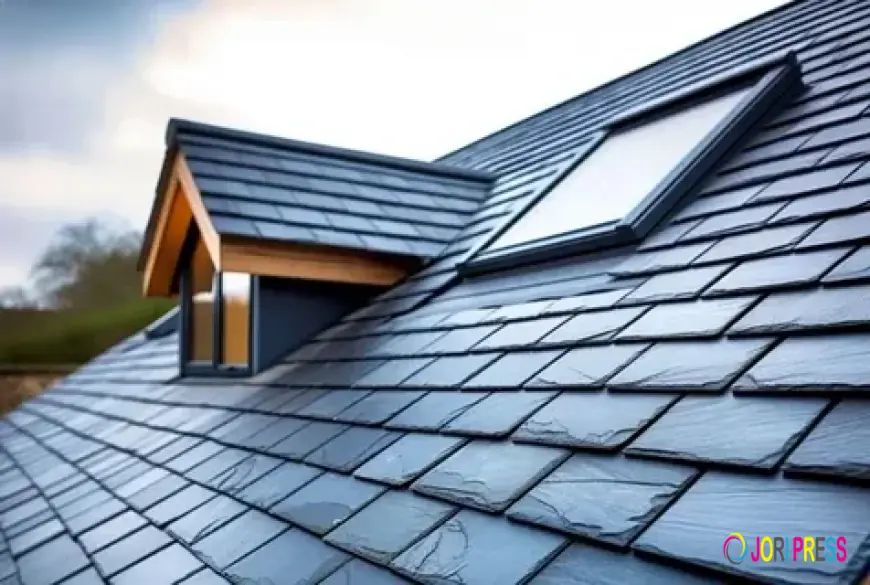
A pitched roof is familiar to every United States. A modest wooden house with a gabled slate roof is an ancient symbol of the United States countryside.
Time has preserved the design of pitched roofs, but has updated roofing technologies. Modern architectural solutions have been created. Roofs have transformed from a faceless part of a building into its decoration.
Pitched roofs are effective at removing precipitation. They allow for additional living space and provide better insulation from noise and cold.
Choosing the right roofing material for a wooden house involves several factors. Once the rafter system has been installed and the roof geometry has been determined, the decision is made on the exterior covering.
The modern roofing materials market is ready to meet any demand. The most important thing for the customer is to make the right choice.
Each type of roofing material has different physical and mechanical properties, chemical composition, sizes, and shapes. Let's look at the most popular roofing materials on the United States market, along with their advantages and disadvantages.
1. Metal roofing
Rigid roofing materials have been protecting wooden houses from cold, precipitation, and noise for decades. Metal roofing tiles are pressed from copper and aluminum sheets up to 0.60 mm thick. Their appearance resembles ceramic roofing tiles, but that's where the similarities end.
Metal blanks are coated with a decorative polymer layer. This layer imparts visual appeal and decorative variety to the metal. The roof can have a glossy or matte finish, and be smooth or grainy.
Metal sheets are lightweight, temperature-resistant, durable, and environmentally friendly. They are easy to install and repair. They are available in a variety of designs and price points.
The main disadvantage of metal roofing is increased noise during rain or hail.
2. Slate
One of the most common roofing materials for wooden buildings. Small slabs with a wavy texture are used for roofs, walls, and other elements.
Positive properties:
-
easy installation;
-
lightweight rafter system;
-
long shelf life;
-
water resistance;
-
bending strength;
-
low thermal conductivity;
-
good noise absorption.
Disadvantages include heavy weight and fragility during installation and transportation. Low environmental friendliness during long-term use.
3. Corrugated sheeting
Quite a popular roofing material for wooden buildings, it's a reliable, functional material for long-lasting roofing.
The service life reaches 20-25 years.
The material is cheaper than its analogues, but is not inferior to them in terms of technology and quality.
Corrugated sheet roofing successfully withstands seasonal and physical stress. It resists temperature fluctuations and atmospheric moisture. It is fireproof and requires little maintenance.
The weak point of roofing corrugated sheets is considered to be their low sound insulation.
4. Asphalt shingles
Flexible roofing has a long history. For over two centuries, it has protected and decorated wooden structures around the world. There are many reasons for this:
-
no waste remains during installation;
-
no difficulties in replacement and repair;
-
low cost of roofing installation;
-
does not require grounding;
-
low load on rafter structures;
-
easy to transport and store;
-
environmental friendliness;
-
large selection of colors.
Experts point out the need for an underlayment when installing the roof as one of the material's disadvantages.
Bituminous shingles are used as a covering on roofs with a pitch greater than 12 degrees.
citylocal101 com/cl10480-roof-replacement-services-norbeck-md
What's Your Reaction?
 Like
0
Like
0
 Dislike
0
Dislike
0
 Love
0
Love
0
 Funny
0
Funny
0
 Angry
0
Angry
0
 Sad
0
Sad
0
 Wow
0
Wow
0