






































What Is a Crypto Wallet Drainer and How Does It Work in 2026?
Learn what a crypto wallet drainer is, how it works, and how wallet transactions and smart contracts interact in 2026. A simple beginner-focused guide to Web3 security awareness.

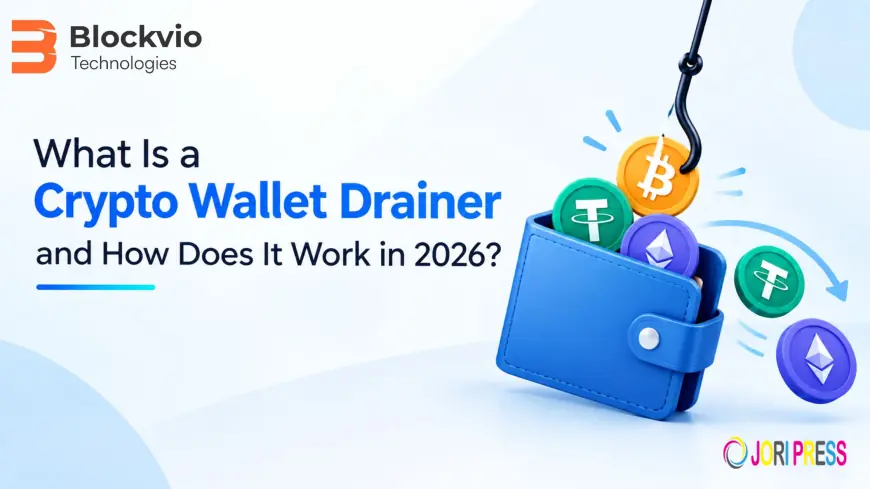
Imagine opening your crypto wallet one morning and noticing that something feels different. You remember connecting your wallet to a website, approving a transaction, and moving on with your day. Later, you discover that an unexpected transaction has affected your digital assets. For someone new to Web3, this can feel confusing because the action may have looked like a normal wallet interaction. A crypto wallet drainer is a type of malicious Web3 application or mechanism designed to trick users into approving transactions or permissions that can move assets from their wallets. Understanding how these systems work is useful for anyone learning about blockchain security, wallet interactions, and safer Web3 experiences.
What Is a Crypto Wallet Drainer?
A crypto wallet drainer generally works by manipulating the way a user interacts with a blockchain wallet. Instead of directly breaking into a wallet, it often relies on the user approving a transaction, signature, or smart-contract permission without fully understanding what that action allows. This makes the topic important from an educational perspective. Blockchain transactions are designed to be transparent, but the information shown to an everyday user can sometimes be difficult to understand. For beginners, the main lesson is simple: connecting a wallet and approving an action are not always the same thing. Each approval can have a specific purpose, and understanding that purpose is an important part of Web3 knowledge.
How Does the Process Work?
The process usually begins with a user visiting a Web3 website and connecting a wallet. The interface may then present an action that appears ordinary, such as signing a message, approving a token interaction, or confirming a smart-contract transaction. Behind the interface, the wallet communicates with blockchain contracts. If the user approves an unintended action, the contract may receive permissions that allow certain operations. This is where Smart-Contract Risk Analysis becomes valuable for learning. It involves examining what a contract is designed to do, what permissions it requests, and how those permissions could affect a wallet. The important concept is not the appearance of the website but the relationship between the wallet, transaction, signature, and smart contract.
Why Wallet Interfaces Matter
A wallet interface acts as a bridge between people and blockchain technology. Beginners may see a simple confirmation window, while the underlying blockchain request can contain much more technical information. This is why Wallet Interface Testing is an important area of Web3 security research. Testing can examine whether transaction details are presented clearly and whether users can understand important actions before approving them.
Better interface communication can support Better Wallet Design. Clear transaction information, understandable permission descriptions, and visible contract details can help users make more informed decisions. The goal is not to make blockchain complicated. It is to make complicated blockchain activity easier for people to understand.
Building Transaction Risk Awareness
Transaction Risk Awareness is about developing the habit of examining what a transaction actually does instead of approving every request automatically. For example, a learner can study the difference between sending tokens, approving a contract to interact with tokens, and signing a message. These actions may look similar from a beginner's perspective, but their technical purposes can be very different. This type of learning also supports Better User Awareness. Users become more familiar with wallet prompts, contract interactions, token permissions, and transaction details. Awareness is especially valuable in Web3 because blockchain transactions can be difficult or impossible to reverse once confirmed.
Learning Through Safe Practical Training
Theory becomes easier to understand when learners can explore blockchain concepts in a controlled environment. A Training Wallet can provide a practical space for studying wallet connections, transaction flows, and smart-contract interactions without using valuable assets. This approach can form part of Safe Practical Training and Security Awareness Training. Instead of learning only from warnings, beginners can understand how different wallet actions appear and what happens during a normal blockchain interaction. Scenario Management can also be used to create different learning situations. For example, one scenario might involve a simple token approval, while another examines an unusual permission request. Comparing these situations helps learners understand the differences.
The Role of AI and Blockchain Analytics
Security education is also becoming more data-driven. AI-powered phishing detection can help analyze suspicious patterns and identify signals associated with deceptive websites or messages. At the same time, Advanced blockchain analytics can help researchers examine transaction patterns, wallet activity, contract relationships, and unusual blockchain behavior. An Analytics Layer can bring different data points together so researchers and security teams can study activity more clearly. Research Analytics can then support broader investigations into how wallet interactions behave across different blockchain environments. These technologies do not replace human understanding. They provide additional information that can help people interpret complex blockchain activity.
How Security Teams Study Wallet Threats
Understanding wallet-draining activity involves several areas of cybersecurity. Security auditing can examine applications, smart contracts, wallet interactions, and access permissions to identify weaknesses in a system. Advanced access controls are another important concept. They focus on limiting what users, applications, or connected services are allowed to do. Organizations may also work with Cybersecurity Training Providers, Web3 Development Teams, blockchain researchers, and security professionals to study these areas. For learners, the important point is that Web3 security is not one single technology. It combines smart-contract knowledge, wallet design, transaction analysis, user education, application security, and blockchain research.
What Beginners Can Learn From Crypto Wallet Drainers
Studying crypto wallet drainers is ultimately about understanding how Web3 interactions work. A beginner who learns how wallets communicate with contracts, how approvals function, how transaction details are presented, and how blockchain activity can be analyzed gains a stronger foundation in Web3 security. The technology will continue to evolve in 2026 and beyond. Wallet interfaces may become clearer, AI systems may improve detection capabilities, and blockchain analytics may become more advanced. But one principle remains valuable: understanding what happens behind a button is just as important as knowing which button to press.
What's Your Reaction?
 Like
0
Like
0
 Dislike
0
Dislike
0
 Love
0
Love
0
 Funny
0
Funny
0
 Angry
0
Angry
0
 Sad
0
Sad
0
 Wow
0
Wow
0