








































What Are the Key Objectives of Forensic Accounting in Fraud Detection and Financial Investigation?
Financial fraud and accounting irregularities can create serious challenges for businesses, financial institutions, and individuals. Identifying these problems requires professional knowledge, careful financial analysis, and investigative skills. This is where forensic accounting plays an important role. Understanding forensic accounting objectives helps businesses detect fraud, investigate financial disputes, and maintain transparency. The Global Association of Forensic Accountants supports professional learning and skill development in forensic accounting, fraud investigation, and financial crime prevention.
1. Understanding Forensic Accounting and Its Importance
Forensic accounting combines accounting, auditing, and investigative techniques to examine financial records and identify suspicious activities. It helps organizations understand financial irregularities and collect reliable evidence for investigations.
Some important areas of forensic accounting include:
-
Investigating financial fraud and mismanagement.
-
Examining financial statements and transactions.
-
Identifying suspicious financial activities.
-
Supporting legal disputes with financial evidence.
-
Improving financial transparency and accountability.
2. What Are the Main Forensic Accounting Objectives?
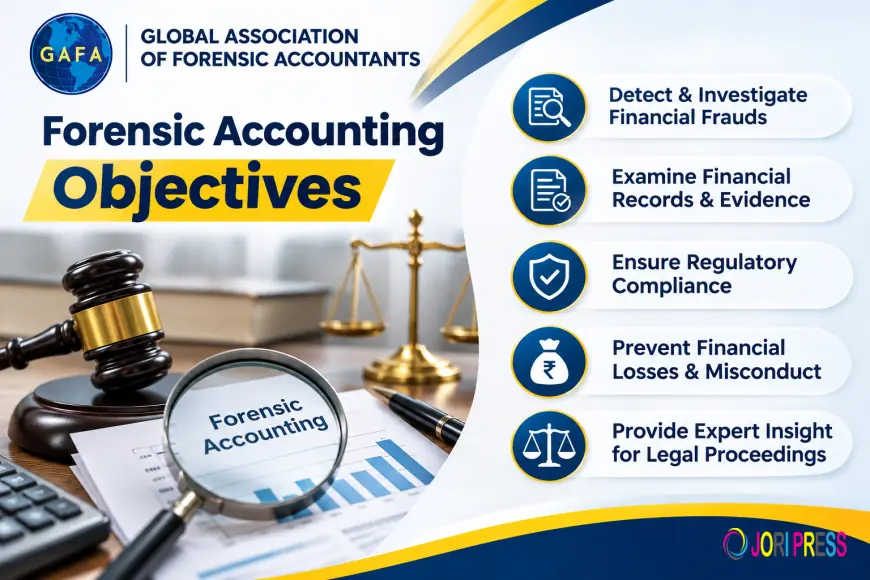
The main forensic accounting objectives focus on identifying financial misconduct, preventing fraud, and providing accurate information during investigations. Forensic accounting helps businesses protect their financial resources and make informed decisions.
Key objectives include:
-
Fraud Detection: Identifying fraudulent transactions and financial activities.
-
Financial Investigation: Examining records to discover financial irregularities.
-
Evidence Collection: Gathering accurate financial information for legal proceedings.
-
Risk Reduction: Helping organizations recognize financial risks.
-
Financial Transparency: Promoting accountability and responsible financial management.
These objectives make forensic accounting valuable for modern businesses and financial organizations.
3. Role of a Forensic Accountant in Financial Investigations
A forensic accountant is a financial professional who investigates accounting records, analyzes transactions, and identifies possible financial misconduct. These professionals use their accounting and analytical knowledge to uncover hidden financial information.
Their responsibilities may include reviewing bank statements, examining business transactions, identifying money laundering activities, investigating employee fraud, and preparing financial reports. A skilled forensic accountant can also provide expert financial assistance during legal disputes and corporate investigations.
4. Importance of Application Forensics in Modern Investigations
Application forensics involves examining digital applications, software records, and electronic data to identify suspicious activities and investigate possible security or financial-related incidents. It can help investigators understand digital transaction records, user activities, and relevant electronic evidence.
In modern financial investigations, digital information can support traditional forensic accounting methods. Combining financial analysis with digital investigation techniques can help organizations identify irregularities and improve fraud detection processes.
5. Learn Forensic Accounting with Global Association of Forensic Accountants
Choosing the right professional learning platform is important for developing financial investigation skills. The Global Association of Forensic Accountants focuses on professional education and skill development in forensic accounting, fraud investigation, AML, KYC, and financial crime prevention.
The organization offers learning and certification opportunities for individuals interested in developing their knowledge of financial investigations and accounting practices. Its professional learning focus can help aspiring forensic accountants and working professionals strengthen their understanding of financial fraud detection and compliance.
Conclusion
Understanding forensic accounting objectives is essential for identifying financial fraud, investigating suspicious transactions, and maintaining financial transparency. From examining financial records to collecting digital evidence, forensic accounting supports businesses and organizations in managing financial risks. The Global Association of Forensic Accountants provides professional learning opportunities for individuals who want to develop their expertise in forensic accounting, fraud investigation, and financial crime prevention. Building these skills can support long-term professional growth in the financial investigation industry.
What's Your Reaction?
 Like
0
 Dislike
0
 Love
0
 Funny
0
 Angry
0
 Sad
0
 Wow
0