






































Web Development in 2026: Build Fast, Secure & Scalable Websites
Discover web development in 2026, including modern technologies, AI, SEO-friendly development, security, performance, and scalable web solutions for business growth.
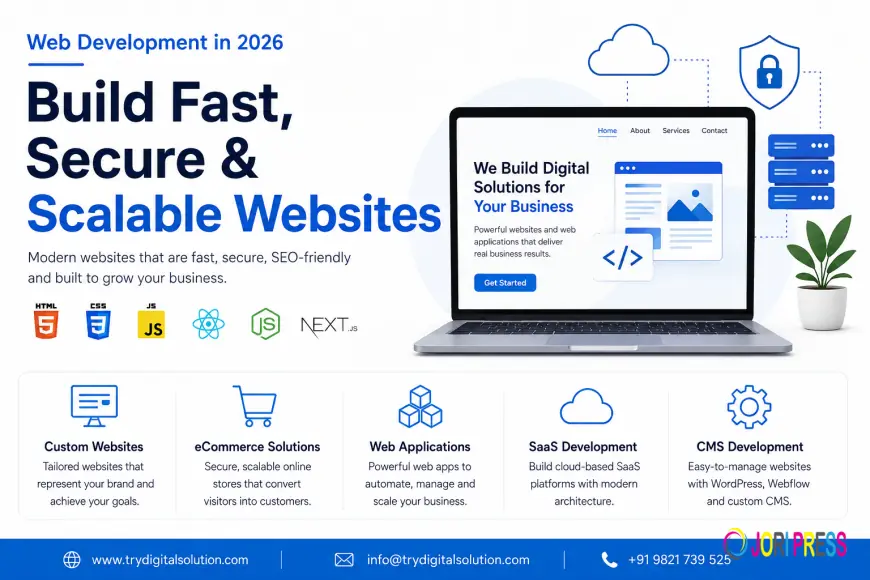
In 2026, a website is much more than an online presence. It can be a powerful tool for generating leads, selling products, supporting customers, automating business processes, and building brand credibility.
Web development is the process of building, launching, and maintaining websites and web applications. Modern development combines technology, UI/UX, security, performance, SEO, integrations, automation, and scalability to create digital experiences that support real business goals.
Whether you are launching a startup website, an eCommerce platform, a SaaS product, or a custom web application, choosing the right development approach is essential for long-term growth.
What Is Web Development?
Web development involves creating the technical foundation behind websites and web applications. It includes everything from frontend interfaces and backend systems to databases, APIs, security, testing, and deployment.
Modern web development generally consists of three key areas:
Frontend Development
Frontend development focuses on the part of a website users see and interact with.
Common technologies include:
-
HTML and CSS
-
JavaScript
-
React
-
Angular
-
Vue
-
Next.js
A good frontend should be responsive, accessible, intuitive, and optimized for performance.
Backend Development
Backend development handles the server-side functionality of a website or application.
It can include:
-
Business logic
-
APIs
-
Authentication
-
Databases
-
Payment processing
-
User management
-
Third-party integrations
Popular backend technologies include Node.js, Python, PHP, Java, and .NET.
Database Development
Databases store and organize application data. Depending on the project, developers may use MySQL, PostgreSQL, MongoDB, or Firebase.
The right database architecture helps websites and applications remain reliable as users and data increase.
Why Is Web Development Important for
Businesses?
Professional web development can directly impact customer experience, search visibility, lead generation, and business growth.
1. Builds a Strong Digital Presence
Your website is often the first place potential customers interact with your business. A professional website communicates credibility and makes your services or products easier to understand.
2. Improves User Experience
Customers expect websites to be fast, mobile-friendly, easy to navigate, and simple to use. Good development removes unnecessary friction from the customer journey.
3. Supports SEO
Technical development creates the foundation for search visibility.
An SEO-friendly website should have:
-
Clean URL structures
-
Logical site architecture
-
Mobile responsiveness
-
Fast loading times
-
Proper heading structures
-
Internal linking
-
Optimized images
-
Crawlable pages
-
Appropriate structured data
4. Increases Conversions
A website should guide visitors toward actions such as requesting a quote, booking a consultation, purchasing a product, or submitting a contact form.
Development and UI/UX should work together to make these actions simple.
Types of Web Development Services
Different businesses require different solutions.
Custom Web Development
Custom development creates a website around specific business requirements instead of relying completely on templates.
It is suitable when you need unique functionality, custom integrations, specialized workflows, or greater scalability.
Web Application Development
Web applications provide interactive functionality through a browser.
Examples include:
-
Customer portals
-
Dashboards
-
Booking systems
-
Marketplaces
-
Business management platforms
SaaS Development
SaaS development focuses on cloud-based software accessed through the internet.
A SaaS application may include subscriptions, user accounts, dashboards, payment systems, APIs, analytics, and role-based access.
eCommerce Development
eCommerce development enables businesses to sell products or services online through features such as product catalogs, shopping carts, payment gateways, customer accounts, inventory management, and order tracking.
CMS Development
Content Management Systems such as WordPress and Webflow allow businesses to manage website content without depending on developers for every update.
Advanced Web Development Trends in
2026
AI-Powered Web Applications
Artificial intelligence is becoming an important part of modern web applications.
Businesses can integrate AI for:
-
Intelligent search
-
AI assistants
-
Recommendations
-
Personalization
-
Automated workflows
-
Data analysis
-
Document processing
AI can help businesses create more personalized and efficient digital experiences, but AI-powered features should be implemented with appropriate security, privacy, testing, and human oversight.
Performance-First Development
Website performance is essential for both user experience and business results.
Developers can improve performance through:
-
Image compression
-
Efficient JavaScript
-
Caching
-
CDN implementation
-
Lazy loading
-
Code optimization
-
Server improvements
A faster website can provide a smoother customer experience and reduce friction during important conversion steps.
Headless and Composable Architecture
Headless development separates the frontend experience from backend content or commerce systems.
This approach can provide greater flexibility for businesses that need to deliver content across websites, applications, and other digital channels.
Accessibility
Modern websites should be usable by as many people as possible.
Developers can improve accessibility through semantic HTML, keyboard navigation, accessible forms, descriptive labels, proper heading structures, and screen-reader-friendly components.
Security-First Web Development
Security should be part of the development process from the beginning.
Websites and applications may handle customer information, account credentials, payments, and confidential business data.
Important security practices include:
-
HTTPS
-
Secure authentication
-
Authorization
-
Input validation
-
Encryption
-
Secure APIs
-
Access controls
-
Dependency updates
-
Security testing
-
Regular backups
A security-first approach helps reduce technical risks and protects both businesses and users.
API Integration in Web Development
Modern websites often need to communicate with other platforms.
APIs allow websites to connect with:
-
CRM systems
-
Payment gateways
-
Email marketing platforms
-
ERP systems
-
Analytics tools
-
Shipping providers
-
AI services
-
Customer support platforms
For example, when a visitor submits a lead form, the information can automatically be sent to a CRM. This reduces manual work and allows sales teams to respond faster.
SEO-Friendly Web Development
SEO should be considered during development rather than after a website is launched.
Developers should pay attention to:
Crawlability
Search engines should be able to access important pages.
Mobile Experience
Pages should work properly across smartphones, tablets, and desktops.
Site Architecture
A logical structure helps users and search engines understand relationships between pages.
Internal Linking
Relevant internal links help visitors discover related content and help search engines understand website structure.
Structured Data
Where appropriate, structured data can provide search engines with additional context about eligible content.
How to Choose a Web Development
Company
Choosing a development partner should involve more than comparing prices.
Consider:
Technical Expertise: Does the company have experience with the technologies required for your project?
Portfolio: Look for projects with similar functionality or complexity.
Development Process: Understand how the company handles planning, design, development, testing, deployment, and communication.
Scalability: Make sure the proposed architecture can support future growth.
Post-Launch Support: Ask about maintenance, security updates, bug fixes, and future development.
A good development partner should understand both your technical requirements and business objectives.
Common Web Development Mistakes
Businesses often make avoidable mistakes when developing websites.
Building Without Clear Goals
Without defined objectives, development can become focused on features rather than business outcomes.
Ignoring Mobile Users
A website that performs poorly on smartphones can lose potential customers.
Choosing Technology Only Because It Is Popular
The best technology depends on your project's requirements, budget, scalability, and maintenance needs.
Ignoring Performance
Too many scripts, large images, and inefficient code can negatively affect website performance.
Treating SEO as an Afterthought
SEO-friendly architecture should be planned before launch.
Forgetting Security
Security should be integrated throughout development rather than addressed only after problems occur.
The Future of Web Development
The future of web development will continue to be influenced by AI, automation, personalization, cloud technologies, security, and performance engineering.
Businesses will increasingly need websites and applications that can:
-
Understand user intent
-
Automate repetitive tasks
-
Provide personalized experiences
-
Integrate with multiple platforms
-
Handle growing traffic
-
Support AI-powered features
-
Deliver fast experiences across devices
The strongest web solutions will combine technology with business strategy rather than focusing only on design or code.
Why Choose TryDigital Solution for Web
Development?
TryDigital Solution provides end-to-end web development services for businesses looking to build modern and scalable digital experiences.
Its services include custom website development, web application development, SaaS development, eCommerce development, enterprise solutions, and CMS development.
The team works with modern technologies and focuses on responsive design, performance, security, scalability, integrations, and business-focused solutions.
Whether you are building a new website, launching an MVP, developing a SaaS platform, or upgrading an existing digital product, the right development strategy can help create a stronger foundation for long-term growth.
Frequently Asked Questions
1. What is web development?
Web development is the process of creating, testing, deploying, and maintaining websites and web applications. It can include frontend, backend, databases, APIs, security, integrations, and performance optimization.
2. What is the difference between web design and web development?
Web design focuses on the visual appearance and user experience, while web development focuses on the technical implementation and functionality of the website.
3. How long does web development take?
The timeline depends on the project's complexity. A basic business website generally requires less time than a custom web application, SaaS platform, or enterprise solution.
4. How much does web development cost?
The cost depends on design requirements, number of pages, functionality, integrations, technology, security requirements, and overall project complexity.
5. Can web development improve SEO?
Yes. Proper development can support SEO through mobile responsiveness, clean architecture, crawlability, performance optimization, internal linking, structured data, and technically sound implementation.
6. Can you build AI-powered websites?
Yes. AI can be integrated into websites and web applications for chat assistants, intelligent search, recommendations, personalization, automation, and data processing.
7. Why is website security important?
Security helps protect user information, business data, accounts, payments, and application infrastructure from potential threats.
8. Can an existing website be rebuilt?
Yes. An existing website can be redesigned or rebuilt using modern technologies. Before rebuilding, businesses should evaluate existing traffic, SEO value, content, integrations, and conversion data.
Conclusion
Modern web development is about much more than creating pages. It combines engineering, UI/UX, SEO, performance, security, integrations, AI, and scalability to create digital experiences that deliver measurable business value.
Whether you need a corporate website, eCommerce store, SaaS platform, or custom web application, the right development strategy can help you build a secure, high-performing, and future-ready digital presence.
Build for today's users. Develop for tomorrow's growth.
What's Your Reaction?
 Like
0
Like
0
 Dislike
0
Dislike
0
 Love
0
Love
0
 Funny
0
Funny
0
 Angry
0
Angry
0
 Sad
0
Sad
0
 Wow
0
Wow
0