










































Transformer Neutral Grounding Resistor: Complete Guide to Electrical System Protection
Learn how a Transformer Neutral Grounding Resistor improves electrical system safety, limits fault currents, protects transformers, and ensures reliable power system performance.

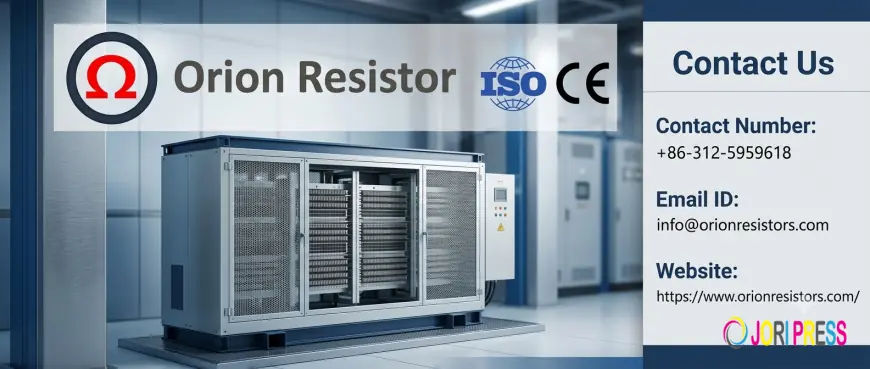
A Transformer Neutral Grounding Resistor (NGR) is one of the most critical components in modern electrical power systems. It limits ground fault current, protects transformers and switchgear, minimizes equipment damage, and improves overall system reliability.
Whether used in industrial plants, power generation facilities, mining operations, data centers, or commercial substations, selecting the right Transformer Neutral Grounding Resistor significantly enhances electrical safety and reduces costly downtime.
Orion Resistors manufactures high-quality Transformer Neutral Grounding Resistors engineered for reliable fault current limitation, long service life, and compliance with international standards.
What is a Transformer Neutral Grounding Resistor?
A Transformer Neutral Grounding Resistor is a specially designed resistor connected between the transformer's neutral point and earth (ground). Its primary function is to limit the magnitude of ground fault current during a single line-to-ground fault.
Instead of allowing extremely high fault currents to flow, the resistor restricts the current to a safe predetermined value, protecting electrical equipment while allowing protective relays to detect and isolate the fault quickly.
Without proper grounding resistance, even a minor ground fault can result in severe equipment damage, arc flash incidents, and prolonged production downtime.
Why is Transformer Neutral Grounding Important?
Ground faults are among the most common electrical faults in industrial power systems. If left uncontrolled, they can damage:
-
Power transformers
-
Circuit breakers
-
Motors
-
Switchgear
-
Busbars
-
Cables
-
Protection relays
A properly selected Transformer Neutral Grounding Resistor limits these fault currents and significantly reduces thermal and mechanical stress on electrical equipment.
How Does a Transformer Neutral Grounding Resistor Work?
Under normal operating conditions, no current flows through the Neutral Grounding Resistor.
When a single line-to-ground fault occurs:
-
Fault current attempts to flow through the transformer neutral.
-
The Neutral Grounding Resistor restricts the current.
-
Protective relays detect the fault.
-
Circuit breakers isolate the faulty section.
-
Healthy parts of the electrical network continue operating safely.
This controlled fault current minimizes damage while ensuring dependable protection.
Main Functions of a Transformer Neutral Grounding Resistor
A Transformer Neutral Grounding Resistor performs several essential functions:
-
Limits ground fault current
-
Protects transformers from severe damage
-
Reduces arc flash energy
-
Prevents winding insulation failure
-
Improves personnel safety
-
Supports protective relay coordination
-
Minimizes maintenance costs
-
Enhances power system reliability
-
Reduces equipment replacement expenses
-
Maintains system stability during faults
Types of Transformer Neutral Grounding Resistors
Low Resistance Grounding Resistor (LRG)
Low Resistance Grounding is commonly used in medium-voltage systems where relatively higher fault current is required for fast protective relay operation.
Typical Applications:
-
Industrial plants
-
Utility substations
-
Process industries
-
Large commercial facilities
Typical Fault Current:
100A to 2000A
High Resistance Grounding Resistor (HRG)
High Resistance Grounding limits fault current to very low values, reducing equipment damage while allowing continuous operation until maintenance can be scheduled.
Typical Applications:
-
Data centers
-
Hospitals
-
Manufacturing facilities
-
Petrochemical plants
Typical Fault Current:
5A to 25A
Transformer Neutral Grounding Methods Comparison
|
Grounding Method |
Fault Current |
Equipment Protection |
Operational Continuity |
Cost |
|
Solid Grounding |
Very High |
Low |
Medium |
Low |
|
Resistance Grounding |
Controlled |
Excellent |
Excellent |
Moderate |
|
Reactance Grounding |
Moderate |
Good |
Good |
Moderate |
|
Ungrounded System |
Very Low Initially |
Poor |
Risky |
Low |
Resistance grounding offers the best balance between safety, protection, and operational reliability.
Key Components of a Transformer Neutral Grounding Resistor
A complete Transformer Neutral Grounding Resistor assembly generally includes:
-
Stainless steel resistor elements
-
Weatherproof enclosure
-
Neutral terminal
-
Ground terminal
-
Insulators
-
Temperature monitoring devices
-
Current transformer (optional)
-
Neutral grounding transformer (where required)
-
Monitoring relay
-
Nameplate with electrical ratings
Premium manufacturers like Orion Resistors design these components for long-term durability in harsh industrial environments.
Benefits of Using a Transformer Neutral Grounding Resistor
1. Improved Equipment Protection
Limiting fault current significantly reduces damage to transformers, motors, generators, switchgear, and cables.
2. Reduced Arc Flash Hazard
Lower fault current means lower arc flash energy, improving worker safety.
3. Longer Equipment Life
Reduced thermal stress extends transformer insulation life and decreases maintenance frequency.
4. Better System Reliability
Electrical faults are isolated quickly without affecting the entire power network.
5. Lower Maintenance Costs
Preventing catastrophic failures reduces repair costs and unexpected outages.
Practical Example
Consider a manufacturing plant operating a 6.6 kV transformer.
Without a Neutral Grounding Resistor:
-
Ground fault current = 3,500 A
-
Severe transformer winding damage
-
Breaker contact erosion
-
Production shutdown
With a 400 A Transformer Neutral Grounding Resistor:
-
Fault current limited to 400 A
-
Protective relay trips safely
-
Minimal equipment damage
-
Production resumes quickly after fault isolation
This simple addition can save thousands of dollars in repair and downtime costs.
Industries That Use Transformer Neutral Grounding Resistors
Transformer Neutral Grounding Resistors are widely used in:
-
Power generation
-
Transmission and distribution
-
Oil and gas
-
Mining
-
Steel plants
-
Cement industries
-
Chemical plants
-
Water treatment facilities
-
Data centers
-
Renewable energy projects
-
Commercial buildings
-
Manufacturing industries
Factors to Consider Before Selecting a Transformer Neutral Grounding Resistor
Choosing the correct resistor requires careful engineering analysis.
Important factors include:
-
System voltage
-
Transformer rating
-
Neutral voltage
-
Desired fault current
-
Fault duration
-
Continuous or intermittent duty
-
Ambient temperature
-
Indoor or outdoor installation
-
IP protection rating
-
Applicable standards
-
Altitude
-
Corrosion resistance
Working with an experienced manufacturer like Orion Resistors helps ensure the resistor is correctly specified for your application.
Installation Best Practices
For reliable performance:
-
Install on a stable foundation.
-
Ensure proper earthing connections.
-
Maintain adequate ventilation.
-
Follow recommended clearances.
-
Tighten all electrical connections.
-
Test insulation resistance before energizing.
-
Verify relay coordination.
-
Conduct commissioning tests.
Proper installation improves reliability and extends service life.
Maintenance Tips
Routine maintenance includes:
-
Visual inspection every six months
-
Check resistor element condition
-
Clean dust and contaminants
-
Inspect terminals for overheating
-
Measure insulation resistance
-
Verify enclosure integrity
-
Test grounding continuity
-
Confirm relay operation
-
Replace damaged components promptly
Preventive maintenance minimizes unexpected failures and improves operational safety.
International Standards
Quality Transformer Neutral Grounding Resistors are designed according to internationally recognized standards, including:
-
IEC standards
-
IEEE recommendations
-
ANSI guidelines
-
NEMA requirements
-
ISO-certified manufacturing practices
Compliance ensures consistent performance, safety, and compatibility with modern electrical systems.
Why Choose Orion Resistors?
When selecting a Transformer Neutral Grounding Resistor, quality and engineering expertise are essential.
Orion Resistors offers:
-
Custom-engineered solutions
-
Precision manufacturing
-
High-quality resistor elements
-
Durable weatherproof enclosures
-
Compliance with international standards
-
Reliable thermal performance
-
Fast technical support
-
Application-specific designs
-
Comprehensive quality testing
-
Proven performance across industrial sectors
These features help customers improve electrical safety, reduce maintenance costs, and enhance overall power system reliability.
Frequently Asked Questions (FAQs)
What is a Transformer Neutral Grounding Resistor?
It is a resistor connected between a transformer's neutral and earth to limit ground fault current and protect electrical equipment from damage.
Why is a Neutral Grounding Resistor necessary?
It limits fault current, reduces equipment damage, enhances personnel safety, and enables protective devices to operate correctly during ground faults.
What is the difference between High Resistance and Low Resistance Grounding?
High Resistance Grounding limits fault current to very low levels, allowing continued system operation in many cases. Low Resistance Grounding permits higher fault current to ensure rapid fault detection and isolation.
How is the resistor rating selected?
The rating depends on system voltage, transformer capacity, desired fault current, fault duration, and applicable protection requirements. Proper engineering calculations are essential.
Can a Transformer Neutral Grounding Resistor be installed outdoors?
Yes. Outdoor models are available with weatherproof enclosures designed to withstand harsh environmental conditions.
How often should it be inspected?
A visual inspection is recommended every six months, with periodic electrical testing as part of a preventive maintenance program.
What happens if no Neutral Grounding Resistor is installed?
Ground fault currents can become excessively high, increasing the risk of transformer damage, equipment failure, arc flash hazards, and costly downtime.
Conclusion
A Transformer Neutral Grounding Resistor is a vital component for protecting transformers, improving electrical safety, and maintaining reliable power system operation. By limiting ground fault current, it reduces equipment stress, supports effective relay coordination, and minimizes maintenance costs across a wide range of industrial applications.
Choosing a trusted manufacturer is just as important as selecting the correct resistor specification. Orion Resistors delivers engineered Neutral Grounding Resistor solutions that meet demanding industrial requirements, helping organizations enhance safety, extend equipment life, and maintain uninterrupted operations. Investing in a high-quality Transformer Neutral Grounding Resistor today can prevent expensive failures and ensure long-term power system reliability.
Contact Number - +86-312-5959618
What's Your Reaction?
 Like
0
Like
0
 Dislike
0
Dislike
0
 Love
0
Love
0
 Funny
0
Funny
0
 Angry
0
Angry
0
 Sad
0
Sad
0
 Wow
0
Wow
0