






































Top 10 White Label Fintech App Development Companies
Compare 10 white label fintech app development companies and platforms. Explore features, use cases, customization, security, and selection tips.

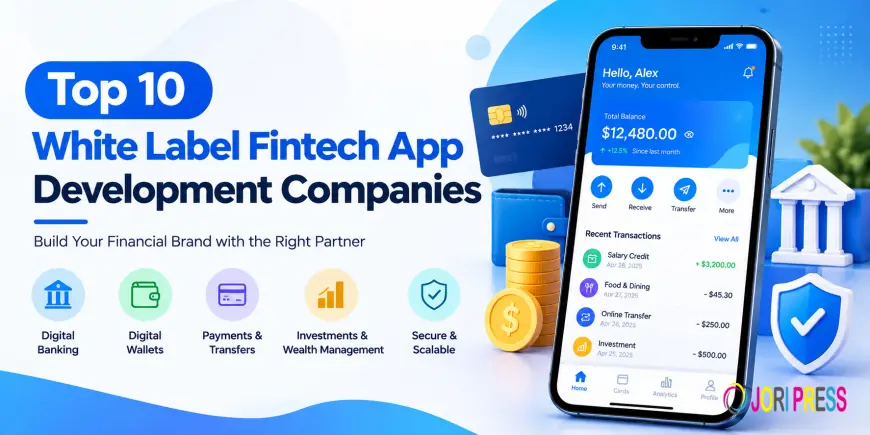
A white label fintech app can help a business launch a financial product under its own brand. Instead of building every feature from scratch, you can use an existing platform and customize it to fit your needs.
This can be useful for startups, financial service providers, and businesses that want to offer digital wallets, payment services, investment tools, or digital banking features.
But choosing the right provider takes care. Some companies build custom fintech apps, while others offer ready-made platforms with banking, payment, or wallet features. Their pricing, customization options, and licensing models can also differ.
In this guide, we cover 10 companies and platforms worth exploring, what each one offers, and what to check before you make a choice. The goal is to help you find a solution that fits your business, budget, and plans for growth.
What Is a White Label Fintech App?
A white label fintech app is a ready-made or pre-built financial software solution that a business can launch under its own brand. The provider supplies the core technology, and the business can customize the design, features, and user experience.
For example, a startup may want to launch a digital wallet. Rather than developing every feature from the beginning, it can use a white label solution with account management, payment tools, and transaction records.
Common uses include digital wallets, online payments, neobanking, money transfers, lending, investment services, and financial management.
The exact features depend on the provider. Some platforms offer a complete branded product, while others provide the software and APIs needed to build a custom financial app.
Top 10 White Label Fintech App Development Companies
1. CloneAppz
CloneAppz is a white label and clone app development company that helps startups, agencies, and enterprises launch mobile and web applications. Its business model focuses on ready-made, customizable solutions that can reduce the work involved in starting a digital product.
For businesses exploring a White Label Fintech App, CloneAppz is an option to consider when looking for a branded financial application tailored to a specific business model.
Before choosing a solution, discuss the financial features you need, such as wallet management, user accounts, payment integration, transaction history, and an admin dashboard. Ask which features are available in the existing product and which require custom development.
Best for: Startups and businesses seeking customizable, ready-made or clone app solutions.
2. SDK.finance
SDK.finance offers fintech software for businesses building digital wallets, payment systems, neobanks, and other financial products. Its platform-based approach can help teams avoid building every core financial component from scratch.
The solution includes financial software components that businesses can use as a foundation for their own products. Depending on the chosen model, buyers can explore hosted options or software licensing arrangements.
For a startup, this type of platform may be useful when transaction management and financial workflows are central to the product.
3. Velmie
Velmie provides white label fintech software for businesses that want to launch digital financial products. Its areas of focus include digital banking, wallets, and payment-related services.
A modular platform can be helpful when a business wants to start with a core set of features and add more capabilities over time. The exact options depend on the product configuration and commercial agreement.
For example, a business may begin with digital accounts and transfers before adding further services as its customer base grows.
4. Crassula
Crassula offers a white label digital banking platform for businesses that want to provide branded financial services. Its platform covers areas such as accounts, payments, cards, and related financial features.
This approach may suit businesses that want to launch a digital banking or wallet product without developing the full technology stack independently.
However, having banking software does not automatically give a business permission to offer regulated financial services. Your operating model and country will affect which licenses and financial partners you need.
5. Mambu
Mambu provides cloud-based core banking software. It is designed to help financial institutions and fintech businesses configure financial products using a flexible banking platform.
Unlike a simple ready-made mobile app, core banking software supports the financial processes behind a product. A business may still need a separate mobile app, customer interface, integrations, and other services to complete its solution.
Mambu may be worth considering when the project needs a strong banking foundation and room to configure different financial products.
6. Thought Machine
Thought Machine develops cloud-native core banking technology. Its platform is designed for banks and financial businesses that need flexible banking systems and configurable financial products.
This type of solution is different from a simple white label wallet app. It focuses more on the underlying banking technology than on providing a fully branded consumer app that is ready to launch.
For businesses with complex banking needs, a core banking platform may provide a foundation for a wider digital finance service.
7. Temenos
Temenos provides banking software for financial institutions. Its product range supports digital banking and core banking operations, along with technology used to deliver financial services.
Businesses looking for a broad banking technology platform may consider Temenos when their needs extend beyond a basic wallet or payment app.
The main point to understand is that enterprise banking software often requires a detailed implementation plan. It may not be the simplest choice for a startup that only needs a small, branded financial app.
8. Finastra
Finastra provides financial software for banks and other financial institutions. Its offerings cover several areas of financial technology, including payments, lending, and banking systems.
Its broad product range can be useful for businesses that need established financial software rather than a single ready-made mobile application.
However, the right product depends on the project. A payment platform, a lending system, and a digital banking solution have different requirements, so you should identify your use case before requesting a proposal.
9. DigiPay.Guru
DigiPay.Guru focuses on digital payment and financial technology solutions. Its product areas include digital wallets, money transfers, and payment-related services.
A provider with a payment-focused offering may suit a business that wants to support digital transactions without building every payment workflow independently.
For example, a company planning a wallet or remittance service may need customer onboarding, transaction records, payment integrations, and tools to monitor activity.
10. Appinventiv
Appinventiv is a software and mobile app development company that works across several industries, including financial technology.
Unlike a provider that focuses only on ready-made fintech infrastructure, a development company can be worth considering when you need a tailored mobile app, custom workflows, or integrations with third-party financial services.
The level of white label support will depend on the specific project. Ask whether the company has a suitable existing product or would build the application as a custom development project.
How to Choose the Best White Label Fintech App Provider
A company list is a useful starting point, but the best provider depends on what you plan to build. Before making a decision, compare these key factors.
1. Define Your Business Model
First, decide what type of financial product you want to offer. A digital wallet has different needs from an investment platform or a neobank.
Write down the features you need for launch. This will help you avoid paying for tools that do not support your business goals.
2. Review Security and Compliance
Fintech apps handle sensitive user and financial data. Look for secure authentication, access controls, encryption, transaction monitoring, and clear data protection practices.
Ask how the provider supports relevant standards and regulatory requirements. Do not assume that using a white label platform automatically makes your business compliant.
3. Check Customization Options
Your app should reflect your brand and serve your target users. Ask whether you can change the design, onboarding process, financial workflows, notifications, and admin controls.
Also, check whether future changes are included in the agreement or charged separately.
4. Understand Pricing and Ownership
The total cost may include setup, customization, hosting, API usage, support, and third-party services.
Ask for a written quote that separates initial and recurring costs. If you need source code ownership, confirm the exact rights in the contract.
5. Test the Product and Support
Request a demo and test the main user journey. Check how users sign up, access features, view transactions, and contact support.
Ask about bug fixes, system updates, response times, and technical help after launch. Reliable support matters when your app handles financial activity.
Frequently Asked Questions
What is a white label fintech app?
It is a financial software solution that a business can brand and offer as its own product. Depending on the provider, it may support wallets, payments, digital accounts, or other financial services.
How much does a white label fintech app cost?
The price depends on the features, customization, integrations, deployment model, and compliance needs. Request a detailed quote and check for recurring fees before signing a contract.
Can a startup launch a fintech app using white label software?
Yes, a white label solution can help a startup reduce the amount of software it must build from scratch. The startup still needs to check licensing, financial partnerships, security, and other local requirements.
Is white label fintech software secure?
Security depends on the platform, its setup, and how it is managed. Review its security controls, data practices, independent assessments, and incident response process before choosing a provider.
What is the difference between white label fintech software and custom development?
White label software starts with an existing product that can be branded and configured. Custom development builds features for a specific business. Some projects combine both approaches.
Can I customize a white label fintech app?
Many providers offer branding and feature customization, but the level of control varies. Confirm which changes are supported and whether you can add new features later.
Conclusion
The right White Label Fintech App provider can help you launch a financial product with a clearer plan and less work on the core software. But not every company on this list offers the same type of solution.
Some provide ready-made financial platforms, while others focus on core banking technology or custom app development. Compare their actual products, security practices, integration options, costs, and support before making your choice.
For businesses exploring a branded fintech product, CloneAppz is one option to contact and evaluate. Request a demo, confirm the available financial features, and review the contract before moving forward.
A careful choice can help you build a fintech product that fits your business today and gives you room to grow.
What's Your Reaction?
 Like
0
 Dislike
0
 Love
0
 Funny
0
 Angry
0
 Sad
0
 Wow
0