






































Top Features to Look for in a Wax Injection Machine
We build the Hydraulic Wax injection Machine, Wax Injection Press, wax pump injector, lost wax casting machines, ceramic Injection machine, Abrasive cutoff machines in India

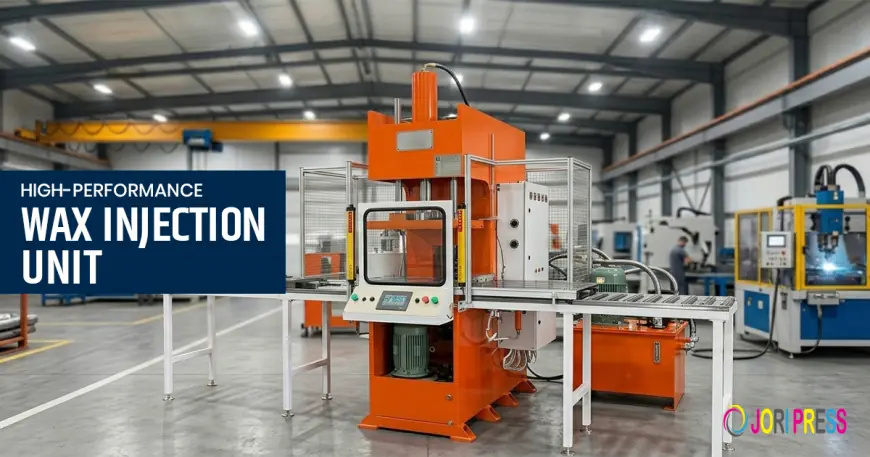
Quick Answer (TL;DR): A dependable wax injection machine holds precise wax temperature, controls injection pressure and hold time, clamps the die rigidly, and repeats every shot. Prioritize stable heating zones, adjustable pressure, cycle consistency, and easy maintenance. These features protect pattern dimensional accuracy and drop your reject rate.
Introduction
Nine out of ten dimensional rejects in investment casting start at the wax pattern. Not the pour. The wax. If your wax injection machine drifts on temperature or pressure, every step downstream inherits that error. At Laxminarayan Technologies, we've built foundry machinery since 1986, and we've watched good alloy go to scrap because the pattern was wrong before it ever touched slurry. So this guide stays blunt. You'll learn which features actually protect your tolerances, your surface finish, and your yield, and which ones are just brochure noise. Truth is, the machine you choose sets the ceiling for everything your foundry casts after it.
What is a wax injection machine?
A wax injection machine injects molten or semi-solid pattern wax into a metal die to form the expendable pattern used in lost-wax investment casting. That pattern's accuracy, surface finish, and shot-to-shot repeatability decide the quality of the final metal casting. Get the pattern right and the mould follows.
Why the wax pattern sets your tolerance ceiling
Here's the thing. Wax shrinks. Then the ceramic shell shrinks. Then the alloy shrinks. Three shrink stages stack up, and only the first one is fully in your hands. A stable pattern gives your process engineers a fixed starting point to compensate from. An unstable one moves the target every shift.
Think of it like baking. A cake baked at the wrong temperature comes out uneven no matter how good the recipe is. Same with wax. Wrong heat, wrong pressure, and the pattern slumps or sinks before you ever build a shell.
The core features that actually matter
Temperature control across zones
Pattern wax lives in a narrow window. Too hot and it slumps and flashes. Too cool and it won't fill thin sections, so you get short shots and cold seams. Look for a machine with separate, closed-loop control for the tank, the delivery line, and the nozzle. According to the ASM Handbook on investment casting, tight wax conditioning is central to pattern dimensional stability. Multi-zone control near ±1°C is what keeps a batch consistent from the first shot to the four-hundredth.
Injection pressure and hold time
One pressure setting does not fit every part. Thin turbine trailing edges need a different push than a chunky valve body. You want adjustable injection pressure, a separate hold (pack) pressure, and independently timed hold. That hold phase feeds wax in as the pattern cools, which fights sink marks and voids. No hold control, and complex parts sink every time.
Clamping and die rigidity
If the die opens under injection pressure, you get flash. Flash means dressing labour, and dressing changes dimensions. A rigid clamp with enough tonnage keeps the parting line shut. Check the frame too. A machine that flexes is a machine that drifts.
Repeatability and cycle consistency
A machine that nails one shot is easy. One that nails ten thousand is the goal. Ask for documented shot-to-shot repeatability. Programmable recipes per die help here, so an operator recalls settings instead of guessing them. Consistency is the whole game in a high-volume wax room.
Maintenance and serviceability
A fouled injection nozzle acts like a blocked syringe. Pressure climbs, fill drops, nobody's sure why. Machines built for quick nozzle access, easy tank cleaning, and standard seals keep you running. Ask a plain question before buying: how long to swap a heater or seal? If the answer is a full shift, keep looking.
Manual vs automated wax injection: a quick comparison
|
Factor |
Manual / semi-auto |
Automated |
|
Cycle consistency |
Operator-dependent |
Programmed, repeatable |
|
Labour per shift |
Higher |
Lower (up to ~40% savings) |
|
Best fit |
Low volume, big dies |
Medium to high volume |
|
Reject risk |
Rises with fatigue |
Stable across shifts |
|
Setup recall |
Manual notes |
Stored recipes |
Automated lines earn their cost fastest in high-volume aerospace and IGT work. For low-volume, large-pattern jobs, a well-built semi-automatic machine is often the smarter spend.
How a wax injection cycle runs
You'll recognize this on any foundry floor:
- Wax is conditioned to a set temperature in the tank, then held in the paste or liquid state.
- The die is closed and clamped to resist injection pressure.
- Wax is injected through the nozzle at a controlled pressure and rate.
- Hold pressure packs the cavity as the wax begins to cool and shrink.
- The pattern cools to a stable state inside the die.
- The die opens and the finished pattern is ejected for assembly onto the sprue.
Six steps. Control all six and your patterns come off predictable, batch after batch.
Use cases and real-world applications
- Aerospace turbine blades. Cooled blade geometries with ceramic cores demand tight tolerances and clean surfaces. Stable wax and firm hold control are non-negotiable here.
- Industrial gas turbine (IGT) parts. Larger patterns, bigger shot volumes. Clamp rigidity and heating capacity carry the load.
- Pump and valve castings. Thick sections that sink easily. Hold pressure and timed packing earn their keep.
- Automotive and general engineering. Volume work where cycle consistency drives yield and unit cost.
- Ceramic-core complex geometries. Delicate cores need gentle, well-controlled fill so they don't shift or crack during injection.
For turnkey wax-room capacity, see our wax injection machine range, and pair it with a proper assembly table so pattern handling doesn't undo the accuracy you just built. For deeper pattern-wax and injector detail, our sister resource at waxinjector.com goes further.
Challenges and solutions
Wax dimensional stability. Shrinkage and slump ruin repeatability. Our answer is multi-zone closed-loop heating and programmable hold pressure, so the pattern cools controlled instead of collapsing. Consistent wax, consistent shell.
Sink marks and voids on thick sections. These come from packing failure, not bad wax. Independent hold pressure and timed pack feed the cavity as it cools. The section stays sound.
Power and labour cost. Wax rooms run hot and constant. Our machines are engineered for roughly 50% power savings across wax, shell, and dewax stages and around 40% labour savings through automation. Over a year, that's real money back, not a line on a spec sheet.
We're honest about limits, too. No machine fixes a worn die or bad wax chemistry. Geometry has boundaries. Maintenance is a discipline, not an option. A wax injection machine is a precision tool, and it rewards foundries that treat it like one.
Conclusion
Choose a wax injection machine on the features that guard your tolerances: zoned temperature control, adjustable injection and hold pressure, rigid clamping, proven repeatability, and honest serviceability. Everything downstream in investment casting depends on that first wax pattern being right. Laxminarayan Technologies has commissioned foundry lines since 1986, ISO 9001 certified, with automated shell building and aviation-turbine capability across full turnkey projects. If you're specifying a new machine or fixing a stubborn reject rate, talk to our engineering team. We've seen the defect before.
FAQs
What temperature should pattern wax be injected at?
Most pattern waxes inject in a paste or low-liquid state, typically in the 55°C to 70°C range depending on the wax grade. The exact window comes from your wax supplier's datasheet. Stable multi-zone control matters more than any single number.
How does injection pressure affect pattern quality?
Pressure controls cavity fill and packing. Too low gives short shots and sink marks. Too high causes flash and die stress. Adjustable injection pressure plus a separate hold pressure lets you tune each part for sound, dimensionally accurate patterns.
What is the difference between manual and automated wax injection machines?
Manual and semi-automatic machines depend on the operator for consistency and suit low-volume or large patterns. Automated machines run stored recipes for repeatable cycles, cutting labour up to ~40% and stabilizing reject rates across shifts in medium to high-volume production.
How do I reduce reject rates from wax patterns?
Control the three variables that drive most defects: wax temperature, injection and hold pressure, and die clamping. Add programmable recipes and disciplined nozzle maintenance. Stable inputs produce stable patterns, and stable patterns cut downstream investment casting rejects.
What's Your Reaction?
 Like
0
Like
0
 Dislike
0
Dislike
0
 Love
0
Love
0
 Funny
0
Funny
0
 Angry
0
Angry
0
 Sad
0
Sad
0
 Wow
0
Wow
0