









































Top 7 Benefits of Professional Retaining Wall Design
A home is one of the biggest investments a homeowner can make, which is why understanding its structural condition is essential.
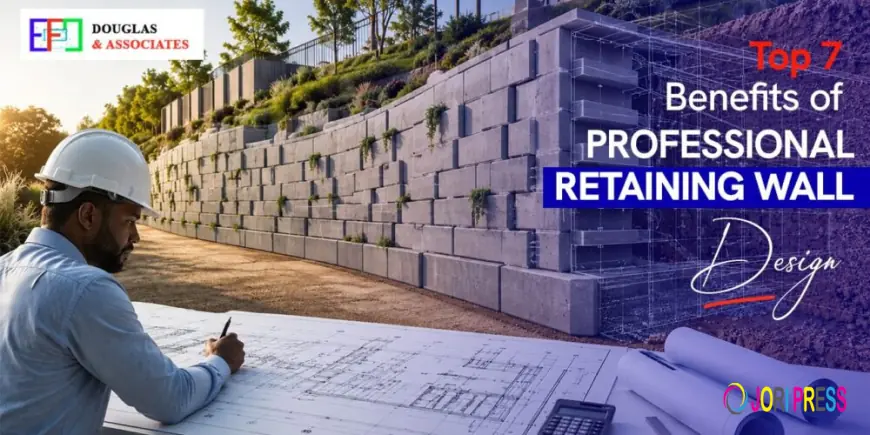
Retaining walls can make a major difference when developing sloped or uneven land. They help hold soil in place and can create safer, more practical areas for properties. However, a retaining wall is more than a structure made from concrete or blocks. Soil pressure, drainage, slope conditions, nearby loads, and the characteristics of the site all influence how well the wall will perform.
Let’s take a look at the key benefits of professional retaining wall design.
Benefits of Retaining Wall Design
1. Improved Wall Stability: Professional design considers soil conditions, wall height, foundation requirements, and expected loads, helping reduce the risk of cracking, leaning, or movement.
2. Better Drainage: Water can build up behind a retaining wall after heavy rainfall and increase pressure on the structure. Proper drainage planning helps control water and protect the surrounding soil.
3. Site-Specific Solutions: Every property has different ground conditions. Soil, groundwater, slope, available space, and nearby structures can affect the appropriate retaining wall design.
4. Better Land Use: A properly planned retaining wall can make challenging sloped land more useful for parking areas, gardens, walkways, roads, or other development purposes.
5. Long-Term Performance: Considering site conditions and structural requirements before construction can help a retaining wall perform reliably over time.
6. Protection Against Local Conditions: In St. Kitts & Nevis and the wider Caribbean, heavy rainfall, coastal conditions, and slope movement may affect retaining structures. Professional engineering helps account for these factors.
7. Reduced Risk of Costly Problems: Identifying design requirements and potential challenges before construction can help property owners avoid preventable structural and drainage issues later.
Why Professional Engineering Matters
A retaining wall design should reflect the conditions of the specific property rather than rely on a standard approach. Experienced Engineering consultants can assess the site and bring together factors such as soil, water, slope, loads, and surrounding structures before construction begins.
For projects in St. Kitts & Nevis and across the Caribbean, this local understanding can be particularly valuable when dealing with challenging terrain and changing weather conditions.
Conclusion
Professional retaining wall design can improve stability, drainage, land use, and long-term performance while helping reduce the risk of costly problems. EF Douglas & Associates provides civil and structural engineering solutions for projects across St. Kitts & Nevis and the wider Caribbean, helping clients address a range of development and engineering requirements with professional expertise.
What's Your Reaction?
 Like
0
Like
0
 Dislike
0
Dislike
0
 Love
0
Love
0
 Funny
0
Funny
0
 Angry
0
Angry
0
 Sad
0
Sad
0
 Wow
0
Wow
0