







































The Smart Moving Checklist: How to Plan a High-Rise Apartment Shift Without the Chaos
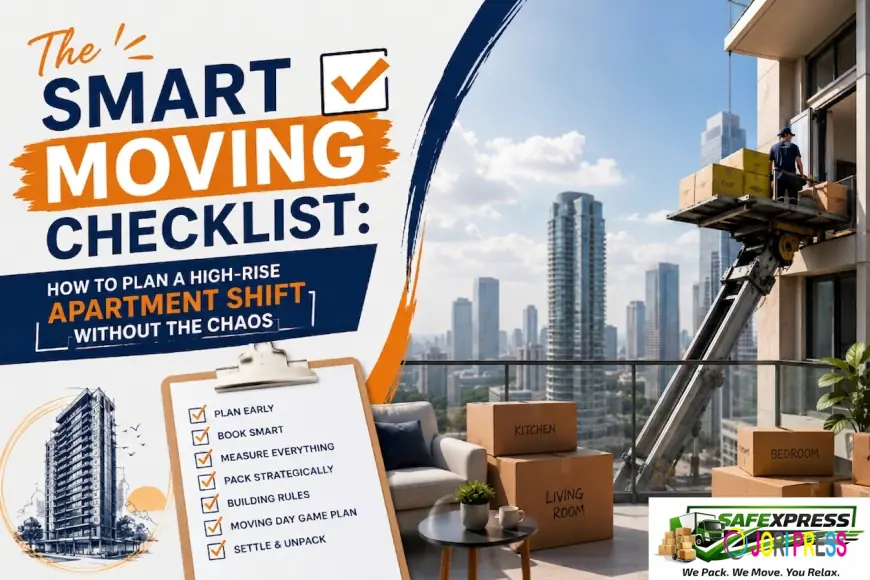
Relocating from or into a modern residential complex is entirely different from moving into a traditional, independent builder floor. In a fast-growing vertical hub, planning a smooth transition requires navigating strict residential welfare association (RWA) policies, coordinating lift allocations, and managing tight corridor spaces. While securing experienced packers and movers Gurgaon is the single most important step to eliminate logistics anxiety, achieving a smooth, orderly move demands a specialized high-rise strategy.
In luxury high-rise corridors like Golf Course Extension Road, Sohna Road, or DLF Phase 5, executing a shift from the 15th or 25th floor requires precision timing and structural planning. To safeguard your expensive furniture, fragile decor, and personal peace of mind, use this master high-rise shifting checklist to conquer the vertical climb without the chaos.
Phase 1: Pre-Move Compliance and RWA Approvals (4 Weeks Out)
High-rise societies operate on strict administrative rules to maintain security and avoid disrupting other residents. Failing to clear paperwork early can result in your moving truck being turned away at the gate.
-
Secure the Move-Out/Move-In NOC: Obtain formal No Objection Certificates from both your current and future estate management offices. Ensure all outstanding maintenance dues are cleared.
-
Verify RWA Operational Timings: Most premium high-rises enforce strict entry windows for professional moving companies—typically between 9:30 AM and 5:30 PM. Moving is rarely permitted on Sundays or national holidays.
-
Request Gate Passes for the Crew: Provide the society management office with the supervisor's identification details and the vehicle registration numbers in advance to speed up security checks at the main gate.
Phase 2: Vertical Logistics and Elevator Management (2 Weeks Out)
You cannot simply show up and expect to load an entire household using standard passenger elevators. Vertical transit is the ultimate bottleneck in high-rise house shifting.
-
Book the Dedicated Service Lift: Formally reserve the service elevator for your specific shifting slot. Passenger lifts are strictly off-limits for transporting large appliances or furniture.
-
Measure the Structural Constraints: Document the exact height, width, and depth of the elevator door, service corridors, and your main entrance. Share these dimensions with your moving partner to confirm if oversized items like king-size mattresses or double-door refrigerators will fit.
-
Establish a Lift Cushioning Plan: Confirm whether the society provides protective wall padding for the service lift. If not, request your movers to wrap elevator edges with thick moving blankets to prevent structural damage and avoid losing your security deposit.
Phase 3: High-Rise Specialized Packing Strategies (1 Week Out)
Vibrations inside high-speed service lifts and long walks down wind-swept, open balconies require high-level wrapping and box stability.
-
Insist on Multi-Layer Isolation Packing: High-rise moves involve extended manual handling on trolleys. Ensure items are secured using a 3-layer system: bubble wrap for shock absorption, heavy corrugated sheets for structural rigidity, and stretch film to lock out moisture and dust.
-
Use Heavy-Duty, Stackable Uniform Boxes: Randomly shaped grocery boxes will collapse when stacked high on long elevator trolleys. Utilize standardized 5-ply boxes that sit perfectly on top of one another.
-
Label by Room and Priority: Mark boxes clearly on at least two sides with the destination room (e.g., "Kitchen - Fragile" or "Master BR - Essentials"). This helps the crew unload efficiently in the new high-rise without cluttering narrow entry foyers.
Phase 4: Execution Day Protocols (The Shifting Blueprint)
When the logistics sector professionals arrive, a chaotic layout can ruin hours of work. Managing the physical movement on matching floor levels is key.
-
Clear the Corridors and Walkways: Ensure the path from your front door to the service elevator is entirely clear of shoes, plants, or doormats to prevent trip hazards for the loading crew.
-
Assign Two Strategic Captains: Place one person inside your apartment to oversee the packing and dismantling. Position a second family member on the ground floor next to the loading vehicle to verify every box leaving the elevator goes directly into the truck.
-
Deploy Professional Moving Trolleys: Ensure the crew utilizes heavy-duty flatbed trolleys with non-marking rubber wheels. This protects the society’s granite or marble hallways from cracks and reduces noise levels for your neighbors.
Phase 5: Seamless Unloading and Setup
Arriving at your new multi-story apartment requires the exact same level of discipline to make the space immediately livable.
-
Inspect Floor and Wall Protectors: Before the first item enters your new home, lay down cardboard sheets or plastic runners over high-traffic flooring areas to prevent scuffs or scratches from heavy boots and equipment.
-
Prioritize Furniture Assembly first: Direct your movers to unpack and assemble large items—like bed frames, wardrobes, and dining tables—first. Once the heavy items are positioned, stacking smaller boxes around them becomes much simpler.
Frequently Asked Questions (FAQs)
Q1. What happens if my large sofa or dining table does not fit inside the service lift? If an item exceeds elevator dimensions, professional movers must transport it via the emergency stairwell. For extremely high floors where stairwell portage is impossible, specialized structural teams use heavy-duty pulley systems or crane operations to safely lift the furniture through open balconies.
Q2. Are there additional labor fees for high-rise apartment moves? Yes, most standard moving rates include a minor premium for high-rise shifting. This covers the extended walking distance through service bays, long elevator transit times, and complex handling requirements compared to a ground-floor move.
Q3. How do I avoid paying penalty fees to the society RWA during a move? RWA penalties usually result from scratching lift interiors, scraping corridor walls, or blocking resident parking spaces. You can easily avoid these charges by ensuring your movers use corner guards, pad the service lift, and park the transport truck strictly within designated commercial loading bays.
Q4. Can I move my household goods using the regular passenger lift? Almost all high-rise residential societies in urban sectors strictly prohibit the use of passenger lifts for commercial household goods. Passenger lifts are not built to handle heavy, unbalanced weight loads, and using them can inconvenience other residents.
The Secret to a Safe, Calm Transition
Successfully moving into a high-rise tower is all about managing logistics, clearances, and community guidelines. By checking off administrative tasks early, measuring your pathways, and keeping open communication with estate management, you turn a chaotic moving day into a predictable, smooth operation.
To ensure your premium appliances and delicate furniture are handled with complete technical accuracy, hiring experienced packers and movers Gurgaon like Safe Shifting Packers ensures a flawless transition. Our trained crews specialize in high-rise dynamics, utilizing specialized packing materials, rubber-wheeled transit systems, and real-time GPS tracking to manage your vertical shift safely and efficiently.
Planning a move to a new luxury high-rise? Connect with Safe Shifting Packers today to book your comprehensive pre-move survey and experience an organized, zero-damage relocation!
What's Your Reaction?
 Like
0
Like
0
 Dislike
0
Dislike
0
 Love
0
Love
0
 Funny
0
Funny
0
 Angry
0
Angry
0
 Sad
0
Sad
0
 Wow
0
Wow
0