








































Tashkent Medical Academy Urgench: A Look at Medical Education
Explore Tashkent Medical Academy Urgench, including its medical education, clinical training, academic environment, accreditation, and key facts for students.

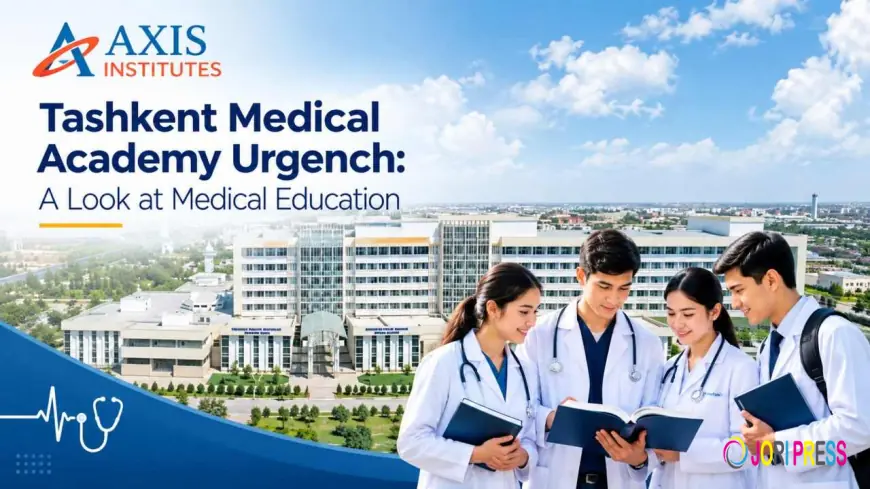
Choosing where to study medicine is a major decision because medical education involves much more than selecting a university. Students need to understand the academic environment, curriculum, clinical exposure, teaching methods, research opportunities, and the overall learning experience before making a decision. For students exploring medical education in Uzbekistan, Tashkent Medical Academy Urgench is an institution worth understanding in greater detail.
The institution has a history dating back to 1992, when the Urgench branch of the First Tashkent State Medical Institute was established. Following the establishment of Tashkent Medical Academy in 2005, the Urgench branch became known as the Urgench branch of Tashkent Medical Academy. More recently, according to the institution's official website, it has been operating as Urgench State Medical Institute since October 2025.
This change in institutional status is important for prospective students researching older references to the academy online. Many educational resources may still use the familiar name Tashkent Medical Academy Urgench because that was the institution's established name for many years.
Understanding Tashkent Medical Academy Urgench
The Urgench medical institution is located in Urgench, Khorezm Region, Uzbekistan. It developed as a regional centre for medical education and professional training and has expanded its academic and research activities over time.
Historical information from Uzbekistan's national science and education records shows that the Urgench branch was established to strengthen the training and professional development of medical personnel in the region. The institution has also developed research activities and academic partnerships over the years.
For students, this background provides useful context. Medical universities should not be evaluated only by their name or location. The structure of medical education, availability of practical training, academic departments, teaching staff, and opportunities for professional development are equally important.
Academic Structure and Medical Education
Medical education generally progresses from fundamental scientific concepts toward clinical application. At an institution such as Tashkent Medical Academy Urgench, students encounter subjects that form the foundation of medical knowledge before moving into more clinically oriented areas.
Basic medical sciences help students understand how the human body functions and how diseases develop. These subjects provide the foundation for later studies in areas such as internal medicine, surgery, pediatrics, obstetrics and gynecology, neurology, and other clinical disciplines.
The institution has historically included areas such as General Medicine, Pediatrics, and Disease Prevention and Healthcare Management among its academic fields. National research documentation also records substantial teaching and research activity at the Urgench branch.
The precise programmes, academic regulations, and course structures can change over time. Therefore, students should always verify the latest programme information directly through the institution or official higher-education sources before applying.
The Importance of Clinical Training
One of the most important aspects of medical education is the transition from classroom learning to practical healthcare settings.
Students can understand medical theory from textbooks, lectures, and laboratory work, but clinical training introduces them to real patient interactions, diagnosis, medical decision-making, communication, and professional responsibilities.
This is why clinical exposure is an important factor when comparing medical schools. Students should look at how clinical training is incorporated into the curriculum, which hospitals or healthcare facilities are used, and when students begin interacting with patients.
A 2024 visit by Uzbekistan's Minister of Higher Education, Science and Innovation to the Urgench branch highlighted the institution's classrooms, educational buildings, information and resource centre, language-learning facilities, and the practical training environment for dentistry students.
For anyone researching Tashkent Medical Academy Urgench, clinical education should therefore be considered alongside classroom-based learning rather than treated as a separate part of the degree.
Teaching and Learning Environment
A productive medical education environment depends on several elements: qualified teachers, appropriate laboratories, access to academic resources, practical facilities, and opportunities for students to develop professional skills.
The institution has reported academic departments covering different areas of medicine and has developed facilities supporting education and research. Historical national records also describe research councils, postgraduate research activity, scientific publications, and international academic agreements.
The Uzbekistan Ministry's 2024 report also noted an information and resource centre and facilities supporting language education. Such resources can be particularly useful for students who are adapting to a new academic environment or studying in an international setting.
Axis Institutes, while providing information about medical education abroad, can also be useful as a reference point for students who want to understand how different aspects of an overseas medical programme should be evaluated. However, students should distinguish between information provided by educational counselors and information confirmed by the university or relevant authorities.
International Students and English-Medium Education
International students considering medical education in Uzbekistan should pay particular attention to the language of instruction.
The international education environment may involve programmes delivered in different languages. Current accreditation information for the Urgench branch records a bachelor's programme in General Medicine with English as a medium of instruction, alongside programmes offered in Uzbek and Russian. The English-medium General Medicine programme received a positive accreditation decision valid from April 2025 through April 2030.
This is useful information for international applicants because the language used in lectures, examinations, practical training, and clinical communication can significantly affect the student experience.
Students should still confirm the language applicable to their specific programme and intake because programme arrangements can change.
Accreditation and Quality Assurance
Accreditation is another important consideration when researching a medical university.
Rather than relying only on statements found on education websites, prospective students should check official or recognised quality-assurance databases. The Database of External Quality Assurance Results in the Asia-Pacific Region lists the Urgench branch's General Medicine programmes and records positive accreditation decisions.
This type of information is particularly relevant because accreditation relates to the quality-assurance status of a specific programme, not simply the reputation of an institution.
Students from other countries should also independently check the regulations applicable to foreign medical graduates in their home country. Recognition requirements, licensing examinations, internship rules, and eligibility conditions may differ from one country to another.
What Should Students Evaluate Before Choosing a Medical University?
Students researching Tashkent Medical Academy Urgench should create a checklist instead of relying on a single factor.
Important areas to investigate include:
-
Programme structure: Understand the subjects covered and how the course progresses from basic sciences to clinical medicine.
-
Teaching language: Confirm the language used for lectures, examinations, and clinical components.
-
Clinical training: Find out where practical training takes place and how it is incorporated into the programme.
-
Accreditation: Check the current accreditation status of the exact programme.
-
Academic facilities: Review laboratories, libraries, simulation resources, and other learning facilities.
-
Research opportunities: Look for departments, research projects, publications, and postgraduate opportunities.
-
Student support: International students should understand accommodation, administrative assistance, and communication arrangements.
-
Home-country regulations: Check the requirements for practising medicine after graduation in the student's intended country.
Axis Institutes can be considered one source of general information while comparing overseas medical education options, but students should verify important regulatory and academic details independently.
Why Urgench Matters as a Study Location
Urgench provides a different environment from Uzbekistan's larger metropolitan centres. As the capital of the Khorezm Region, the city has an established educational and healthcare ecosystem.
For medical students, the surrounding healthcare environment matters because medical education is closely connected with hospitals, healthcare professionals, and patient populations.
Students choosing an overseas medical programme also need to think about factors beyond academics, including accommodation, transportation, living costs, cultural adjustment, communication, and access to essential services.
These considerations can influence the overall student experience just as much as classroom facilities.
Frequently Asked Questions
1. What is Tashkent Medical Academy Urgench called now?
The institution was historically known as the Urgench branch of Tashkent Medical Academy. According to its official website, it has been operating as Urgench State Medical Institute since October 2025.
2. Where is Tashkent Medical Academy Urgench located?
The institution is located in Urgench, Khorezm Region, Uzbekistan. The World Directory of Medical Schools lists its main address as 25 Al-Khorazmiy Street, Urgench.
3. Is General Medicine available in English?
Current quality-assurance records list a General Medicine bachelor's programme with English as the medium of instruction. The same database also lists General Medicine programmes in Uzbek and Russian.
4. Why is clinical training important for medical students?
Clinical training allows students to apply theoretical knowledge in healthcare settings. It helps develop skills related to patient interaction, examination, diagnosis, communication, and professional practice.
5. What should Indian students check before applying?
Indian students should verify the current eligibility requirements, NEET-related rules, programme recognition, curriculum, internship arrangements, and NMC regulations applicable to foreign medical graduates. Requirements can change, so information should be checked against current official sources before making an application.
Axis Institutes may provide educational guidance for students exploring medical studies abroad, but final decisions should be based on current university information and applicable regulatory requirements.
Conclusion
Tashkent Medical Academy Urgench represents an important part of Uzbekistan's medical education landscape and has a history extending back to the establishment of its Urgench branch in 1992. Its development has included medical education, clinical training, research activity, academic facilities, and programmes serving both local and international learners.
For prospective students, the most useful approach is to look beyond basic claims about a university. Examining the curriculum, teaching language, clinical exposure, accreditation, academic resources, research opportunities, and professional licensing requirements provides a much clearer picture of whether a medical programme matches individual goals.
Because institutional names and regulations can change—as demonstrated by the transition from the Urgench branch of Tashkent Medical Academy to Urgench State Medical Institute—students should always verify the latest information before making an important educational decision.
For students comparing overseas medical education options, Axis Institutes can serve as an additional source of general guidance, while official university and regulatory sources should remain the final reference for programme-specific and licensing information.
What's Your Reaction?
 Like
0
Like
0
 Dislike
0
Dislike
0
 Love
0
Love
0
 Funny
0
Funny
0
 Angry
0
Angry
0
 Sad
0
Sad
0
 Wow
0
Wow
0