






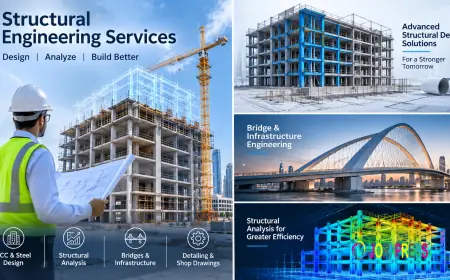































Structural Engineering Solutions Supporting the UAE's Growing Construction and Infrastructure Sector
Conserve provides expert structural engineering services in Dubai and UAE, including RCC and steel structure design, structural analysis, detailing, bridges, infrastructure and value engineering.

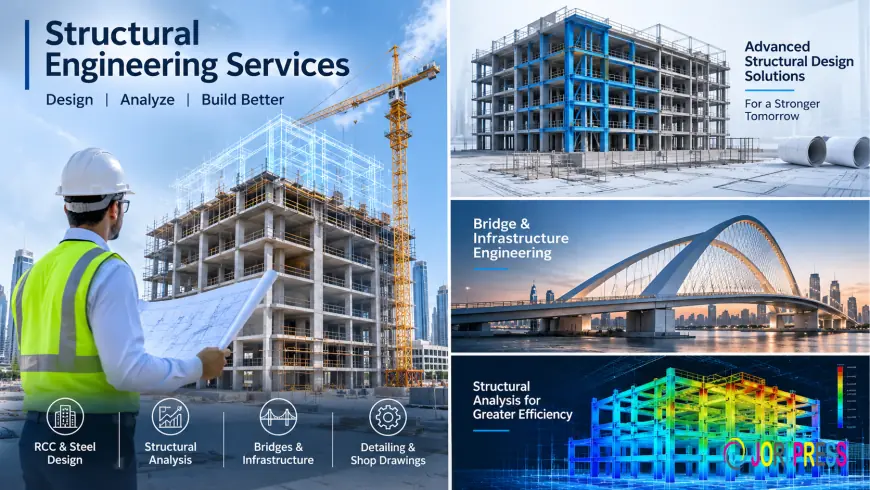
The construction and infrastructure industry in the United Arab Emirates requires engineering solutions that combine technical accuracy, efficient design, and practical construction planning.
From commercial developments and industrial facilities to highways, bridges, railway systems, and energy infrastructure, structural engineering is a fundamental part of modern project development.
As project requirements become more complex, engineering companies are increasingly focused on delivering integrated structural design, analysis, detailing, and construction support.
The Growing Importance of Structural Engineering
Structural engineering involves the analysis and design of systems that support buildings and infrastructure.
Engineers evaluate how structures respond to different loads and conditions, considering factors such as material selection, structural stability, member sizing, connections, and construction requirements.
The objective is to develop structures that meet applicable design criteria while remaining practical to fabricate, erect, and maintain.
Key Areas of Structural Engineering
RCC Structure Design
Reinforced Cement Concrete structures are essential in many building and infrastructure developments.
Structural design activities can include foundation systems, columns, beams, slabs, retaining structures, and other reinforced concrete components.
Accurate design and detailing help coordinate engineering requirements with construction activities.
Steel Structure Design and Connection Engineering
Steel structures are widely used in industrial facilities, warehouses, manufacturing plants, commercial buildings, and equipment-support systems.
Typical engineering requirements include:
-
Steel member design and sizing.
-
Structural connection design.
-
Roof truss and canopy engineering.
-
Pipe rack and cable tray support structures.
-
Equipment and platform support systems.
-
Structural erection engineering.
Connection engineering is particularly important because structural forces must be transferred effectively between connected members.
Structural Analysis and Simulation
Structural analysis helps engineers understand how a proposed system responds to different loading conditions.
Depending on project requirements, engineering assessments may include:
-
Equivalent static analysis.
-
Dynamic analysis.
-
In-place analysis.
-
Transportation analysis for barge and land movements.
-
Lifting analysis.
These assessments support design decisions and help evaluate the structural requirements of different project stages.
Structural Detailing and Engineering Documentation
Design information must be translated into practical engineering documents that can be understood by construction teams and fabricators.
Typical deliverables include:
-
Conceptual drawings.
-
Issued-for-construction (IFC) drawings.
-
Fabrication drawings.
-
Assembly drawings.
-
Single-part drawings.
-
Shop drawings.
-
Rebar detailing.
-
Bar bending schedules.
-
Coordination drawings.
-
As-built drawings.
-
Material take-offs.
Clear and coordinated documentation is important for reducing ambiguity during fabrication and construction.
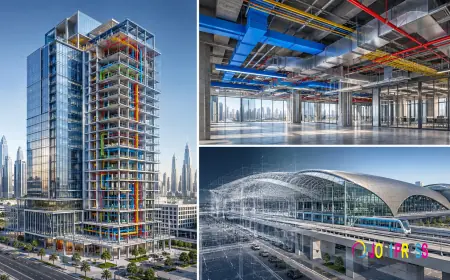
Structural Engineering for Infrastructure Projects
Infrastructure development requires specialized engineering knowledge across several sectors.
Structural engineering can support:
Roads and highways: Road structures, flyovers, elevated roads, interchanges, and bridge rehabilitation.
Railways and tunnels: Railway bridges, station structures, underpasses, track-related infrastructure, and freight corridors.
Bridges: Cable-stayed bridges, arch bridges, suspension bridges, segmental bridges, and composite bridge structures.
Marine infrastructure: Shipyard platforms, skid modules, and port-related structural systems.
Water infrastructure: Water treatment facilities, wastewater systems, pump houses, and stormwater infrastructure.
These projects require coordination between structural design, construction methods, transportation requirements, and other engineering disciplines.
The Role of Front-End Engineering and Design
Front-End Engineering and Design (FEED) provides an important foundation for detailed project development.
During this stage, engineering teams establish design requirements, evaluate technical options, coordinate stakeholders, and develop the information needed for subsequent engineering phases.
A structured FEED process can help clarify project scope and identify technical considerations before detailed design progresses.
Engineering Software and Digital Design
Modern structural engineering relies on specialized software for analysis, design, modeling, and detailing.
Tools used across the industry include:
-
STAAD.Pro
-
Tekla Structures
-
Revit Structure
-
ETABS
-
SAP2000
-
ANSYS
-
MIDAS
-
Robot Structural Analysis
-
RISA
-
PLAXIS
The appropriate software depends on the structure, analysis requirements, project standards, and required deliverables.
Conserve Technical Services: Structural Engineering in Dubai and UAE
Conserve Technical Services LLC provides civil and structural engineering solutions for building services, infrastructure, oil and gas, power and energy, resources, and other industrial sectors.
Its capabilities cover RCC and steel structure design, conceptual engineering, connection design, structural analysis, value engineering, fabrication drawings, detailed engineering, rebar detailing, and as-built documentation.
The company also supports commercial and industrial buildings, transportation infrastructure, bridges, flyovers, marine facilities, power plants, and geotechnical projects.
Conserve provides engineering support to clients across India, the Middle East, Canada, and Singapore.
Conclusion
Structural engineering is about much more than calculating loads or preparing drawings. It involves understanding how structures behave, how components connect, and how engineering decisions affect construction and long-term performance.
For developers, consultants, contractors, and industrial organizations seeking structural engineering support in the UAE, choosing an experienced engineering partner is an important part of successful project planning.
Company: Conserve Technical Services LLC
Location: Dubai, United Arab Emirates
What's Your Reaction?
 Like
0
 Dislike
0
 Love
0
 Funny
0
 Angry
0
 Sad
0
 Wow
0