































SP3D Admin Training: Build Expertise in Smart 3D Management
Master SP3D Admin Training to learn SmartPlant 3D administration, project setup, configuration, and database management with practical, expert-led online training.

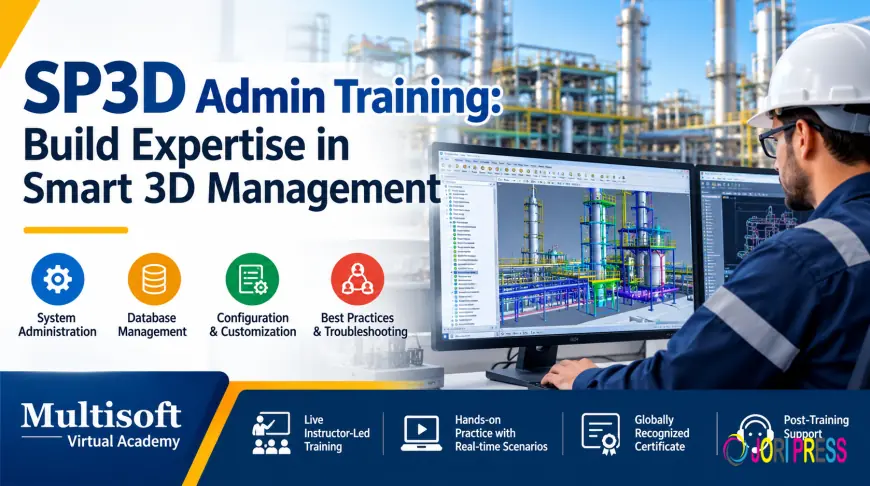
The engineering industry increasingly relies on intelligent design applications to develop complex industrial facilities with greater accuracy and efficiency. From oil and gas plants to chemical processing units and power generation facilities, advanced 3D design technologies help engineering teams coordinate equipment, piping, structural components, and other essential systems. Smart 3D, commonly associated with SmartPlant 3D (SP3D), plays an important role in these engineering workflows.
While designers focus on developing accurate plant models, administrators ensure that the underlying software environment remains properly configured, organized, and accessible. This makes SP3D Admin Training an important learning opportunity for professionals interested in engineering software administration, project configuration, and technical support.
By understanding Smart 3D administration, professionals can develop the skills needed to support engineering teams, manage project resources, investigate technical issues, and maintain consistent design environments.
Understanding SP3D Administration and Its Role
SP3D administration involves managing the technical environment that supports intelligent plant design activities. It focuses on the configuration, organization, and maintenance of project resources rather than concentrating exclusively on 3D modeling.
An SP3D administrator may work with project settings, databases, user permissions, reference data, system configurations, and application troubleshooting. These responsibilities help engineering teams work within a structured environment that follows established project requirements.
A comprehensive SP3D Administration Training Course introduces learners to the administrative functions of Smart 3D and explains how these functions influence day-to-day engineering operations.
For example, a piping engineer may need access to specific project specifications, while a structural designer may require different resources. Administrators help establish the configurations and access arrangements necessary for each team to perform its responsibilities.
Understanding these relationships allows professionals to identify administrative dependencies, follow appropriate procedures, and support smoother project execution.
Why Do Engineering Professionals Need SP3D Admin Training?
Large engineering projects involve substantial amounts of technical information, multiple design disciplines, and numerous participants working toward shared project objectives. Without suitable administrative practices, organizations may encounter inconsistent configurations, restricted access, database issues, and delays caused by technical problems.
SP3D Admin Training helps professionals understand how administrative controls contribute to an efficient engineering environment.
Improve Engineering Project Organization
A well-organized project environment makes it easier for engineering teams to access relevant information and follow consistent working procedures. Administrators help maintain project structures and configurations that reflect organizational requirements.
Training introduces learners to the administrative concepts behind organized plant design projects and explains how proper configuration supports multidisciplinary collaboration.
Maintain Reliable Engineering Data
Plant design projects depend on accurate information about equipment, piping systems, structural elements, and engineering specifications. Administrative knowledge helps professionals understand how project databases and reference data contribute to the consistency of this information.
Learners can develop an understanding of data maintenance, integrity checks, and procedures for investigating inconsistencies.
Strengthen Application Support Capabilities
Technical problems can interrupt modeling activities and affect project schedules. Professionals who understand SP3D administration are better equipped to investigate configuration-related issues, examine error messages, and follow structured troubleshooting procedures.
This knowledge can be useful for engineering application support teams and administrators responsible for maintaining software environments.
Support Secure User Access
Engineering organizations often work with internal departments, external consultants, and project contractors. Different users may require different access privileges depending on their responsibilities.
Administration training explains the importance of permission management, user groups, and controlled access. These concepts support responsible information handling and help organizations maintain appropriate security practices.
Core Skills Developed Through SP3D Admin Training
The effectiveness of an SP3D administration course depends on how well it connects software concepts with practical engineering requirements. A comprehensive program should introduce the following subject areas, although the exact syllabus may vary by software version and training provider.
1. Smart 3D System Architecture
Understanding the overall application environment is an important starting point. Learners explore the relationships between project configurations, databases, reference data, and the tools used by engineering teams.
This knowledge helps administrators understand how different components interact and why a change in one area may affect other project activities.
2. Project Creation and Configuration
Project configuration establishes the foundation for organized engineering work. Training may cover site and plant structures, project settings, administrative options, and the preparation of environments for engineering activities.
Participants learn why project configurations should reflect established design standards and organizational requirements.
3. Database Management and Maintenance
Database administration is a significant area of technical responsibility. Learners may study database connectivity, maintenance procedures, backup strategies, restoration concepts, and database integrity.
These skills help professionals understand the importance of protecting project information and maintaining reliable access to engineering data.
Practical exercises should be performed in suitable training environments, particularly when they involve database changes or recovery procedures.
4. User Management and Permission Configuration
User management involves organizing access according to the responsibilities of engineers, administrators, and other project participants.
An SP3D administration course may introduce permission groups, access privileges, user roles, and administrative security practices.
Understanding these concepts helps learners support collaboration without granting unnecessary permissions.
5. Reference Data and Catalogue Administration
Reference data provides essential information used throughout the engineering design process. Depending on the project environment, administrative tasks may involve catalogues, specifications, reference data updates, and system hierarchy configuration.
Training helps participants understand how these resources affect model consistency and engineering workflows.
6. Model Reference and Data Reuse
Industrial projects sometimes require the reuse of existing model information or the integration of external 3D references. Depending on the syllabus, learners may explore reference model handling, model reuse, and related configuration requirements.
These concepts are especially relevant when multiple disciplines must coordinate their design information within a common project environment.
7. Troubleshooting and Error Resolution
Effective administration requires a systematic approach to identifying technical problems. Training may include reviewing error messages, checking configuration settings, examining available logs, and understanding common database or connectivity issues.
Learners should also understand when a problem requires escalation to database specialists, IT teams, or software support.
Practical Applications of SP3D Administration in Industrial Projects
SP3D administration supports several activities throughout the lifecycle of an engineering project.
In an oil and gas facility, administrators may help maintain the project environment used by piping, equipment, and structural design teams. Appropriate configuration and access controls support coordinated engineering work.
In chemical processing projects, administrators may help maintain reference data and project settings so that engineering activities follow the established project standards.
In power generation projects, structured administration can support the organization of design resources and help technical teams investigate application-related problems.
Engineering contractors may also use administrative practices to maintain consistent working environments across projects and teams.
These examples illustrate why Smart 3D administration is relevant beyond software configuration alone. It contributes to the broader process of maintaining reliable engineering information and supporting project coordination.
Who Can Benefit From an SP3D Administration Course?
SP3D Admin Training is suitable for professionals who want to develop administrative knowledge related to intelligent plant design applications.
CAD administrators: Professionals managing engineering software environments can strengthen their understanding of project configurations, access controls, and technical maintenance.
Plant design engineers: Engineers who already use Smart 3D may benefit from understanding how administrative settings influence their modeling activities.
Piping and mechanical engineers: Professionals involved in industrial plant projects can broaden their knowledge of the technical systems supporting engineering design.
IT support professionals: Individuals responsible for engineering application support can learn more about the administrative requirements of Smart 3D environments.
Engineering project support teams: Professionals assisting with project setup, data organization, and technical coordination may find administration training relevant to their responsibilities.
Previous experience with CAD applications, engineering projects, or Smart 3D can be helpful. However, learners should check the prerequisites before selecting an introductory or advanced course.
Career Prospects After Smart 3D Administration Training
Professionals with relevant administration knowledge may explore opportunities in engineering software management, technical support, and plant design operations.
Potential job roles include:
- SP3D Administrator
- Smart 3D Application Support Engineer
- CAD Systems Administrator
- Plant Design Software Specialist
- Engineering Application Support Professional
- SP3D Project Support Engineer
- Engineering Systems Support Specialist
The availability of these roles depends on industry demand, employer requirements, practical experience, and familiarity with the relevant software version.
Employers may also expect knowledge of databases, operating systems, networking fundamentals, engineering workflows, and technical documentation.
To improve their professional readiness, learners should combine training with practical exercises, develop troubleshooting skills, and review the technical requirements mentioned in relevant job descriptions.
Completing a course alone does not guarantee employment, but structured learning can help professionals build a stronger foundation for suitable technical responsibilities.
How to Select the Best SP3D Admin Training Program
Choosing the right course requires evaluating its technical coverage and suitability for your career goals.
Examine the Course Curriculum
Check whether the syllabus covers system architecture, project configuration, database administration, reference data, permission management, and troubleshooting.
A detailed outline helps you identify whether the program addresses the administrative skills you want to develop.
Verify Software Version Compatibility
Smart 3D environments may differ according to software version, implementation, and organizational configuration. Confirm that the course is relevant to your intended working environment.
Look for Practical Exercises
Practical learning helps participants connect theoretical concepts with administrative tasks. Examples may include configuring a training project, reviewing access permissions, investigating errors, and understanding database maintenance procedures.
Evaluate Instructor Experience
An instructor familiar with engineering software and real project workflows can explain technical concepts more clearly and provide useful context for administrative decisions.
Confirm Training Delivery and Support
Review the available learning format, class schedule, practical sessions, study resources, and post-training support. Live instructor-led sessions may be helpful for learners who want to discuss technical questions during training.
Understand Certification Options
Ask whether the course includes a certificate of completion and what requirements must be fulfilled to receive it. A training completion certificate should not automatically be interpreted as an official vendor certification.
Comparing these factors helps learners make an informed decision and select a course aligned with their professional objectives.
Best Practices for Managing an SP3D Environment
Administrative knowledge becomes more effective when supported by consistent operational practices.
Document configuration changes. Maintain clear records of important changes, including their purpose, approval, and expected impact.
Protect project information. Follow established backup and recovery procedures, and verify that appropriate recovery arrangements are available.
Apply appropriate access controls. Grant users only the permissions required for their responsibilities and review access when roles change.
Test changes before deployment. Where possible, validate significant configuration changes in a suitable test environment before applying them to production projects.
Maintain consistent reference data. Coordinate updates with relevant engineering teams to reduce the risk of inconsistencies.
Follow structured troubleshooting procedures. Record error details, investigate possible causes, test solutions carefully, and document the outcome.
Collaborate with technical teams. Work with engineers, database administrators, and IT support professionals when issues involve multiple systems or specialized expertise.
These practices help organizations maintain more consistent engineering environments and reduce avoidable disruptions to project activities.
Frequently Asked Questions About SP3D Admin Training
What is the purpose of SP3D Admin Training?
SP3D Admin Training helps professionals understand how to manage Smart 3D project environments, including configuration, database-related activities, user permissions, reference data, and troubleshooting.
Is SP3D administration different from SP3D modeling?
Yes. Modeling training focuses on creating and modifying 3D plant components, while administration training emphasizes the technical environment, project settings, databases, permissions, and system maintenance that support engineering work.
Do I need previous Smart 3D experience?
Previous experience is useful, particularly for advanced administrative concepts. Beginners should select a course with suitable prerequisites and a clear introduction to the application.
Does the course cover SP3D database administration?
Many administration programs include database-related topics. However, the precise coverage of backup, recovery, maintenance, and troubleshooting depends on the curriculum.
How long does SP3D Admin Training take?
The duration varies according to the depth of the syllabus, practical exercises, software version, and delivery format. Request a detailed course outline before confirming enrollment.
Can this training help with career development?
The training can help learners develop relevant knowledge for engineering software administration and technical support roles. Career opportunities also depend on practical experience, broader technical skills, and employer expectations.
Conclusion
As industrial organizations continue to adopt intelligent plant design technologies, effective software administration remains essential for maintaining organized engineering workflows and reliable project information. SP3D Admin Training helps professionals understand the administrative functions behind Smart 3D, including project configuration, database management, user permissions, reference data, and technical troubleshooting. For individuals and organizations seeking structured learning, practical technical guidance, and professional skill development, Multisoft Virtual Academy provides training opportunities designed to help learners strengthen their Smart 3D administration knowledge and prepare for the evolving demands of the engineering industry.
What's Your Reaction?
 Like
0
Like
0
 Dislike
0
Dislike
0
 Love
0
Love
0
 Funny
0
Funny
0
 Angry
0
Angry
0
 Sad
0
Sad
0
 Wow
0
Wow
0