

































Why Sialkot, Pakistan Is a Growing Hub for Sportswear Manufacturing
Discover why Sialkot, Pakistan is becoming a major sportswear manufacturing hub, from skilled workers and supply chains to export experience.
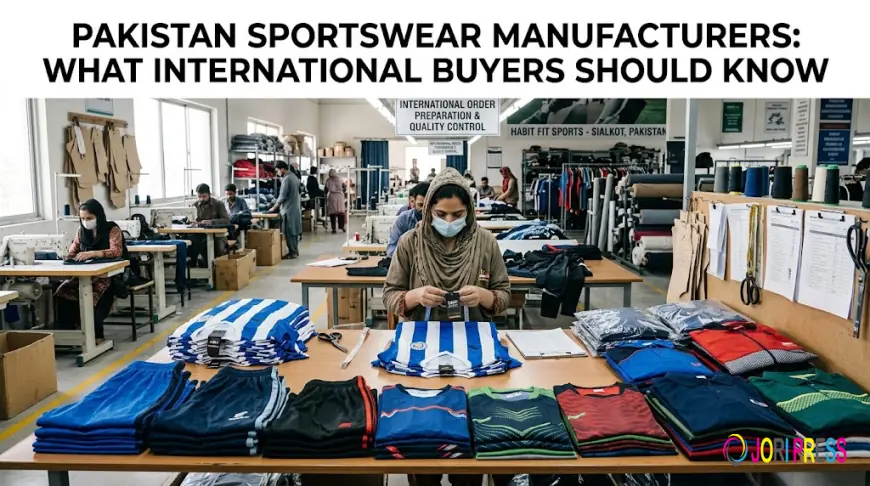
Why Sialkot, Pakistan Is a Growing Hub for Sportswear Manufacturing
When people think about sportswear manufacturing, countries such as China, Vietnam, Bangladesh, and Turkey often come to mind. However, Pakistan has also built a strong position in the global sports goods and apparel supply chain, and the city of Sialkot is at the center of that story.
Sialkot has developed a reputation for manufacturing sports goods, protective equipment, apparel, and other products for international markets. Its industrial experience, skilled workforce, supplier network, and export-oriented businesses have helped create an environment where sportswear companies can develop and manufacture products for customers around the world.
For clothing brands looking for a sportswear manufacturing partner, understanding why Sialkot has become an important production center can help when comparing manufacturing locations.
Where Is Sialkot?
Sialkot is a major industrial city in Punjab, Pakistan, located near the country's northeastern border.
The city is widely associated with sports goods manufacturing, particularly products such as footballs, gloves, protective equipment, and other sporting products. Over time, its manufacturing base has expanded into related textile and apparel production.
This concentration of sports-related businesses has created an ecosystem where manufacturers, suppliers, skilled workers, exporters, and supporting businesses operate close to one another.
That ecosystem is one of the important reasons Sialkot continues to attract international buyers.
Sialkot Has a Long Sports Manufacturing Tradition
One of Sialkot's biggest advantages is its long experience in sports-related manufacturing.
The city's industrial development did not begin with modern fitness clothing. Sialkot built its reputation through sports goods and gradually developed capabilities across related manufacturing sectors.
This history matters because manufacturing expertise is often built over many years.
Companies that have worked with international buyers learn about:
-
Product specifications
-
Quality requirements
-
Export documentation
-
International customer expectations
-
Production planning
-
Material sourcing
-
Quality control
-
Packaging
-
Shipping
That experience can provide a foundation for newer categories such as performance apparel and activewear.
A Strong Network of Sports-Related Suppliers
Manufacturing is rarely about one factory working alone.
A strong industrial cluster usually includes businesses that provide different parts of the production process.
In Sialkot, the broader sports-related manufacturing ecosystem can include suppliers and service providers involved in:
-
Fabrics
-
Trims
-
Printing
-
Embroidery
-
Labels
-
Packaging
-
Cutting
-
Stitching
-
Finishing
-
Quality control
-
Logistics
-
Export services
This supplier network can make product development more practical because manufacturers can work with established local businesses for different production requirements.
For a clothing brand, this can be useful when a product requires several processes.
For example, a custom sportswear order may need fabric sourcing, cutting, sewing, sublimation printing, labels, quality inspection, packaging, and international shipping.
Skilled Garment Workers Support Production
A manufacturing industry needs skilled people.
Sialkot's long industrial history has helped create a workforce familiar with different types of production and manual garment-related processes.
Experienced workers can be valuable when producing sportswear because athletic clothing often requires attention to fit, stitching, panels, seams, and finishing.
Products such as leggings, sports bras, jerseys, tracksuits, gym tops, and performance jackets can require different construction techniques.
Manufacturers with access to experienced workers may be better positioned to handle these requirements than businesses entering the industry without an established production base.
Sportswear Requires Specialized Manufacturing
Sportswear is different from ordinary casual clothing.
Athletic garments are often designed around movement and performance.
Depending on the product, manufacturers may need to consider:
-
Stretch
-
Recovery
-
Breathability
-
Moisture management
-
Weight
-
Durability
-
Seam construction
-
Fit
-
Comfort
-
Printing
-
Branding
For example, a pair of leggings needs to move with the wearer without becoming uncomfortable during exercise. A running shirt may need lightweight and breathable fabric, while a sports jersey may require durable construction and detailed printing.
This is why experience with sports-related manufacturing can be valuable when selecting a production partner.
Sialkot's Export-Oriented Business Environment
Sialkot has a strong export-oriented business community.
Manufacturers in the city serve customers beyond the local Pakistani market, which has encouraged businesses to develop systems for international trade.
For overseas clothing brands, working with an export-oriented manufacturer can simplify discussions around:
-
International orders
-
Packaging
-
Documentation
-
Shipping
-
Production schedules
-
Quality requirements
However, buyers should still verify the specific export capabilities and experience of each manufacturer rather than assuming that every factory has the same capabilities.
Access to Pakistan's Textile Industry
Pakistan has a large textile and apparel sector, providing an important foundation for clothing manufacturing.
The country's textile industry covers areas such as:
-
Yarn
-
Fabric
-
Dyeing
-
Processing
-
Garments
-
Home textiles
-
Technical textiles
This broader textile ecosystem can support sportswear manufacturing by providing access to different materials and textile-related services.
For sportswear brands, access to appropriate fabrics is particularly important because product performance depends heavily on material selection.
Fabric Selection Is Important for Sportswear
A sportswear manufacturer needs to understand more than garment construction.
The fabric itself can determine how a product feels and performs.
Common materials used in athletic apparel include:
-
Polyester
-
Nylon
-
Spandex
-
Cotton blends
-
Recycled polyester
-
Performance fabric blends
Different products require different characteristics.
Leggings may require a combination of stretch and recovery. Running tops may prioritize lightweight construction and moisture management. Training jackets may require greater durability or protection from weather conditions.
A manufacturer with access to textile suppliers and fabric knowledge can help brands evaluate appropriate options.
Customization Is an Important Advantage
Modern sportswear brands increasingly want products that look different from generic wholesale clothing.
They may need:
-
Custom colors
-
Custom patterns
-
Brand logos
-
Woven labels
-
Printed labels
-
Custom measurements
-
Sublimation
-
Screen printing
-
Embroidery
-
Hang tags
-
Custom packaging
Sialkot manufacturers serving international markets may offer different levels of customization depending on their equipment and production capabilities.
Brands should discuss these requirements before placing an order.
Sialkot Can Support Different Types of Buyers
The city's manufacturing ecosystem can serve different customer groups.
Potential buyers include:
Sports Teams
Teams may need custom jerseys, shorts, tracksuits, jackets, and training apparel.
Fitness Brands
Fitness companies may develop leggings, sports bras, tank tops, gym shirts, shorts, and other activewear.
Clothing Startups
New brands can work with manufacturers to develop their first collection and build a private-label product range.
Sports Retailers
Retailers may source custom or branded products for their customers.
Corporate and Promotional Buyers
Organizations may require sportswear for events, employee activities, competitions, or promotional campaigns.
Each buyer has different requirements, so manufacturers should be evaluated according to the products and production volumes they can handle.
Private Label Sportswear From Sialkot
Private label manufacturing is another opportunity for clothing brands.
Under a private-label arrangement, a manufacturer produces garments that are sold under the customer's own brand.
Depending on the manufacturer, services may include:
-
Product development
-
Sample production
-
Custom fabrics
-
Custom colors
-
Logo application
-
Labels
-
Hang tags
-
Packaging
-
Bulk manufacturing
For a new fitness brand, this model can be more practical than building an in-house factory.
The brand can focus on design, marketing, sales, and customer relationships while working with a manufacturing partner for production.
Custom Sportswear Development
Some buyers need more than a standard product with a logo.
They may want a garment developed according to their own specifications.
The development process can involve:
-
Product concept
-
Design
-
Fabric selection
-
Measurements
-
Pattern development
-
Sample production
-
Testing
-
Revisions
-
Final approval
-
Bulk manufacturing
This approach gives a brand greater control over the final product.
However, it also requires more communication and planning than simply purchasing ready-made wholesale garments.
Sialkot's Sports Goods Reputation Creates a Natural Advantage
One reason Sialkot stands out is its association with sports products.
The city has supplied sporting goods to international markets for decades, giving its manufacturing community exposure to the requirements of sports-related customers.
This creates a natural environment for businesses producing related categories such as athletic clothing and performance apparel.
A sportswear manufacturer does not necessarily need to produce the same products as a football or equipment manufacturer, but experience within a sports-oriented industrial cluster can still be valuable.
Quality Control Matters More Than Location
Choosing a manufacturing location is only one part of the decision.
A brand should not select a supplier simply because it is located in Sialkot.
The individual manufacturer's capabilities matter more.
Before placing an order, evaluate:
-
Product quality
-
Fabric quality
-
Sample quality
-
Manufacturing experience
-
Production capacity
-
MOQ
-
Customization options
-
Quality-control procedures
-
Lead time
-
Communication
-
Packaging
-
Export experience
A good manufacturing location cannot compensate for poor production management.
Always Request Samples
Before placing a large order, request samples.
A sample allows you to evaluate the actual product rather than relying on photographs or promises.
Check:
-
Fabric
-
Fit
-
Measurements
-
Stretch
-
Stitching
-
Seams
-
Logo placement
-
Printing
-
Labels
-
Color
-
Finishing
If you are producing activewear, test the garment according to its intended purpose.
For example, wear leggings during movement and exercise instead of only examining them on a table.
Understand MOQ Before Ordering
MOQ means Minimum Order Quantity.
Different manufacturers may have different requirements.
Some may set MOQs by:
-
Product
-
Color
-
Design
-
Fabric
-
Size
-
Total order
This is especially important for startups.
A new fitness brand may want to test a product with a smaller quantity before committing to a large inventory investment.
Ask the manufacturer about MOQ before spending time on detailed product development.
Compare Manufacturers Based on Total Value
Price is important, but it should not be the only factor.
A lower unit price may not represent a better deal if the manufacturer provides poor quality or inconsistent production.
When comparing suppliers, consider:
| Factor | What to Evaluate |
|---|---|
| Quality | Fabric, stitching, fit and finishing |
| Experience | Relevant sportswear production history |
| MOQ | Minimum production requirements |
| Customization | Available design and branding options |
| Samples | Development and revision process |
| Capacity | Ability to handle your order volume |
| Quality control | Inspection procedures |
| Lead time | Production schedule |
| Communication | Response quality and reliability |
| Shipping | International shipping capabilities |
This approach provides a more realistic comparison.
Why International Brands Consider Pakistan
Pakistan can be attractive to international apparel buyers for several reasons.
These include:
-
Established textile manufacturing
-
Skilled labor
-
Sports manufacturing experience
-
Export-oriented businesses
-
Established supplier networks
-
Product customization
-
Access to textile materials
However, the suitability of Pakistan depends on the individual buyer's requirements.
A brand should compare manufacturers based on product quality, communication, production capabilities, certifications where relevant, pricing, shipping, and other business requirements.
Sialkot and the Future of Sportswear Manufacturing
The global activewear market continues to create opportunities for manufacturers that can produce products with better fit, quality, customization, and performance characteristics.
Consumer expectations are also changing.
Customers increasingly look for:
-
Better-fitting clothing
-
Comfortable fabrics
-
Attractive designs
-
Functional performance
-
Responsible production
-
Strong brand identity
Manufacturers that can respond to these expectations may have more opportunities to work with international brands.
For Sialkot, the opportunity is not simply to continue producing traditional sports goods. The broader opportunity is to build on its existing sports manufacturing experience and participate in newer categories such as activewear, performance apparel, private-label fitness clothing, and custom sportswear.
What Should You Ask a Sialkot Sportswear Manufacturer?
Before starting a production relationship, ask clear questions.
For example:
-
What sportswear products do you manufacture?
-
Do you produce custom designs?
-
What fabrics are available?
-
What is your MOQ?
-
Can you produce samples?
-
How many sample revisions are available?
-
What printing methods do you offer?
-
Can you add private labels?
-
What packaging options are available?
-
What is your production capacity?
-
What is the expected lead time?
-
How is quality control handled?
-
Do you work with international buyers?
-
What shipping options are available?
-
How are defective products handled?
Clear answers to these questions can help you determine whether a manufacturer is suitable for your project.
Is Sialkot Suitable for a New Sportswear Brand?
It can be.
A new brand may benefit from working with a manufacturer that understands custom apparel, has relevant production experience, and can provide samples and manageable MOQs.
However, new brands should avoid choosing a supplier simply because it is located in a well-known manufacturing city.
The right supplier should match your specific requirements.
If you need 500 custom gym tops, the best manufacturer may not be the same company that specializes in very large uniform orders.
If you need premium leggings and sports bras, look for a manufacturer with experience in those specific products.
How to Start Manufacturing Sportswear in Sialkot
A practical starting process is:
1. Define Your Product
Decide what you want to manufacture and who will buy it.
2. Prepare Your Design
Create clear product designs and technical specifications.
3. Contact Suitable Manufacturers
Share your requirements and ask about MOQ, samples, pricing, and production capabilities.
4. Compare Responses
Do not choose based only on the lowest price.
5. Order Samples
Evaluate the physical products.
6. Make Revisions
Correct any problems before bulk production.
7. Approve the Final Sample
Use the approved sample as a production reference.
8. Confirm the Bulk Order
Agree on quantity, price, specifications, payment terms, production schedule, and shipping.
9. Monitor Production
Maintain communication with the manufacturer during production.
10. Inspect the Finished Products
Check the order before distribution or shipment whenever possible.
Final Thoughts
Sialkot has developed into an important manufacturing center through decades of experience in sports goods, textiles, apparel, and international trade.
Its skilled workforce, sports-related industrial ecosystem, textile connections, supplier network, and export-oriented businesses create a strong foundation for sportswear production.
For international clothing brands, sports teams, retailers, and fitness companies, Sialkot can be worth considering when searching for a sportswear manufacturing partner.
But the city itself should not be the deciding factor.
The most important decision is choosing a manufacturer that can consistently meet your requirements for quality, design, fabric, customization, production quantity, communication, and delivery.
A strong manufacturing partnership starts with clear specifications, proper samples, realistic expectations, and careful quality control. When those elements are in place, Sialkot can provide a practical manufacturing base for brands looking to develop custom sportswear and grow their apparel business.
Frequently Asked Questions
Why is Sialkot famous for sports manufacturing?
Sialkot has a long history of producing sports goods and serving international markets. This has helped create a large ecosystem of manufacturers, suppliers, skilled workers, and export-related businesses.
Does Sialkot manufacture sportswear?
Yes. In addition to traditional sports goods, businesses in the region manufacture various textile and apparel products, including sportswear and related clothing categories.
Can international brands source sportswear from Sialkot?
Yes. Sialkot has an export-oriented manufacturing community, and individual manufacturers may work with international buyers depending on their capabilities and business requirements.
Can Sialkot manufacturers produce custom sportswear?
Many manufacturers offer customization, but capabilities vary. Buyers should confirm whether a specific supplier can handle their required designs, fabrics, printing, embroidery, labels, measurements, and packaging.
Can new clothing brands work with Sialkot manufacturers?
Yes, provided the manufacturer's MOQ, product capabilities, pricing, sampling process, and production requirements are suitable for the brand.
What should I check before choosing a Sialkot sportswear manufacturer?
Check relevant experience, product quality, samples, MOQ, customization, production capacity, quality control, lead times, communication, packaging, and international shipping capabilities.
Is Sialkot good for private-label activewear?
Sialkot can be considered for private-label activewear, particularly when a manufacturer has experience with products such as leggings, sports bras, gym tops, shorts, tracksuits, and other performance apparel.
Should I order a sample before bulk production?
Yes. A sample allows you to evaluate the actual fabric, fit, measurements, construction, printing, branding, and finishing before committing to a larger order.
Is the cheapest Sialkot manufacturer always the best option?
No. Manufacturing price should be evaluated alongside quality, communication, production reliability, customization, lead time, and other costs. The cheapest supplier may not provide the best overall value.
What makes Sialkot different from other manufacturing locations?
Its combination of sports manufacturing history, textile and apparel capabilities, skilled labor, supplier networks, and international trade experience gives the city a distinctive position in the sports-related manufacturing industry.
What's Your Reaction?
 Like
0
Like
0
 Dislike
0
Dislike
0
 Love
0
Love
0
 Funny
0
Funny
0
 Angry
0
Angry
0
 Sad
0
Sad
0
 Wow
0
Wow
0