




































Self-Healing Paint: The Future of Automotive Protection

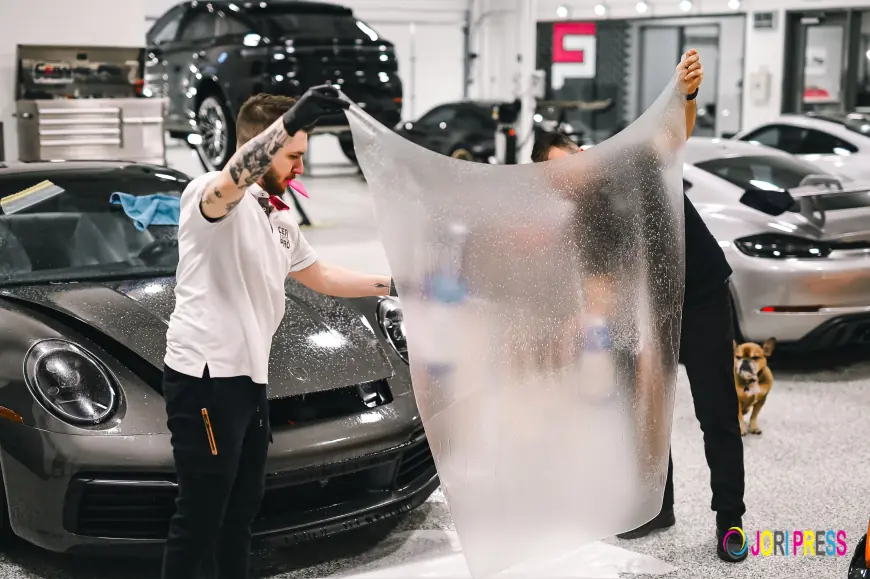
If you've ever winced at a fresh swirl mark on your car's hood, self-healing paint technology sounds almost too good to be true. But it's real, it's advancing fast, and it's changing how car owners think about paint protection.
What Is Self-Healing Paint?
Self-healing paint (also called self-healing clear coat) uses a special polymer layer that can repair minor scratches and swirl marks on its own. The technology works through elastomeric polymers that have flexible molecular structures. When the surface is scratched, heat - from the sun, warm water, or even a hair dryer, causes these polymers to soften and flow back into place, closing the scratch.
This isn't a Hollywood gimmick. It's an evolution of clear coat chemistry that many premium ceramic coatings and PPF (paint protection film) products now incorporate.
How Does It Actually Work?
The science comes down to molecular memory. Self-healing formulations are built with cross-linked polymer chains that "remember" their original shape. Here's the general process:
- Scratch occurs: Light abrasions disturb the polymer surface.
- Heat is applied: Sunlight, warm water, or engine heat softens the coating.
- Polymers realign: The flexible chains flow and re-bond, smoothing the surface.
- Scratch disappears: Within minutes to a few hours, most micro-scratches vanish.
It's worth noting: self-healing technology works best on light swirl marks and fine scratches, the kind caused by improper washing or minor contact. Deep scratches that go through to the base coat or metal still need professional correction.
Self-Healing PPF vs. Self-Healing Ceramic Coating
Car owners often confuse these two, but they're different layers of protection:
Self-healing PPF (Paint Protection Film) is a thick, physical film applied to the car's surface. It absorbs impacts from rock chips, road debris, and abrasions, and its top layer self-heals from light scuffs using heat.
Self-healing ceramic coatings are thinner, liquid-applied layers that bond to the paint. While true self-healing ceramic coatings are less common and generally less durable than PPF in this regard, many modern hybrid coatings do offer some scratch resistance and gloss recovery.
For owners wanting maximum protection, combining a quality PPF with a ceramic top coat is often the smartest long-term investment.
Why This Matters for Daily Drivers
Indian and German driving conditions alike - dusty roads, automated car washes, tight parking, all contribute to micro-scratching over time. Self-healing paint technology means:
- Fewer trips to the detailer for minor correction work
- A consistently glossy finish without constant polishing
- Better resale value, since the paint stays visually fresh for longer
Choosing the Right Self-Healing Product
Not all "self-healing" products perform equally. Quality varies significantly by:
- Polymer grade - Automotive-grade urethane films outperform cheaper alternatives
- Coating thickness - Thicker films generally self-heal more effectively
- UV stability - Cheap films yellow and lose healing properties within a year or two
This is exactly why sourcing from a reputable automotive protection brand matters more than chasing the lowest price.
FAQ
Does self-healing paint fix deep scratches?
No. It only repairs light surface-level scratches and swirl marks, not scratches reaching the base coat.
How long does self-healing take?
Most minor scratches heal within a few hours under direct sunlight or warm water, sometimes faster with heat guns.
Does self-healing PPF wear out?
Yes, self-healing properties typically diminish after 5-7 years depending on quality and maintenance.
Is self-healing ceramic coating worth it?
It offers added gloss and hydrophobic benefits, but for true scratch-healing performance, PPF remains the stronger choice.
What's Your Reaction?
 Like
0
Like
0
 Dislike
0
Dislike
0
 Love
0
Love
0
 Funny
0
Funny
0
 Angry
0
Angry
0
 Sad
0
Sad
0
 Wow
0
Wow
0