





























RWA Token Development in 2026: How to Turn Real-World Assets Into Digital Tokens
Introduction
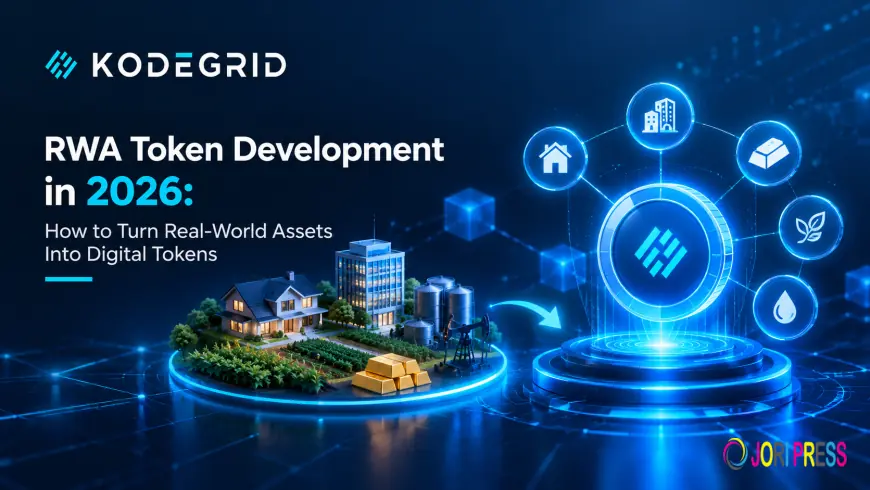
Real-world asset (RWA) tokenization is becoming an important part of the blockchain industry in 2026. Businesses and investors are exploring ways to represent physical and financial assets as digital tokens, making ownership records easier to manage and potentially improving accessibility and transferability.
Assets such as real estate, gold, commodities, bonds, and private credit can be represented on blockchain networks through tokenization. With the right technology and legal structure, RWA token development can help businesses connect traditional assets with decentralized digital ecosystems.
But how does the process work, and what should businesses consider before launching a tokenized asset project?
What Is RWA Token Development?
RWA token development is the process of creating blockchain-based tokens that represent ownership, rights, or interests in real-world assets. These tokens can be designed to represent a physical asset directly or a legal or financial interest in an asset held by an organization.
For example, a real estate company could structure a property investment into legally defined interests and issue digital tokens representing those interests. Investors could then hold and transfer tokens according to the project's legal agreements and platform rules.
Tokenization does not automatically transfer legal ownership or guarantee liquidity. The relationship between the token and the underlying asset must be clearly established through enforceable legal arrangements.
Which Real-World Assets Can Be Tokenized?
Several asset categories can be considered for tokenization.
1. Real estate: Commercial buildings, residential properties, and property investment interests can be represented through appropriately structured tokens.
2. Precious metals: Gold and other commodities may be tokenized when custody, ownership, redemption, and auditing arrangements are clearly defined.
3. Bonds and financial instruments: Eligible debt instruments and other financial assets can be represented digitally, subject to applicable securities laws.
4. Private credit: Certain loan portfolios and credit-related interests may be tokenized to support digital administration and investor access.
5. Art and collectibles: High-value artwork and collectibles can be represented through tokens linked to documented ownership or specific contractual rights.
Each asset category has different legal, financial, operational, and technical requirements.
How Does RWA Token Development Work?
Developing a tokenized asset platform involves several important stages.
1. Select the Asset and Define Ownership
The first step is identifying the asset and deciding what the token represents. It could represent a fractional interest, a contractual claim, a fund unit, or another legally defined right.
Businesses must establish ownership, assess the asset's value, and determine how investor rights will be protected.
2. Establish the Legal Framework
Legal structuring is essential for RWA projects. Depending on the asset and jurisdiction, the project may need a special-purpose entity, custody arrangements, investor eligibility checks, disclosures, or securities-related approvals.
Legal professionals should establish how token ownership relates to the underlying asset and what happens if the asset is sold, transferred, or redeemed.
3. Choose a Blockchain Network
The blockchain affects transaction fees, speed, security, smart contract capabilities, and compatibility with wallets and other applications.
Ethereum is a common option because of its established smart contract ecosystem. Other networks may be suitable depending on project requirements, costs, and interoperability needs.
An experienced crypto token development company can help evaluate these technical factors before selecting a network.
4. Develop and Test Smart Contracts
Smart contracts define token functionality, including issuance, transfers, supply limits, and access restrictions where required.
For projects using Ethereum-compatible networks, an ERC-20-based implementation may be appropriate when its features meet the project's requirements. Regulated assets may require additional controls, such as permissioned transfers or investor eligibility restrictions.
Smart contracts should undergo thorough testing and independent security audits before deployment.
5. Integrate Compliance and Asset Management
RWA platforms may require identity verification, know-your-customer (KYC) checks, anti-money laundering (AML) controls, investor onboarding, and transaction monitoring.
Businesses must also plan asset custody, valuation, reporting, and redemption processes. Secure integrations between blockchain systems and off-chain records help maintain consistency between digital tokens and the assets they represent.
6. Launch and Maintain the Platform
After testing and compliance reviews, the project can proceed to deployment. Depending on the business model, the platform may include investor dashboards, wallets, payment integrations, transfer functionality, and reporting tools.
Ongoing maintenance, security monitoring, legal updates, and accurate asset records remain important after launch.
Benefits of RWA Tokenization in 2026
RWA tokenization can offer several potential benefits when implemented correctly.
Fractional ownership: Certain assets can be divided into smaller investment interests, subject to legal and regulatory requirements.
Improved transparency: Blockchain records can make token transfers and issuance activity easier to track.
Operational efficiency: Smart contracts may automate selected administrative tasks and transaction rules.
Broader access: Digital platforms may help eligible investors access opportunities that were previously difficult to manage or distribute.
Programmable ownership: Tokens can support defined transfer conditions, distribution rules, and integrations with compatible blockchain applications.
However, these benefits do not guarantee investment returns, legal compliance, or secondary-market liquidity.
Why Choose Professional RWA Token Development Services?
RWA projects combine blockchain engineering with asset management, legal structuring, compliance, and cybersecurity. A development partner can help translate these requirements into a practical technical solution.
Professional can support blockchain selection, token architecture, smart contract development, testing, and deployment planning.
When evaluating a development company, review its blockchain expertise, security practices, integration capabilities, project experience, and communication process. Legal and regulatory advice should come from qualified professionals familiar with the relevant jurisdictions.
Conclusion
RWA token development offers businesses a way to represent real-world assets through blockchain-based digital tokens. In 2026, successful projects require more than deploying a smart contract. They need clear ownership rights, appropriate legal structures, secure technology, reliable asset records, and ongoing compliance.
By carefully selecting assets, choosing a suitable blockchain, testing smart contracts, and planning asset management, businesses can build more dependable tokenization platforms.
The strongest RWA projects combine sound legal foundations with secure blockchain infrastructure to create digital asset solutions designed for long-term use.
What's Your Reaction?
 Like
0
 Dislike
0
 Love
0
 Funny
0
 Angry
0
 Sad
0
 Wow
0