









































Rubber Floor Mats Explained: Types, Uses, and Key Advantages

Introduction
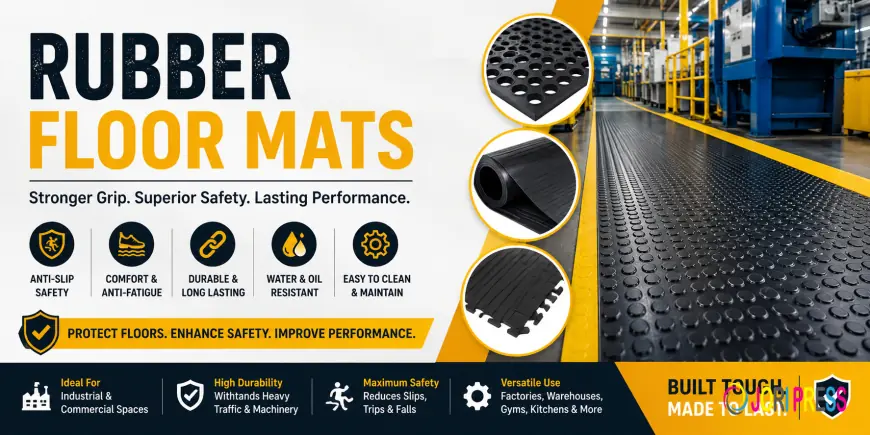
Rubber floor mats have become an essential flooring solution across industrial, commercial, and residential environments because of their durability, slip resistance, comfort, and long service life. Whether used in factories, warehouses, gyms, kitchens, workshops, offices, or public buildings, high-quality rubber floor mats improve workplace safety while protecting floors from wear and tear.
Modern industries demand flooring materials that can withstand heavy foot traffic, machinery movement, chemicals, moisture, and changing environmental conditions. This is where industrial rubber floor mats provide exceptional performance. Their ability to absorb impact, reduce fatigue, improve traction, and minimize accidents makes them one of the most preferred flooring options.
Choosing the right rubber flooring depends on factors such as the working environment, load-bearing capacity, chemical exposure, slip resistance, and maintenance requirements. Understanding these factors helps businesses invest in flooring that delivers long-term performance and safety.
What Are Rubber Floor Mats?
Rubber floor mats are protective flooring products manufactured using high-quality rubber compounds designed to provide cushioning, traction, insulation, and floor protection. They are available in different sizes, thicknesses, textures, and surface patterns to meet various industrial and commercial requirements.
These mats are widely used because they offer excellent grip, reduce workplace fatigue, protect expensive flooring, and improve employee safety in demanding environments.
Key Features of Rubber Floor Mats
High-quality rubber floor mats offer numerous advantages that make them suitable for a wide range of applications.
Some important features include:
- Excellent slip resistance
- High durability
- Superior abrasion resistance
- Water-resistant surface
- Chemical resistance
- Noise reduction
- Shock absorption
- Comfortable standing surface
- Easy installation
- Low maintenance
These characteristics help businesses improve operational efficiency while maintaining a safer workplace.
Benefits of Rubber Floor Mats
Enhanced Workplace Safety
One of the biggest advantages of rubber floor mats is their anti-slip surface. Wet or oily floors significantly increase the risk of slips and falls. Proper rubber flooring improves traction and provides better grip, reducing workplace accidents.
Excellent Durability
Premium industrial rubber floor mats are manufactured to withstand continuous foot traffic, heavy equipment movement, and demanding industrial conditions without losing performance.
Comfortable Working Environment
Workers who stand for extended periods often experience fatigue. Rubber flooring provides cushioning that reduces pressure on joints, feet, knees, and the lower back, improving overall comfort.
Floor Protection
Heavy machinery, carts, and equipment can damage concrete, tiles, or wooden floors. Rubber floor mats act as protective layers that minimize scratches, dents, and surface wear.
Easy Maintenance
Most rubber flooring mats require only regular sweeping and occasional washing with mild cleaning solutions, making maintenance simple and cost-effective.
Applications of Rubber Floor Mats
Because of their versatility, rubber floor mats are used across numerous industries.
Common applications include:
- Manufacturing industries
- Warehouses
- Assembly lines
- Automotive workshops
- Commercial kitchens
- Hospitals
- Laboratories
- Gyms and fitness centers
- Schools
- Hotels
- Retail stores
- Shopping malls
- Airports
- Residential garages
- Industrial entrances
Their flexibility allows them to perform efficiently in both indoor and outdoor environments.
Types of Rubber Floor Mats
Different workplaces require different flooring solutions.
Popular options include:
Anti-Slip Rubber Mats
Designed to improve grip in wet or slippery environments.
Heavy-Duty Rubber Mats
Suitable for industries with heavy machinery and equipment.
Anti-Fatigue Rubber Mats
Provide cushioning for employees working in standing positions for long hours.
Interlocking Rubber Mats
Easy to install, replace, and expand according to floor size.
Drainage Rubber Mats
Feature drainage holes that allow water and liquids to pass through, making them ideal for wet areas.
Industries That Benefit from Rubber Flooring
Many industries rely on industrial rubber floor mats to improve workplace efficiency.
These include:
- Food processing
- Pharmaceutical manufacturing
- Chemical industries
- Textile manufacturing
- Packaging plants
- Engineering workshops
- Logistics centers
- Agriculture
- Construction
- Warehousing
Every industry benefits from improved worker safety, reduced maintenance, and longer flooring life.
Factors to Consider Before Choosing Rubber Floor Mats
Selecting the right rubber floor mats involves evaluating several important factors.
Thickness
Thicker mats provide better cushioning and impact absorption for heavy-duty applications.
Surface Pattern
Choose textured surfaces where maximum slip resistance is required.
Load Capacity
Industrial environments require mats capable of supporting heavy machinery and equipment.
Chemical Resistance
For manufacturing plants exposed to oils or chemicals, select rubber flooring designed for chemical resistance.
Environment
Indoor and outdoor environments require different material properties depending on weather exposure and operational conditions.
Maintenance Tips
Proper maintenance extends the life of rubber floor mats.
Recommended practices include:
- Sweep regularly
- Remove dust and debris
- Clean with mild detergent
- Avoid harsh chemicals
- Inspect periodically for damage
- Replace worn sections when necessary
Routine maintenance preserves both appearance and functionality.
Why Rubber Floor Mats Are a Cost-Effective Investment
Although premium rubber floor mats may require a higher initial investment, they significantly reduce long-term costs by protecting floors, lowering maintenance expenses, minimizing workplace accidents, and extending flooring lifespan.
Businesses also benefit from improved employee comfort and increased productivity because workers experience less fatigue during long shifts.
Environmental Advantages
Many modern rubber flooring solutions are manufactured using durable materials that offer long service life, reducing the frequency of replacement. Long-lasting flooring contributes to sustainable operations by minimizing material waste and lowering maintenance requirements over time.
Conclusion
Rubber floor mats are among the most reliable flooring solutions for industrial, commercial, and institutional environments. Their excellent durability, slip resistance, impact absorption, and ease of maintenance make them an ideal choice for improving workplace safety and operational efficiency. Whether installed in factories, warehouses, gyms, hospitals, commercial kitchens, or workshops, industrial rubber floor mats provide dependable long-term performance while protecting both employees and flooring surfaces. Choosing high-quality rubber flooring ensures better productivity, reduced maintenance costs, enhanced comfort, and a safer working environment for years to come.
What's Your Reaction?
 Like
0
Like
0
 Dislike
0
Dislike
0
 Love
0
Love
0
 Funny
0
Funny
0
 Angry
0
Angry
0
 Sad
0
Sad
0
 Wow
0
Wow
0