




































Ready-Made Dating Software: Buying Guide for First-Time Founders
Thinking about ready-made dating software? See how payment processors and app stores treat dating apps, and what first-time founders should check before buying.
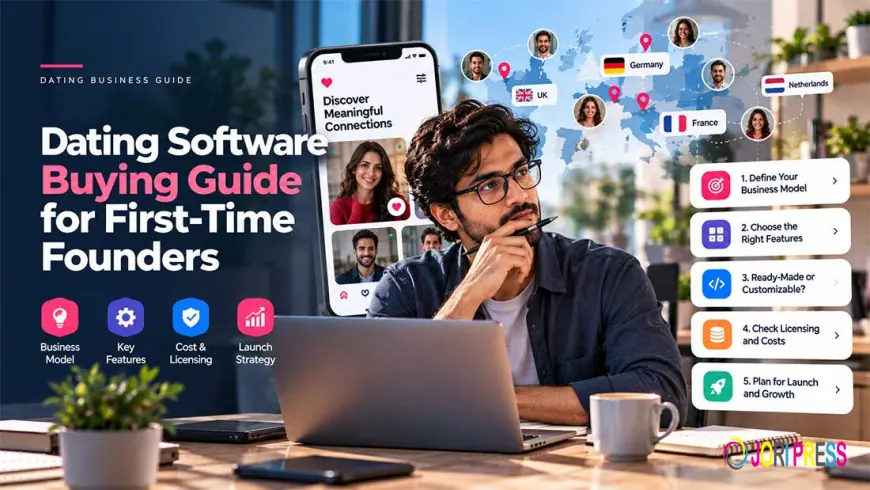
Founders who plan a dating business usually start by comparing feature lists: swipe matching, chat, video calls, subscriptions. That's a reasonable first step, but it tends to hide the questions that decide whether a platform launches and stays online. Can you take payments? Will the app stores approve the app? Who handles moderation once real users arrive?
Ready-made dating software answers some of these questions and leaves others open. It gives you a working base, with profiles, matching, messaging and an admin panel already built, so you don't pay for a full custom build before you know whether people want your product. It doesn't give you users, a payment account, store approval or a safety policy. Those still belong to the founder.
This article covers what software can't solve, how payment processors and app stores treat dating products, how the main build options compare, and a short checklist for vendor conversations. The policies described reflect published rules as of October 2026 and change often, so check current versions before you commit.
Why more founders are looking at ready-made dating software
The appeal is mostly about sequence. A custom dating app has to be designed, built, tested and submitted to the stores before a single real user can try it. Starting from existing software lets a founder test demand first and pay for custom work later, only where users show they care.
The retention and local-density problem no script solves
Dating has an unusual retention pattern. A user who finds a partner stops using the product, so the business needs a steady flow of new members and other reasons for people to stay, such as events, friendship features or referrals. Density matters as well, since ten thousand sign-ups spread across a country can feel empty in any one city.
Vendors that have shipped many platforms have published their own lessons from building dating platforms, a useful second opinion on early problems.
What a ready-made product covers and what it leaves to you
Core functions usually come built: profiles, matching, real-time chat, subscription handling and an admin dashboard. What stays with you is marketing, moderation, verification policies, hosting if you self-host, legal pages, support and the payment account itself.
Can you actually accept payments for a dating platform?
Usually yes, but it isn't automatic, and the answer depends on your country, your business model and the processor you pick.
What processors say about dating
According to Stripe's Prohibited and Restricted Businesses list, last updated in September 2026, online dating and matchmaking fall in the restricted category. That means Stripe does extra due diligence and may or may not approve a given business. Stripe's support FAQ adds that some listed businesses can be supported with explicit prior approval.
Paddle takes a stricter line. Its acceptable use policy names dating services and applications among its prohibited categories. So the same product can be a maybe with one processor and a no with another.
Why country and business model change the answer
Stripe's list also carries country-specific prohibitions. It names dating or matchmaking services in India, Thailand and the United Arab Emirates, and matchmaking in Malaysia. Content matters too, since the same list prohibits adult services outright.
In practice, founders should ask the processor directly, in writing, before buying anything, and line up a second option in case the first declines.
Do app stores force in-app purchases on dating apps?
Often, for digital features. There are exceptions, and the details differ by region.
Digital features versus services consumed outside the app
Apple's App Review Guidelines, updated in June 2026, require in-app purchase when an app unlocks features or functionality, and they give subscriptions and in-app currencies as examples. Google Play's payments policy takes a similar approach and lists dating among its examples of subscription services. Both allow exceptions, such as physical goods and services consumed outside the app.
Rules on outside payment links vary. Apple's guidelines say apps on the US storefront can include external purchase links without a special entitlement, and Google Play's policy lets developers in the European Economic Area lead users outside the app. These rules cover store apps only. A web product uses your own checkout, subject to your processor, so many founders end up with web payments through a processor and in-app purchases inside the mobile apps.
The template and "dating is crowded" rules
Apple's guidelines describe dating as a well-established category and say new submissions need a meaningfully different experience. They also say apps built from a commercialized template are rejected unless the content provider submits them. A re-skinned app has a weak case, while an app under your own developer account with a clear point of difference, such as a niche audience, has a better one.
Apple also expects apps with user-generated content to offer filtering, reporting, blocking and published contact details.
Ready-made, custom or SaaS: how do they compare?
Ready-made software starts from an existing product that you configure and brand. Custom development starts from a blank page, which suits unusual matching logic, specialized workflows or complex integrations, but takes longer and costs more upfront. Hosted SaaS moves hosting and maintenance to the vendor, in exchange for less control over code, roadmap and data. A dating app development cost report is one place to compare typical cost ranges across these routes.
| Ready-made with source code | Custom build | Hosted SaaS | |
| Launch speed | Faster | Slowest | Fast |
| Control | High | Highest | Lowest |
| Upfront cost | Moderate | Highest | Lowest |
| Ongoing work | You host and maintain | You host and maintain | Vendor maintains |
| Best for | Validating an idea | Unusual logic | Quick tests |
Some vendors, such as Best Dating Scripts, license the web platform and the iOS and Android apps together with source code, which changes the build-versus-buy math for a small team. Source-code access gives more control, but it doesn't remove responsibilities. Someone still has to handle hosting, security patches and upgrades.
What should founders check before they buy ready-made dating software?
Most of these checks cost only time and work with any vendor.
License, source code and hosting
Ask whether source code covers the web platform and each mobile app, whether the license covers one domain or several, and how long support lasts. Find out what hosting the software needs and who installs it. Get the answers in writing. A longer walkthrough is in this guide to building a dating platform.
A two-account demo test
Create two demo accounts, message between them, then report and block one profile. Next, check the admin side. Can a moderator see the report, remove the profile and see a record of what was done? How does verification work, through email, phone or photo? It takes about twenty minutes and tells you more than a feature page.
Costs that appear after launch
Budget for moderation staff or tools, verification services, SMS and email delivery, hosting, store fees, customer support, marketing and legal documents such as a privacy policy and terms of use. These sit next to the license price and add up over time.
Conclusion
Ready-made dating software shortens the early build, but it doesn't settle the business questions. Retention, local density and marketing remain the founder's job.
Payments and store approval depend on your country, your model and the specific processor or store, so check them early and in writing. Safety and moderation are daily operations as much as software features, which is why a hands-on demo test is worth doing. Processor and store policies keep shifting, so the most useful habit is to re-check them every year.
What's Your Reaction?
 Like
0
Like
0
 Dislike
0
Dislike
0
 Love
0
Love
0
 Funny
0
Funny
0
 Angry
0
Angry
0
 Sad
0
Sad
0
 Wow
0
Wow
0