






































Rapid Manufacturing: The Complete Guide to Faster Product Development in 2026
Discover how rapid manufacturing accelerates product development in 2026 with faster prototyping, lower costs, flexible production, and improved efficiency.

Introduction to Rapid Manufacturing
Rapid manufacturing has transformed how companies bring products from concept to market. Instead of waiting weeks or months for traditional tooling and production setups, businesses now use advanced digital fabrication methods to produce functional parts in days. Whether you're a startup racing to validate a product idea or an established enterprise optimizing your supply chain, understanding rapid manufacturing is essential for staying competitive. At SanwoRapid, we specialize in helping businesses navigate this shift by combining speed, precision, and cost-efficiency into a single streamlined process.
What Is Rapid Manufacturing
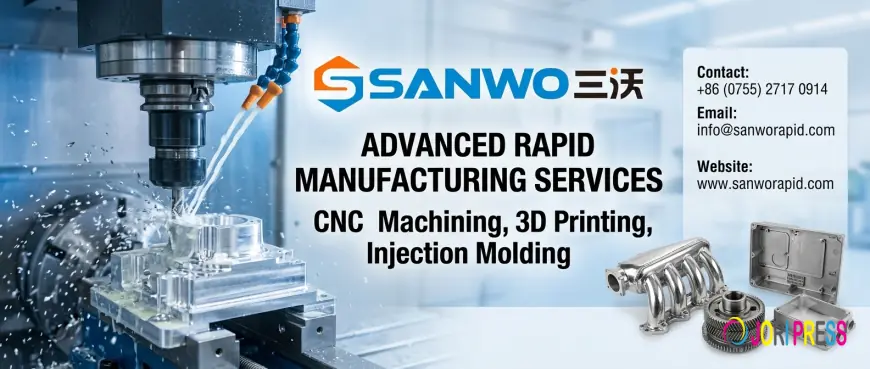
Rapid manufacturing refers to the use of technologies like 3D printing, CNC machining, injection molding, and sheet metal fabrication to produce parts quickly, often without the need for expensive tooling upfront. Unlike traditional manufacturing, which can involve long lead times for mold creation and setup, rapid manufacturing shortens the timeline dramatically while maintaining product quality and functional accuracy.
Key Characteristics of Rapid Manufacturing
-
Shorter lead times compared to conventional production methods
-
Lower upfront tooling costs for low-to-medium volume runs
-
Ability to produce functional prototypes and end-use parts
-
Flexibility to iterate designs quickly based on testing feedback
-
Compatibility with multiple materials, including plastics and metals
Why Rapid Manufacturing Matters for Modern Businesses
Speed to market is no longer a luxury; it's a competitive necessity. Companies that can design, test, and produce products faster gain a significant edge over slower competitors. Rapid manufacturing addresses this need directly by compressing the product development cycle.
Benefits of Choosing Rapid Manufacturing
-
Faster product validation and testing cycles
-
Reduced financial risk before committing to mass production
-
Greater design freedom for complex geometries
-
Easier incorporation of customer feedback into revisions
-
Improved supply chain agility during demand fluctuations
Rapid Manufacturing Technologies Explained
3D Printing and Additive Manufacturing
3D printing builds parts layer by layer directly from a digital file. It's ideal for complex shapes, low-volume production, and rapid prototyping where design changes are frequent.
CNC Machining
CNC machining removes material from a solid block to create precise parts. This subtractive method is excellent for functional prototypes and small-batch production runs requiring tight tolerances.
Rapid Injection Molding
For businesses needing hundreds or thousands of identical parts quickly, rapid injection molding uses simplified, faster-to-produce molds to bridge the gap between prototyping and full-scale production.
Sheet Metal Fabrication
This process is commonly used for enclosures, brackets, and structural components, offering durability and cost-effectiveness for metal-based products.
Comparison Table: Rapid Manufacturing Methods
|
Method |
Best For |
Lead Time |
Typical Volume |
Material Options |
|
3D Printing |
Prototypes, complex geometries |
1-5 days |
1-100 units |
Plastics, resins, some metals |
|
CNC Machining |
Functional parts, tight tolerances |
2-7 days |
1-500 units |
Metals, plastics |
|
Rapid Injection Molding |
Bridge production, larger batches |
7-15 days |
100-10,000 units |
Thermoplastics |
|
Sheet Metal Fabrication |
Enclosures, brackets |
3-10 days |
1-1,000 units |
Steel, aluminum, copper |
How SanwoRapid Supports Rapid Manufacturing Projects
SanwoRapid helps businesses move from idea to finished product without the usual bottlenecks. Our approach focuses on combining engineering expertise with fast turnaround capabilities, ensuring that every part meets functional and aesthetic requirements before scaling to full production.
What Sets SanwoRapid Apart
-
Dedicated project engineers who review designs for manufacturability
-
Multiple manufacturing technologies under one roof
-
Transparent quoting with no hidden costs
-
Quality control checks at every production stage
-
Support for both prototyping and low-to-mid volume manufacturing
Industries That Benefit Most from Rapid Manufacturing
Consumer Electronics
Product cycles in electronics move quickly, and rapid manufacturing allows companies to test enclosures, housings, and internal components before committing to mass production.
Medical Devices
Precision and regulatory compliance matter deeply in this sector. Rapid manufacturing enables iterative design validation while maintaining strict tolerances.
Automotive and Industrial Equipment
Custom brackets, jigs, fixtures, and replacement parts often require fast turnaround, making rapid manufacturing a natural fit for this industry.
Consumer Products and Startups
Startups benefit enormously from lower financial risk, since they can test market demand with small production runs before scaling.
Choosing the Right Rapid Manufacturing Partner
Questions to Ask Before Selecting a Provider
-
What manufacturing technologies do they offer in-house?
-
Can they handle both prototyping and production-level orders?
-
What materials and finishes are available?
-
How do they handle quality assurance and tolerances?
-
What is their average turnaround time for your specific part type?
Frequently Asked Questions
1. What is rapid manufacturing used for?
Rapid manufacturing is used to produce prototypes, functional parts, and low-to-medium volume production runs quickly, helping businesses validate designs and reduce time to market.
2. How is rapid manufacturing different from traditional manufacturing?
Traditional manufacturing typically requires expensive tooling and long lead times, while rapid manufacturing uses flexible technologies like 3D printing and CNC machining to skip or minimize tooling costs.
3. Is rapid manufacturing suitable for mass production?
It's best suited for prototyping and low-to-mid volume runs. For very high-volume production, traditional injection molding often becomes more cost-effective.
4. What materials can be used in rapid manufacturing?
Common materials include various plastics, resins, aluminum, steel, and other metals, depending on the specific process used.
5. How long does rapid manufacturing typically take?
Turnaround times vary by method but generally range from a few days to a couple of weeks, significantly faster than conventional manufacturing timelines.
6. Can rapid manufacturing produce functional end-use parts?
Yes, many rapid manufacturing methods, including CNC machining and certain 3D printing processes, produce parts strong and accurate enough for real-world functional use.
7. Does SanwoRapid offer design feedback before production?
Yes, SanwoRapid's engineering team reviews designs for manufacturability and suggests improvements before production begins.
8. What industries use rapid manufacturing the most?
Consumer electronics, medical devices, automotive, and industrial equipment industries rely heavily on rapid manufacturing for prototyping and small-batch production.
9. Is rapid manufacturing cost-effective for startups?
Absolutely. It allows startups to test and validate products with minimal upfront investment compared to traditional tooling costs.
10. How do I get a quote for a rapid manufacturing project?
You can submit your design files directly to a provider like SanwoRapid, who will assess your requirements and provide a transparent, detailed quote.
11. What tolerances can rapid manufacturing achieve?
Tolerances vary by process, but CNC machining and rapid injection molding can often achieve tight, production-grade tolerances suitable for functional assemblies.
Contact - +86 (0755) 2717 0914
What's Your Reaction?
 Like
0
Like
0
 Dislike
0
Dislike
0
 Love
0
Love
0
 Funny
0
Funny
0
 Angry
0
Angry
0
 Sad
0
Sad
0
 Wow
0
Wow
0