









































PTFE Material: Why It Is Used in Demanding Industrial Applications
PTFE material is a synthetic fluoropolymer known for its strong chemical stability and extremely low coefficient of friction.

When industrial equipment operates under high temperatures, chemical exposure, friction, or demanding working conditions, choosing the right material is essential. PTFE material is widely used in industrial applications because of its combination of chemical resistance, low friction, thermal stability, electrical insulation, and non-stick characteristics.
PTFE stands for polytetrafluoroethylene, a high-performance fluoropolymer commonly known by the brand name Teflon. Its unique characteristics make it suitable for manufacturing components used in chemical processing, engineering, electrical equipment, pharmaceuticals, food processing, automotive systems, and many other industries.
What Is PTFE Material?
PTFE material is a synthetic fluoropolymer known for its strong chemical stability and extremely low coefficient of friction. It can withstand exposure to many aggressive chemicals while maintaining its performance under demanding operating conditions.
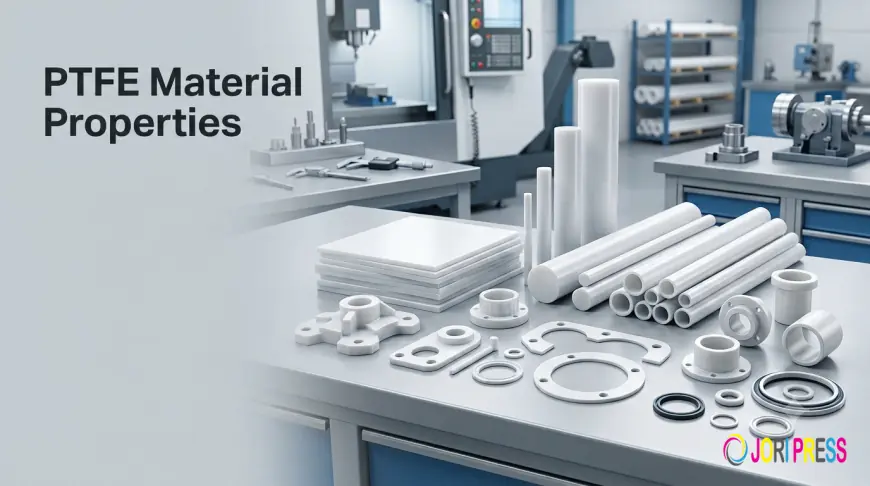
Because of its non-reactive nature, PTFE is commonly selected when conventional plastics or rubber materials may not provide the required resistance. It can be manufactured into different forms, including sheets, rods, tubes, bushings, seals, gaskets, and custom-machined components.
The versatility of the material allows manufacturers to produce components according to specific dimensions and application requirements.
Important PTFE Material Properties
One of the main reasons industries choose PTFE is its combination of physical and chemical characteristics.
1. Excellent Chemical Resistance
Chemical resistance is one of the most important PTFE material properties. PTFE can resist many acids, alkalis, solvents, and corrosive substances. This makes it useful in equipment that comes into contact with aggressive chemicals.
Chemical processing plants, laboratories, pharmaceutical equipment, and industrial fluid-handling systems can use PTFE components where chemical compatibility is important.
2. High Temperature Resistance
PTFE offers excellent thermal stability and can be used across a wide temperature range. It can typically operate continuously at temperatures up to approximately 260°C, depending on the application and component design.
This characteristic makes PTFE suitable for equipment exposed to heat where ordinary plastics may deform or lose their performance.
3. Low Friction
Another major advantage of PTFE is its extremely low friction. This allows components to move smoothly against other surfaces while reducing resistance and wear.
For this reason, PTFE material uses include bushings, bearings, guide components, seals, and other parts involved in sliding or rotational movement.
4. Non-Stick Surface
PTFE has a naturally non-stick surface that makes it difficult for many substances to adhere to it. This characteristic can help reduce material buildup and simplify cleaning.
This is particularly useful in industries where hygiene and easy maintenance are important, including food processing and pharmaceutical manufacturing.
5. Electrical Insulation
PTFE is also valued for its electrical insulation properties. It has high electrical resistance and maintains its insulating characteristics across a broad temperature range.
As a result, PTFE can be used for insulating components, sleeves, spacers, wire and cable applications, and other electrical parts.
Common PTFE Material Uses
The versatility of PTFE allows it to serve many industrial purposes. PTFE material uses include manufacturing seals, gaskets, bushings, bearings, liners, insulation components, guide rings, and custom-machined parts.
PTFE sheets can be used for lining and sealing applications, while PTFE rods can be machined into components with specific dimensions. PTFE tubes and other profiles can also be selected according to equipment requirements.
In chemical industries, PTFE components can help handle corrosive substances. In mechanical applications, their low friction can support smooth movement. In electrical applications, their insulating characteristics provide an additional layer of protection.
PTFE in Different Industries
The demand for PTFE industrial applications comes from its ability to perform in challenging environments.
In the chemical industry, PTFE components are used where resistance to corrosive chemicals is required.
In the automotive and engineering sectors, PTFE bushings, seals, and other components can be used in systems where low friction and durability are important.
In the food and pharmaceutical industries, suitable PTFE components can be used in machinery where cleanability, chemical resistance, and temperature performance are required.
In the electrical industry, PTFE is used as an insulating material for various components and assemblies.
Choosing the Right PTFE Component
Selecting the right PTFE component depends on more than simply choosing the material. Application temperature, pressure, chemical exposure, dimensions, load, movement, and operating environment should all be considered.
For example, a component designed for a static sealing application may have different requirements from a PTFE bushing used for continuous movement. Filled PTFE grades can also be considered when additional mechanical or wear performance is required.
Working with an experienced supplier can help ensure that the selected component matches the equipment's operating conditions.
Why PTFE Remains Important for Industrial Applications
The combination of chemical resistance, thermal stability, low friction, electrical insulation, and non-stick performance makes PTFE a versatile engineering material.
From PTFE sheet and PTFE rod products to custom-machined components, the material can be adapted to a wide variety of industrial requirements. Its long service life and resistance to demanding environments can also help reduce frequent component replacement and maintenance requirements.
For businesses sourcing PTFE components, material quality, dimensional accuracy, application suitability, and manufacturing consistency are important factors to consider.
Conclusion
PTFE material has become an important engineering solution for industries that require reliable performance under challenging operating conditions. Its chemical resistance, low friction, temperature stability, non-stick surface, and electrical insulation properties make it suitable for a wide range of components and applications.
Whether used in seals, bushings, sheets, rods, liners, or custom-machined parts, selecting the correct PTFE grade and component design is essential for achieving dependable performance. Understanding the material's properties and application requirements can help industries choose suitable PTFE solutions for their equipment.
What's Your Reaction?
 Like
0
Like
0
 Dislike
0
Dislike
0
 Love
0
Love
0
 Funny
0
Funny
0
 Angry
0
Angry
0
 Sad
0
Sad
0
 Wow
0
Wow
0