




























Private Label Activewear: A Complete Guide for New Fitness Clothing Brands
Learn how private label activewear works, from product design and fabrics to branding, MOQ, samples, manufacturing, and launching your fitness clothing brand.
A Complete Guide for New Fitness Clothing Brands
Starting a fitness clothing brand can be an exciting business opportunity, but creating your own activewear collection involves more than choosing a logo and putting it on a pair of leggings. You need the right products, fabrics, designs, branding, manufacturer, quality standards, and production plan.
This is where private label activewear can make the process easier.
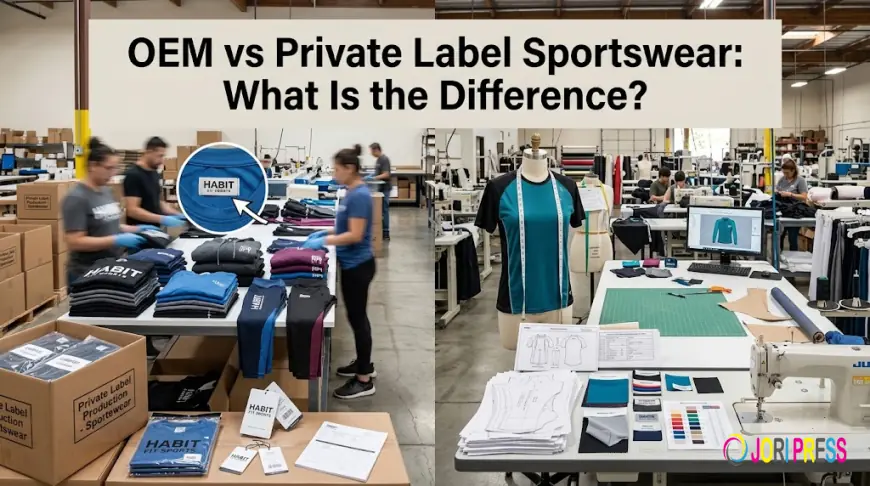
Private label activewear allows a clothing brand to sell fitness apparel under its own brand name without having to build and operate its own garment factory. Depending on the manufacturer, you can customize products, fabrics, colors, labels, packaging, and other details to create a collection that represents your brand.
For new fitness clothing businesses, private labeling can provide a practical way to enter the activewear market while focusing resources on product development, marketing, sales, and customer growth.
This guide explains how private label activewear works, what new brands should consider, how to choose products and fabrics, what to expect from manufacturers, and how to prepare for your first production order.
What Is Private Label Activewear?
Private label activewear is fitness and sports clothing manufactured by a third-party apparel company and sold under another company's brand name.
Instead of owning a factory, your brand works with an experienced activewear manufacturer that produces the garments according to agreed specifications.
Private label activewear can include products such as:
-
Leggings
-
Sports bras
-
Gym shorts
-
Tank tops
-
Training shirts
-
Yoga pants
-
Workout tops
-
Tracksuits
-
Hoodies
-
Sweatshirts
-
Cycling apparel
-
Running clothing
-
Compression wear
-
Performance jackets
The exact level of customization depends on the manufacturer.
Some suppliers offer existing designs with your branding, while others allow brands to customize fabrics, colors, measurements, patterns, labels, packaging, and other product details.
How Does Private Label Activewear Work?
The private-label process usually starts with choosing the products you want to sell.
You then work with a manufacturer to determine the product specifications, materials, colors, branding, quantities, and packaging.
A typical process looks like this:
-
Choose your product category.
-
Define your target customer.
-
Select fabrics and product specifications.
-
Develop or customize designs.
-
Add your brand identity.
-
Request samples.
-
Review and approve samples.
-
Confirm quantity and pricing.
-
Begin bulk production.
-
Complete quality inspection.
-
Package the products.
-
Ship the finished collection.
The exact process varies between manufacturers, but having a clear plan can make your first production order much easier to manage.
Private Label vs. White Label vs. Custom Activewear
These terms are sometimes used interchangeably, but they can describe different production models.
Private Label Activewear
Private label generally means products are manufactured by another company and sold under your brand. Depending on the supplier, you may be able to customize branding, colors, materials, packaging, and product details.
White Label Activewear
White-label products are usually pre-designed or pre-existing products that multiple businesses can sell under their own branding. Customization may be more limited.
Custom Activewear Manufacturing
Custom manufacturing generally provides greater control over the product itself. A brand may provide its own designs, measurements, fabric requirements, patterns, artwork, and technical specifications.
For example, a startup might choose an existing legging design and add its own labels, while a more established brand may develop an entirely new legging design with custom measurements and fabric specifications.
Before ordering, ask the manufacturer exactly what customization is included.
Why New Fitness Brands Choose Private Label Activewear
Building an activewear factory from scratch requires significant investment in machinery, workers, facilities, raw materials, quality control, and production management.
Private label manufacturing allows a new brand to work with an existing production partner instead.
This can offer several advantages.
Lower Initial Manufacturing Investment
You do not need to purchase industrial sewing machines or establish a garment production facility.
Your investment can instead focus on areas such as:
-
Product development
-
Branding
-
Website development
-
Photography
-
Marketing
-
Packaging
-
Customer acquisition
Faster Product Development
Experienced manufacturers already understand garment construction, fabric handling, stitching, and production processes.
This can make product development more practical than starting everything from zero.
Access to Manufacturing Expertise
A specialized activewear manufacturer may already have experience producing products such as leggings, sports bras, performance shirts, and gym clothing.
That experience can be useful when deciding on fabrics, stitching, fit, and construction.
Easier Brand Customization
Depending on the supplier, you can add your own labels, colors, designs, packaging, and other branding elements.
This allows customers to recognize your products as part of a consistent brand.
Define Your Target Customer Before Designing Products
One of the biggest mistakes new clothing brands make is trying to sell to everyone.
Your activewear collection should be designed around a specific customer.
For example, a brand targeting yoga customers may prioritize soft, flexible fabrics and comfortable designs. A brand targeting runners may focus more heavily on lightweight materials, breathability, and moisture management.
Ask yourself:
-
Who will wear these products?
-
What type of exercise do they do?
-
What price range can they afford?
-
What styles do they prefer?
-
What sizes should you offer?
-
What problems do existing products have?
-
What makes your brand different?
Understanding your customer before production can help you avoid creating products that look good but have little demand.
Choose the Right Activewear Products
You do not need to launch 20 different products on your first day.
A focused collection can be easier to manage.
A new fitness clothing brand might start with:
-
One or two leggings
-
One sports bra
-
One training top
-
One pair of shorts
-
One lightweight jacket
You can expand the collection after learning which products customers actually want.
For example, if your first collection contains five products and leggings generate most of your sales, you can develop additional legging styles, colors, and fits instead of investing heavily in products that have not proven demand.
Select Activewear Fabrics Carefully
Fabric has a major effect on how activewear feels and performs.
Common materials include polyester, nylon, spandex, cotton blends, and recycled performance fabrics.
The right material depends on the product and its intended use.
Important characteristics include:
-
Stretch
-
Recovery
-
Breathability
-
Moisture management
-
Durability
-
Softness
-
Weight
-
Opacity
-
Color fastness
-
Resistance to pilling
For leggings, stretch and recovery are particularly important. The fabric should move with the wearer and return to its original shape.
For running tops, lightweight and breathable materials may be more appropriate.
Do not select fabric only because it is inexpensive. A fabric that performs poorly can create customer complaints even when the garment looks attractive.
Pay Attention to Fit and Sizing
Activewear needs to fit correctly because customers often wear it while moving, exercising, stretching, or training.
A small sizing problem can become a major customer-service issue.
Your manufacturer should be able to work from clear measurements and specifications.
Consider defining:
-
Waist measurement
-
Hip measurement
-
Inseam
-
Rise
-
Bust measurement
-
Shoulder width
-
Garment length
-
Sleeve length
-
Leg opening
-
Elastic dimensions
You should also determine how your sizes will be labeled.
For example, a customer ordering a medium should receive a garment that consistently matches your brand's approved medium measurements.
Develop a Strong Brand Identity
Private label is not simply about adding a logo to a garment.
Your brand identity should be reflected throughout the customer experience.
Consider:
-
Brand name
-
Logo
-
Colors
-
Typography
-
Labels
-
Hang tags
-
Packaging
-
Product photography
-
Website design
-
Product descriptions
A consistent visual identity makes your collection look more professional.
For example, if your brand uses a simple, premium visual style, your labels and packaging should support that same style rather than looking like generic wholesale packaging.
Add Custom Labels and Tags
Custom labels can help turn a generic-looking garment into a branded product.
Depending on your manufacturer, you may be able to use:
-
Woven labels
-
Printed labels
-
Neck labels
-
Size labels
-
Care labels
-
Hang tags
-
Custom packaging
Care labels are also important because customers need instructions for washing and maintaining the garment.
Ask your manufacturer which labeling options are available and whether there are minimum quantities or additional setup costs.
Consider Custom Packaging
Packaging is another opportunity to reinforce your brand.
Depending on your business model, packaging could include:
-
Branded poly bags
-
Recyclable packaging
-
Custom mailers
-
Tissue paper
-
Thank-you cards
-
Product cards
-
Custom boxes
You do not need expensive packaging to create a professional experience. The packaging should match your brand and protect the product during storage and shipping.
Understand MOQ Before Placing an Order
MOQ stands for Minimum Order Quantity.
It represents the minimum quantity a manufacturer requires for an order, product, color, or other production category.
MOQ can be particularly important for startups.
Suppose you want to test three colors of leggings. If the manufacturer requires a high MOQ for every color, your initial inventory investment can become much larger than expected.
Ask the manufacturer:
-
What is the MOQ per product?
-
Is there an MOQ per color?
-
Is there an MOQ per size?
-
Does customization change the MOQ?
-
Are samples included in the MOQ?
-
Can smaller quantities be produced for startup brands?
Do not look at MOQ alone. A very low MOQ is useful only if the overall quality and production terms are suitable.
Always Order Samples First
A sample is one of the most important steps before bulk production.
Do not approve a product simply because a photograph looks good.
Inspect the physical sample for:
-
Fabric quality
-
Stretch
-
Fit
-
Sizing
-
Stitching
-
Seams
-
Logo placement
-
Printing
-
Labels
-
Color
-
Comfort
-
Overall construction
If possible, wear the sample during the activity for which it was designed.
A pair of leggings should be tested through movement. A running shirt should be evaluated during exercise. A sports bra should be checked for comfort, support, and fit.
If something is wrong, make changes before approving bulk production.
Create a Product Specification Sheet
A product specification sheet helps you communicate exactly what you expect from the manufacturer.
It can include:
-
Product name
-
Product measurements
-
Fabric composition
-
Fabric weight
-
Colors
-
Stitching requirements
-
Logo placement
-
Label specifications
-
Printing requirements
-
Packaging
-
Size chart
-
Approved sample reference
The more clearly your specifications are documented, the easier it is to maintain consistency.
This becomes especially important when you place repeat orders months later.
Understand Private Label Activewear Pricing
The final cost of private label activewear depends on several factors.
These may include:
-
Fabric
-
Product complexity
-
Quantity
-
Customization
-
Printing
-
Embroidery
-
Labels
-
Packaging
-
Sampling
-
Production requirements
-
Shipping
Do not compare manufacturers using only the unit price.
For example, one manufacturer might quote a lower garment price but charge separately for custom labels, packaging, or certain production processes.
Ask for a complete quotation so you can understand your actual production cost.
Consider Your Total Landed Cost
Your manufacturing price is not necessarily the final cost of getting products into your warehouse.
For international orders, you may also need to consider:
-
Shipping
-
Customs-related charges
-
Import duties where applicable
-
Insurance
-
Packaging
-
Local delivery
-
Taxes or other applicable fees
Your total landed cost gives you a better foundation for setting a retail price.
Build a Realistic Production Timeline
Launching an activewear collection involves several stages.
A typical timeline may include:
-
Product planning
-
Design development
-
Fabric selection
-
Sample production
-
Sample revisions
-
Final approval
-
Bulk production
-
Quality control
-
Packaging
-
Shipping
Do not plan your marketing launch around an unrealistic manufacturing deadline.
Ask your manufacturer how long each stage is expected to take and allow additional time for unexpected issues.
Quality Control Should Be Planned From the Beginning
Quality control should not start after customers complain.
Establish your expectations before bulk production.
Important checks may include:
-
Fabric quality
-
Measurements
-
Stitching
-
Seam strength
-
Color consistency
-
Logo placement
-
Printing quality
-
Zippers and accessories
-
Garment finishing
-
Packaging
You can use your approved sample as a reference for future production.
If a manufacturer produces 1,000 leggings, for example, the goal should be consistency across the entire batch rather than having only a few excellent pieces.
Choose a Manufacturer That Understands Activewear
A general clothing manufacturer may not have the same experience as a company that regularly produces performance apparel.
When evaluating an activewear manufacturer, ask about:
-
Previous activewear products
-
Fabric experience
-
Custom development
-
Sample production
-
Private labeling
-
Quality control
-
Production capacity
-
MOQ
-
Lead times
-
Branding options
-
Packaging
Ask for examples of similar products they have produced.
Experience with the exact type of garment you want can be more valuable than a long list of unrelated products.
Check Production Capacity Before Your Brand Grows
Your first order may be relatively small, but successful products can create much larger demand.
Ask whether the manufacturer can handle increased volumes.
For example, a supplier that can comfortably produce 300 pieces may struggle with a future order of 10,000 pieces.
Ask about:
-
Monthly production capacity
-
Repeat orders
-
Peak-season capacity
-
Additional production resources
-
Large-order scheduling
-
Lead times for growing brands
Choosing a manufacturer that can support your growth can reduce the need to change suppliers later.
Think About Sustainability Carefully
Sustainability is increasingly important to clothing brands and customers.
If sustainability is part of your brand positioning, ask manufacturers about available options such as:
-
Recycled fabrics
-
Responsible material sourcing
-
Reduced packaging
-
Recyclable packaging
-
Production waste management
Do not make environmental claims simply because a fabric is described as "eco-friendly." Ask for clear information about the material and any relevant certifications before making specific claims.
Accuracy is important because customers increasingly pay attention to sustainability statements.
Protect Your Designs and Brand Assets
If you have original designs, patterns, logos, or technical specifications, keep organized records.
Maintain copies of:
-
Design files
-
Product specifications
-
Approved samples
-
Logo files
-
Brand guidelines
-
Purchase orders
-
Invoices
-
Manufacturer communications
For important intellectual-property agreements or international contracts, professional legal advice can help you understand your rights and responsibilities.
Common Mistakes New Private Label Activewear Brands Make
Ordering Too Much Inventory
A large first order may look attractive because of lower unit costs, but unsold inventory can tie up your cash.
Start with a quantity that fits your realistic demand and budget.
Choosing the Cheapest Manufacturer
Cheap production can become expensive if products have defects, inconsistent sizing, or poor fabric quality.
Skipping Samples
This is one of the easiest mistakes to avoid. Always evaluate the actual product before approving bulk manufacturing.
Launching Too Many Products
A large collection can make inventory management difficult. A focused initial collection is often easier to test.
Ignoring Customer Fit
Activewear customers care about comfort, movement, support, and fit. A product that looks good in a photograph may still fail if it does not perform well.
Not Defining Quality Standards
If you do not explain your expectations, different people may interpret "good quality" differently.
Failing to Calculate Total Costs
Manufacturing is only one part of your total business cost. Include packaging, shipping, taxes or duties where applicable, marketing, warehousing, and other expenses when planning your pricing.
How to Launch Your First Private Label Activewear Collection
A simple launch process can look like this:
Step 1: Define Your Customer
Identify who you want to serve and what type of fitness clothing they need.
Step 2: Select Your Products
Choose a focused range rather than trying to create every type of activewear at once.
Step 3: Create Your Designs
Develop the colors, styles, measurements, logos, and other product details.
Step 4: Find Suitable Manufacturers
Compare manufacturers based on quality, customization, MOQ, communication, pricing, and production capabilities.
Step 5: Request Samples
Order samples and test them carefully.
Step 6: Make Revisions
Fix sizing, fabric, stitching, colors, branding, or other problems before production.
Step 7: Approve the Final Product
Keep an approved sample as a reference.
Step 8: Place the Bulk Order
Confirm quantities, pricing, payment terms, production schedule, and shipping details.
Step 9: Inspect the Finished Products
Check the production batch before distributing or selling the products.
Step 10: Launch and Collect Customer Feedback
Pay attention to customer comments about sizing, comfort, quality, and product performance.
Use this feedback to improve future collections.
How Much Does It Cost to Start a Private Label Activewear Brand?
There is no single fixed startup cost because every brand has different products, quantities, materials, branding requirements, marketing budgets, and shipping arrangements.
Your budget may need to cover:
-
Product development
-
Samples
-
Manufacturing
-
Labels
-
Packaging
-
Shipping
-
Website
-
Photography
-
Marketing
-
Inventory storage
-
Business operations
Instead of asking only how much it costs to manufacture one garment, calculate the total amount needed to take the product from an idea to a customer.
This gives you a more realistic view of your startup requirements.
How to Choose the Right Private Label Activewear Manufacturer
Before making a decision, compare several potential suppliers.
Consider creating a simple scorecard covering:
| Factor | What to Check |
|---|---|
| Product quality | Fabric, stitching, fit and finishing |
| MOQ | Minimum quantity requirements |
| Samples | Sample quality and revision process |
| Customization | Fabrics, colors, designs and branding |
| Private labeling | Labels, tags and packaging |
| Pricing | Complete production cost |
| Lead time | Sample and bulk production schedule |
| Quality control | Inspection procedures |
| Capacity | Ability to handle larger orders |
| Communication | Response time and clarity |
| Shipping | Available methods and estimated timelines |
This makes the selection process more objective.
Frequently Asked Questions
What is private label activewear?
Private label activewear is fitness clothing manufactured by a third-party company and sold under your own brand name. Depending on the manufacturer, you may customize designs, fabrics, colors, labels, packaging, and other product details.
Is private label activewear good for new brands?
It can be a practical option for new brands because the business does not need to establish its own manufacturing facility. The brand can work with an existing apparel manufacturer while focusing on product development, branding, marketing, and sales.
Can I customize private label activewear?
Customization depends on the manufacturer. Many suppliers offer options for colors, fabrics, designs, labels, logos, packaging, and other product specifications.
What activewear products should a new brand start with?
A focused collection can be easier to manage than a very large one. Depending on the target market, a brand might begin with leggings, sports bras, shorts, training tops, or other products that match its customer needs.
What does MOQ mean in activewear manufacturing?
MOQ means Minimum Order Quantity. It is the smallest quantity a manufacturer requires for a particular production order, product, color, or other manufacturing requirement.
Should I order samples before bulk production?
Yes. Samples allow you to check fabric, sizing, fit, stitching, branding, color, and overall quality before investing in a larger production run.
Can private label manufacturers add my logo?
Many private label manufacturers offer branding options such as woven labels, printed labels, embroidery, printing, hang tags, and custom packaging. Confirm the available options with the manufacturer before ordering.
How long does private label activewear production take?
Production time varies according to product complexity, materials, order quantity, customization, sampling, and the manufacturer's schedule. Ask for a complete timeline covering sampling, bulk production, quality control, and shipping.
How can I keep private label activewear costs under control?
Start with a focused product collection, compare several manufacturers, understand MOQ requirements, request samples, calculate total landed costs, and avoid ordering more inventory than your business can reasonably sell.
Final Thoughts
Private label activewear can give new fitness clothing brands a practical path into the apparel market. Instead of building a factory, you can work with an experienced manufacturer to develop and produce products under your own brand.
However, successful private label manufacturing requires careful planning.
Choose products based on your target customers, select fabrics that match the intended activity, develop clear specifications, request samples, understand MOQ and pricing, establish quality standards, and choose a manufacturer that can support your current and future needs.
Your brand is ultimately responsible for the experience customers have with your products. Taking the time to get the manufacturing side right can help you create activewear that looks professional, performs well, and gives customers a reason to come back for your next collection.
What's Your Reaction?
 Like
0
Like
0
 Dislike
0
Dislike
0
 Love
0
Love
0
 Funny
0
Funny
0
 Angry
0
Angry
0
 Sad
0
Sad
0
 Wow
0
Wow
0