






































Precision Measuring Instruments: Types and Applications Explained
Explore the types and applications of precision measuring instruments. Learn how these tools ensure accuracy, quality, and efficiency in manufacturing, engineering, and research.

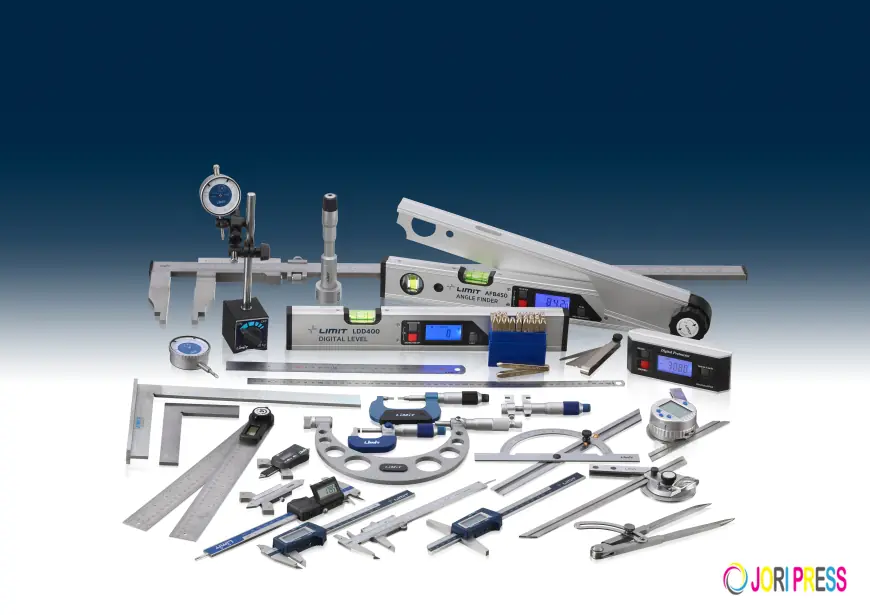
Accurate measurement is the foundation of engineering, manufacturing, and scientific research. To achieve precise results, professionals rely on precision measuring instruments, specialized tools designed to provide exact measurements of dimensions, angles, weight, and other physical properties. These instruments are essential in industries where accuracy directly affects product quality, safety, and efficiency.
In this article, we’ll explore the different types of precision measuring instruments, their applications, and why they are indispensable in modern industries.
What Are Precision Measuring Instruments?
Precision measuring instruments are devices used to measure physical quantities with a high degree of accuracy. Unlike standard measuring tools, precision instruments are engineered to minimize errors and provide reliable data that professionals can trust. They are commonly used in mechanical engineering, electronics, aerospace, automotive, manufacturing, and laboratory research.
The choice of instrument depends on the type of measurement required—whether it’s length, thickness, angle, surface roughness, or even electrical properties.
Types of Precision Measuring Instruments
-
Calipers
-
Vernier Calipers: Measure internal, external, and depth dimensions with high accuracy.
-
Digital Calipers: Offer easy-to-read digital outputs and quick measurements.
-
Applications: Mechanical workshops, quality control in manufacturing.
-
-
Micrometers
-
Outside Micrometers: Measure the external dimensions of objects with precision.
-
Inside Micrometers: Used for internal diameters.
-
Depth Micrometers: Measure depths of holes or slots.
-
Applications: Automotive, aerospace components, and metal fabrication.
-
-
Dial Indicators and Test Indicators
-
Used to measure small deviations in flatness, roundness, or alignment.
-
Applications: CNC machines, assembly lines, and tool alignment.
-
-
Height Gauges
-
Measure vertical dimensions from a reference surface.
-
Often used with surface plates for accurate height and depth measurements.
-
Applications: Mechanical engineering, metalworking, and inspection labs.
-
-
Coordinate Measuring Machines (CMMs)
-
Highly sophisticated machines that use probes to measure the physical geometrical characteristics of objects.
-
Applications: Automotive, aerospace, and precision engineering industries for complex component measurements.
-
-
Optical Measuring Instruments
-
Include optical comparators, microscopes, and laser measurement devices.
-
Provide non-contact measurement solutions, ideal for delicate or small components.
-
Applications: Electronics, medical device manufacturing, and fine mechanical components.
-
-
Surface Roughness Testers
-
Measure the texture and finish of surfaces.
-
Applications: Quality control in machining, metal finishing, and manufacturing.
-
Applications of Precision Measuring Instruments
Precision measuring instruments have widespread applications across multiple industries:
-
Manufacturing and Engineering – Ensure that parts meet design specifications and tolerances.
-
Automotive Industry – Measure engine components, gears, and assemblies for performance and safety.
-
Aerospace Industry – Inspect aircraft parts, turbines, and critical components where precision is crucial.
-
Electronics and Semiconductor Manufacturing – Measure tiny components like circuit boards and microchips.
-
Laboratory Research – Ensure accurate measurements in scientific experiments and material testing.
-
Medical Device Production – Verify the dimensions and tolerances of surgical instruments and implants.
Why Precision Measuring Instruments Are Important
-
Accuracy: Reduce errors in measurements and ensure products meet exact specifications.
-
Quality Assurance: Maintain high standards in production and inspection processes.
-
Efficiency: Speed up measurement tasks without compromising reliability.
-
Safety: Prevent defective products from entering the market, reducing potential hazards.
-
Compliance: Meet industry standards and regulatory requirements for manufacturing and testing.
Conclusion
Precision measuring instruments play a crucial role in ensuring accuracy, quality, and efficiency in modern industries. From simple calipers and micrometers to advanced CMMs and optical systems, these tools are indispensable for engineers, manufacturers, and researchers. Choosing the right instrument for the application can dramatically improve productivity, reduce errors, and maintain high standards of quality.
By understanding the types and applications of precision measuring instruments, businesses and professionals can make informed decisions that enhance measurement accuracy and operational performance.
What's Your Reaction?
 Like
0
Like
0
 Dislike
0
Dislike
0
 Love
0
Love
0
 Funny
0
Funny
0
 Angry
0
Angry
0
 Sad
0
Sad
0
 Wow
0
Wow
0