







































Paper Cushion Machine: Complete Guide to Features, Uses, and Benefits
Discover how paper cushion machines work, their major uses and benefits, and why they are useful for modern packaging and product protection.

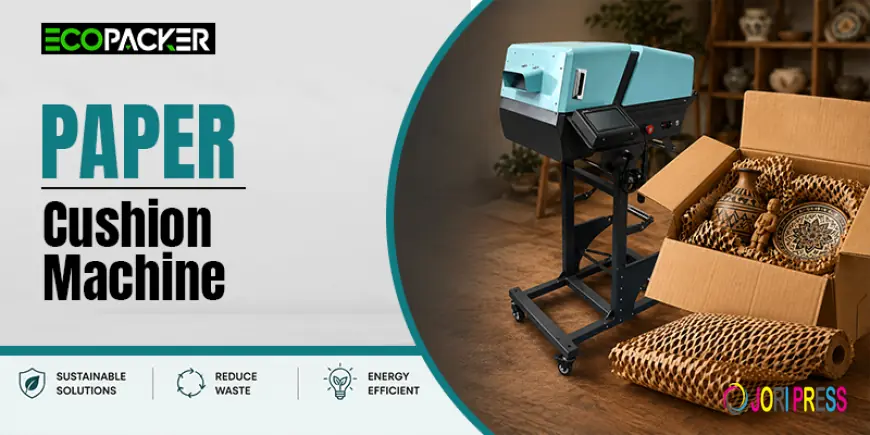
Package companies need ways to efficiently protect their products through the packaging process and also ensure that there are no excess materials used. The Paper Cushion Machine converts paper into paper cushioning material that can be used to fill up any empty space in the package, cover the products and limit their movement in the box. Unlike plastics, which are heavy materials that fill the space in packages, paper cushioning material is manageable, recyclable and can be applied to all packaging and shipping purposes. Machines today are designed for efficiency, productivity and versatile packaging requirements. This machine can be used in e-commerce companies, warehouses, manufacturing facilities, retailers and fulfillment centers. There are a number of factors to consider when choosing the right machine.
What Is It?
A Paper Cushion Machine converts rolls or sheets of kraft paper into protective material. Depending on the model, paper may be crumpled, folded, or formed into a structured cushion. The finished material can be placed around products or used to fill empty spaces inside cartons.
Its main purpose is to create protective packaging directly at the packing station. This reduces the need to store large quantities of ready-made filler and lets businesses produce material according to each order.
Key Features to Consider
When selecting this type of equipment, businesses should consider how well it fits their daily packaging workflow.
-
Adjustable output: Variable paper feed or cushion size supports different products.
-
Fast operation: Consistent processing helps teams manage busy periods.
-
Compact design: A small footprint is useful where workspace is limited.
-
Simple controls: Easy operation reduces training requirements.
-
Paper compatibility: Check recommended paper width, weight, and type.
-
Safety features: Guards and emergency stops improve workplace safety.
-
Easy maintenance: Accessible components simplify routine servicing.
How Does It Work?
The operator loads a suitable paper roll and guides it through the feeding mechanism. The system processes the paper into a cushioning format and delivers it for packing. Depending on the design, the required length may be cut manually or through an integrated cutting function.
A paper cushioning machine is useful when order sizes vary because cushioning can be produced only when needed. Regular cleaning and inspection of feeding components can also help maintain consistent performance.
A paper packing machine can create cushioning for void filling, wrapping, or interlayer protection, helping packing teams handle different product requirements efficiently.
Common Uses
Paper cushioning is suitable for many packaging applications:
-
E-commerce: Protecting products during handling and transportation.
-
Fragile goods: Supporting glass, ceramics, electronics, and similar products.
-
Void filling: Reducing movement inside cartons.
-
Interlayer protection: Separating products placed in multiple layers.
-
Fulfillment: Supporting fast packing operations with changing order volumes.
-
Industrial packaging: Protecting components from scratches and minor impacts.
A paper packing machine can also help standardize packing because operators can produce cushioning directly at the workstation.
Major Benefits
The biggest advantage is flexibility. Businesses can produce protective material as needed, helping keep packing stations organized and reducing dependence on pre-made filler. Paper is also familiar to many recycling systems, making it useful for companies seeking alternatives to plastic-based packaging.
Other benefits include:
-
Better space management: Paper rolls can take less storage space than bulky filler.
-
Product protection: Properly formed cushioning helps limit movement inside cartons.
-
Less material handling: On-demand production simplifies movement of packaging supplies.
-
Flexible packing: Operators can adjust material according to the product and box.
-
Neater presentation: Paper cushioning can create a more organized package.
An Ecopackaging machine can help businesses integrate paper-based protective packaging into regular fulfillment operations.
What Should You Check Before Buying?
Before investing, evaluate packaging volume, product range, carton sizes, available space, and operator requirements. The equipment should match the paper you plan to use and provide enough output during peak periods.
Also compare power requirements, maintenance support, spare parts, warranty, safety, and installation needs. Businesses with multiple packing stations should decide whether one centralized unit or several smaller units will create a better workflow.
An Ecopackaging machine should be assessed by total operating cost, not just purchase price. Paper consumption, maintenance, electricity, downtime, and labor efficiency can affect long-term value.
Paper Cushioning vs. Traditional Filler
Filler used conventionally could be loose paper, air pillows, foam, and other fillers. The paper based system ensures an efficient method to manufacture packing materials at the packing point and could minimize the space required for storing previously made filler.
The most appropriate choice will depend on the product, packaging conditions, packaging volumes, and needs of the business. Testing of the filling material on the actual products is advisable.
Conclusion
A Paper Cushion Machine can be a practical addition to packing operations where product protection, workflow efficiency, and material management matter. Producing cushioning on demand can improve workstation organization and support different product sizes. Before choosing equipment, compare output, paper compatibility, safety, maintenance, operating costs, and available space. Businesses looking for paper-based packaging solutions can explore options from ecopacker according to their operational needs.
FAQs
1. What is a Paper Cushion Machine used for?
It converts paper into protective cushioning for void filling, wrapping, interlayer protection, and reducing product movement inside cartons.
2. Is paper cushioning suitable for fragile products?
Yes. When correctly produced and applied, it can help protect many fragile products from movement, scratches, and minor impacts.
3. What type of paper is used?
The suitable paper depends on the equipment model. Kraft and other packaging-grade papers are commonly used, but manufacturer specifications should always be followed.
4. How does a paper packing machine improve efficiency?
It produces cushioning at the packing station, reducing manual preparation and allowing operators to make the required amount for each shipment.
5. What should I consider before buying?
Consider packaging volume, machine speed, paper compatibility, cushion formats, footprint, safety, maintenance, power needs, and total operating cost.
What's Your Reaction?
 Like
0
Like
0
 Dislike
0
Dislike
0
 Love
0
Love
0
 Funny
0
Funny
0
 Angry
0
Angry
0
 Sad
0
Sad
0
 Wow
0
Wow
0