







































Moustache Hair Transplant in Islamabad: Procedure, Cost, Recovery and Results
Have patchy or thin hair on your upper lip? Learn how a moustache hair transplant works, who is a good candidate, what recovery looks like, the cost in Islamabad, and how to choose a surgeon.
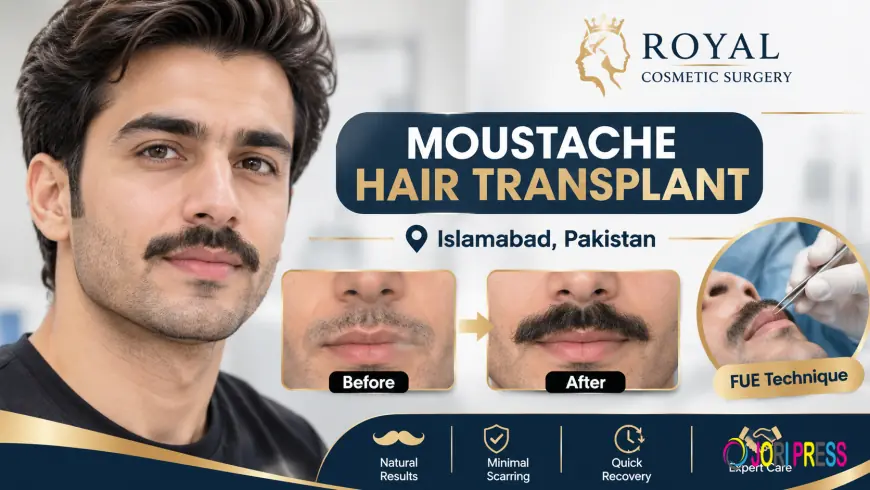
In many cultures, and across South Asia in particular, a full moustache carries real meaning. It is often linked with masculinity, maturity and presence. So when the hair on your upper lip grows in thin, patchy or not at all, it can quietly dent your confidence. The good news is that facial hair loss is not something you simply have to live with. A moustache hair transplant in Islamabad can restore hair to the upper lip area using your own follicles, and the new hair grows like natural facial hair. This guide explains how the treatment works, who it suits, what recovery involves and what it costs.
What Is a Moustache Hair Transplant?
A moustache hair transplant is a cosmetic surgical procedure that fills in bald or sparse areas of the moustache. The technique is the same one used for scalp hair restoration, called FUE (Follicular Unit Extraction). Healthy follicles are taken from a donor area, usually the back of the scalp, and placed one by one into the upper lip area.
Because the hair is your own, the result looks natural. Once the transplanted follicles settle, they grow, can be trimmed or shaved and generally behave like normal facial hair.
Why Does Moustache Hair Go Patchy?
Understanding the cause helps your surgeon plan the right treatment. Common reasons include:
Genetics: Facial hair density runs in families. If your father or other relatives have thin facial hair, you may too.
Hormones: Testosterone and related hormones affect how beard and moustache hair grow. Poor blood flow or lower hormonal influence in the area can lead to thin, uneven growth.
Lifestyle factors: Stress, poor nutrition and low levels of nutrients such as biotin and niacin can affect hair health.
Alopecia areata: This autoimmune condition causes patchy hair loss and can affect the beard and moustache as well as the scalp.
Scars: Burns, accidents, injuries, acne scars or cleft lip scars can leave areas where hair no longer grows.
Who Is a Good Candidate?
You may be a good candidate for facial hair transplantation if you:
Have scars on the face from burns, accidents or injuries.
Have lost facial hair after facial surgery, cleft lip repair or severe acne.
Were born with low facial hair density.
Are a transgender patient (female to male) who wants a more masculine appearance.
Have patchy areas of the moustache that you want to fill in.
Have enough healthy donor hair on the scalp.
Are in good general health and have realistic expectations.
A proper diagnosis comes first. If your hair loss is caused by an active condition such as alopecia areata, your surgeon may recommend treating that before considering surgery.
How Is the Procedure Done?
A moustache transplant is done in a clinic under local anaesthesia, so the area is numbed and you stay comfortable. The main steps are:
Consultation and design. The surgeon examines your face, discusses your goals and plans the shape and density of the moustache.
Harvesting. Individual follicular units are removed from the back of the scalp using the FUE technique.
Placement. The grafts are placed one at a time into the upper lip area, at the correct angle and direction so the hair grows naturally.
Completion. In many cases, if the donor supply is good, all the patches can be covered in a single session.
The angle of each graft is especially important in the moustache area. Facial hair grows downward and slightly outward, and incorrect placement can look unnatural.
Recovery and Aftercare
Recovery is usually straightforward, but how you look after the area matters a great deal.
First few days: Mild redness, swelling and small scabs are common. Avoid pressing, rubbing or picking at the transplanted area.
Sun protection: Avoid strong sunlight on the treated area after the procedure.
Washing and care: Follow your surgeon’s exact instructions on cleaning the area.
Shaving and trimming: Wait until your surgeon says it is safe before shaving or trimming.
Follow-up: Attend your check-ups so your surgeon can monitor healing.
Success depends heavily on good aftercare, so follow the instructions you are given closely.
When Will You See Results?
Hair transplant results take time, and facial hair follows the same growth cycle as scalp hair.
First few weeks: The transplanted hairs often shed. This is called shock loss and is a normal part of the process. The follicles are resting beneath the skin.
Around 3 to 4 months: New hair starts to grow.
Around 6 months: Growth becomes thicker and more noticeable.
Around 9 to 12 months: The moustache fills out and reaches its full density, though timing varies between patients.
The final result depends on the quality of your donor hair, the number of grafts, your skin and how well you follow aftercare. Individual results vary, and no clinic can promise an exact outcome.
Possible Risks and Complications
Moustache transplantation is generally safe, but every procedure carries some risk. Possible issues include:
Post-inflammatory hyperpigmentation: Darkening of the skin in the transplanted area, which is more likely in patients with darker skin. It may need depigmentation treatment to achieve a good cosmetic result.
Incorrect graft direction or angle: If grafts are placed badly, the hair may grow in an unnatural direction, and in some cases a number of the grafts may need to be removed.
Swelling, redness and scabbing during early healing.
Infection or folliculitis, which is uncommon with proper care.
Uneven or lower-than-expected density.
Choosing an experienced surgeon and following aftercare instructions is the best way to reduce these risks.
Cost of Moustache Hair Transplant in Islamabad
The cost of a moustache hair transplant in Islamabad depends on several factors, including the number of grafts needed and the reputation and experience of the clinic. At Royal Cosmetic Surgery, the cost typically ranges from PKR 30,000 to PKR 80,000.
A few points are worth knowing when you compare prices:
Many clinics charge per graft instead of per session, so ask how pricing is calculated.
Most moustache cases can be completed in a single session, but the number of grafts varies from patient to patient.
Some clinics offer very low prices, so always check the clinic’s credentials, hygiene standards and real patient results before booking.
A personal consultation is the most reliable way to get an accurate quote, because your surgeon can assess how many grafts you will need.
Moustache vs Beard Transplant
Many patients want both. A moustache transplant focuses on the upper lip, while a beard transplant fills in the cheeks, jawline and chin. Both use the same FUE technique, and they can often be planned together so the facial hair looks balanced and even. If you have patchy hair in several areas, discuss a combined plan with your surgeon.
How to Choose the Right Clinic
Before you commit, check that:
The surgeon is qualified and experienced in hair transplantation, especially facial hair.
You can see real before-and-after photos of moustache or beard cases.
The surgeon explains the risks, costs and aftercare openly.
Pricing is clear and you know what is included.
You feel comfortable asking questions without pressure.
Why Choose Royal Cosmetic Surgery?
At Royal Cosmetic Surgery in F-7 Markaz, Islamabad, hair transplant procedures are led by Dr. Naveed Azhar, a plastic surgeon and fellow of the College of Physicians and Surgeons of Pakistan. Patients visit from across Pakistan for hair restoration. The clinic is open Monday to Thursday 9 AM–9 PM and Friday to Saturday 9 AM–10 PM, which makes it easier to fit a consultation around work.
What's Your Reaction?
 Like
0
 Dislike
0
 Love
0
 Funny
0
 Angry
0
 Sad
0
 Wow
0