


































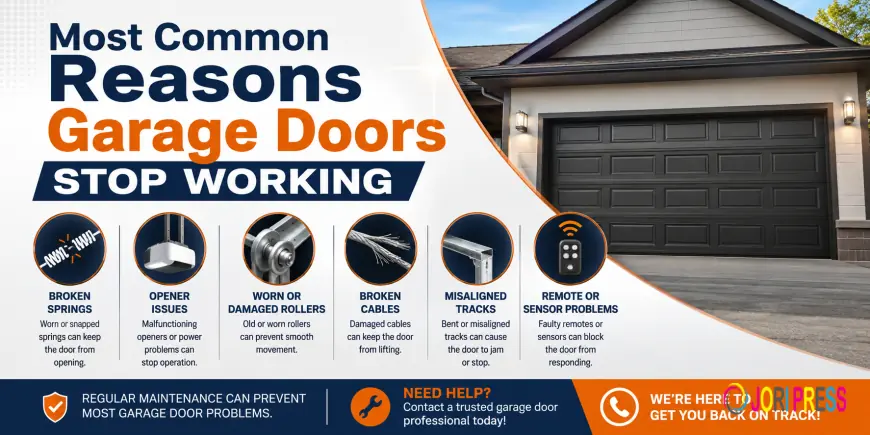
Most Common Reasons Garage Doors Stop Working
A garage door is one of the most frequently used entry points in many homes. Whether you're leaving for work, returning home, or accessing stored belongings, your garage door plays an important role in daily convenience and security. However, like any mechanical system, garage doors can develop problems over time. When a garage door suddenly stops working, it can disrupt your routine and even create safety concerns.

A garage door is one of the most frequently used entry points in many homes. Whether you're leaving for work, returning home, or accessing stored belongings, your garage door plays an important role in daily convenience and security. However, like any mechanical system, garage doors can develop problems over time. When a garage door suddenly stops working, it can disrupt your routine and even create safety concerns.
Understanding the most common reasons garage doors stop working can help homeowners identify issues early and avoid expensive repairs. In this guide, we'll explore the leading causes of garage door failures and provide practical tips for keeping your system operating smoothly.
1. Dead or Weak Remote Control Batteries
One of the simplest yet most overlooked reasons a garage door won't open is a dead remote battery. Many homeowners immediately assume there's a major mechanical problem when the issue is simply a drained battery.
Signs:
- Garage door doesn't respond to remote commands.
- Wall-mounted opener still works normally.
- Intermittent operation from a distance.
Solution:
Replace the batteries in your remote control and test the system. It's a good idea to keep spare batteries available for emergencies.
2. Misaligned or Dirty Safety Sensors
Modern garage doors are equipped with safety sensors that prevent the door from closing if an object is detected in its path. If these sensors become dirty, blocked, or misaligned, the door may refuse to close.
Signs:
- Door starts closing and then reverses.
- Blinking sensor lights.
- Door only closes when holding the wall button.
Solution:
Clean the sensor lenses with a soft cloth and ensure both sensors are aligned correctly. Remove any debris, leaves, or objects that may obstruct the sensor beam.
3. Broken Garage Door Springs
Garage door springs bear most of the door's weight. Over time, these springs wear out and eventually break, making it difficult or impossible for the opener to lift the door.
Signs:
- Loud snapping noise.
- Door feels unusually heavy.
- Door opens only a few inches.
- Visible gap in the spring.
Solution:
Never attempt to replace torsion springs yourself, as they are under extreme tension. Contact a professional garage door technician for safe replacement.
4. Worn-Out Rollers and Tracks
Garage door rollers and tracks guide the door during opening and closing. Dirt buildup, lack of lubrication, or physical damage can cause these components to wear prematurely.
Signs:
- Grinding or squeaking noises.
- Jerky door movement.
- Door gets stuck midway.
- Visible track damage.
Solution:
Inspect tracks regularly and remove dirt or debris. Lubricate rollers using a garage-door-specific lubricant. Replace damaged rollers promptly.
5. Motor or Garage Door Opener Failure
The garage door opener is essentially the heart of the system. Over years of use, motors can wear out, electrical components may fail, or internal gears can break.
Signs:
- Opener hums but doesn't move.
- Door doesn't respond at all.
- Excessive vibration during operation.
Solution:
Check the power source first. If power isn't the issue, have the opener inspected by a qualified technician. Sometimes replacing the opener is more cost-effective than repeated repairs.
6. Broken or Frayed Cables
Garage door cables work alongside springs to lift and lower the door safely. Over time, cables can fray, rust, or snap.
Signs:
- Door hangs unevenly.
- Visible cable damage.
- Door jams during operation.
Solution:
Damaged cables should be replaced immediately by professionals. Continuing to use the door can cause further damage and create safety risks.
7. Lack of Regular Maintenance
Many garage door problems result from neglected maintenance. Components naturally wear over time and require periodic inspection.
Common Maintenance Tasks:
- Lubricating moving parts.
- Tightening loose hardware.
- Inspecting springs and cables.
- Cleaning tracks and sensors.
- Testing balance and safety features.
Routine maintenance can significantly extend the lifespan of your garage door system.
8. Weather-Related Damage
Extreme temperatures, humidity, snow, and rain can affect garage door performance. Metal components may contract or expand, while moisture can cause rust and corrosion.
Signs:
- Slower door operation.
- Rust on hardware.
- Swollen wooden door panels.
Solution:
Inspect weather seals regularly and replace damaged components. Applying rust-resistant lubricants can help protect metal parts from corrosion.
9. Power Supply Problems
Sometimes the issue isn't with the garage door itself but with the electrical supply.
Signs:
- Opener receives no power.
- No lights on the opener unit.
- Circuit breaker repeatedly trips.
Solution:
Check the outlet, breaker panel, and power cord. If electrical issues persist, consult a licensed electrician.
10. Damaged Garage Door Panels
Garage door panels can become damaged from accidental impacts, storms, or general wear and tear. Bent or cracked panels can interfere with smooth operation.
Signs:
- Visible dents or cracks.
- Uneven door movement.
- Increased strain on opener.
Solution:
Replace damaged panels promptly to prevent additional stress on other components.
Where to Buy Quality Garage Door Products
When replacing garage door components, choosing high-quality products is essential for long-term reliability.
LiftMaster
LiftMaster is a trusted manufacturer known for durable garage door openers, smart home integration, and advanced security features. Their products are widely used by homeowners and professional installers.
Clopay
Clopay offers a wide range of residential garage doors designed for durability, energy efficiency, and curb appeal. Their products are available in various styles and materials.
Wayne Dalton
Wayne Dalton is recognized for innovative garage door designs, quality construction, and dependable performance. They provide solutions for both residential and commercial properties.
My Garage Dude
My Garage Dude is dedicated to helping homeowners maintain safe, reliable, and efficient garage door systems. Whether you need expert advice, professional maintenance, repair services, or guidance on selecting quality replacement parts, My Garage Dude focuses on delivering customer-first solutions that keep garage doors operating smoothly year-round.
Final Thoughts
Garage doors are complex systems made up of many interconnected components. When one part fails, the entire system can be affected. Fortunately, most common garage door problems can be prevented through regular inspections, proper maintenance, and timely repairs.
By understanding the reasons garage doors stop working, homeowners can identify warning signs early and avoid costly emergency repairs. Investing in quality products from trusted brands and scheduling routine maintenance will help ensure your garage door remains safe, reliable, and functional for years to come.
Remember: if you're ever unsure about a garage door issue, it's always safer to consult a professional rather than attempting repairs on high-tension components yourself.
What's Your Reaction?
 Like
0
Like
0
 Dislike
0
Dislike
0
 Love
0
Love
0
 Funny
0
Funny
0
 Angry
0
Angry
0
 Sad
0
Sad
0
 Wow
0
Wow
0