




































Memdeklaro: The Power and Promise of Self-Declared Identity
Identity is far too important to be handed over to distant authorities. It is ours to define, assert, and reclaim.

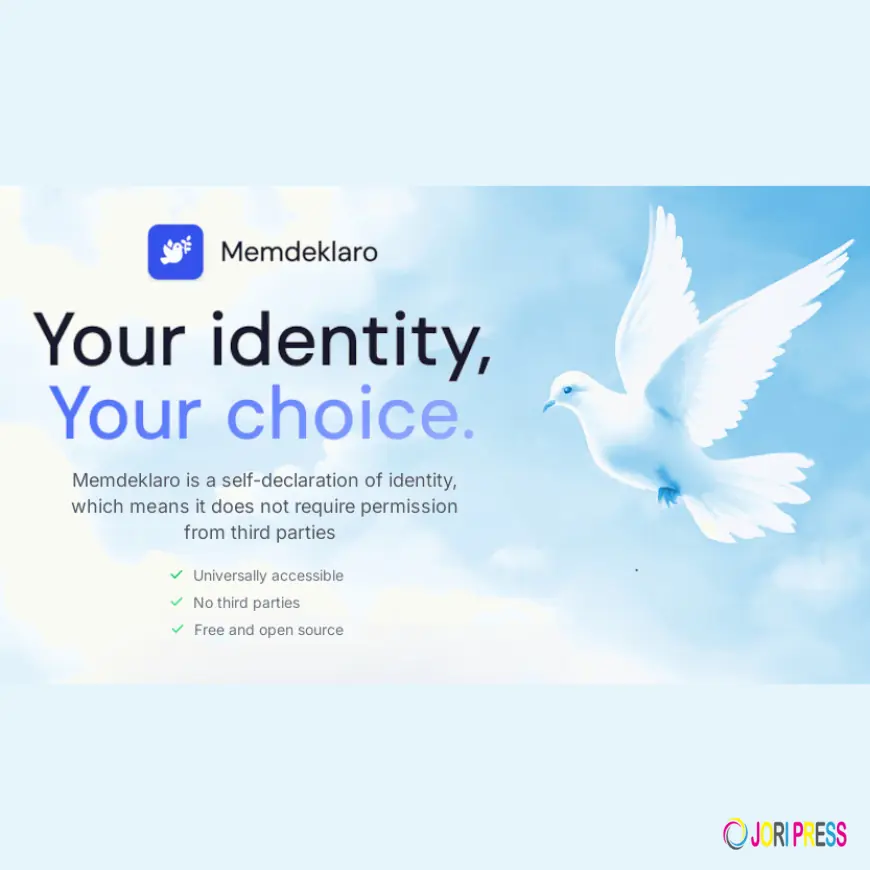
Freedom of Identity
What if you had the freedom to define your own name and create your own community — without needing a third party’s permission? Can you imagine living in a world where your identity is entirely yours? It’s a radical idea, but one that’s gaining traction in discussions about belonging and personal freedom.
Let’s dive into the concept of self-sovereign identity, specifically through the lens of Memdeklaro, a project that empowers individuals to declare their identity on their own terms.
In this post, we’ll investigate the hidden exclusion caused by the state’s monopoly on identity and explore whether the right to an identity can be universal. We’ll break down how Memdeklaro operates, discuss its significance, and examine how this movement lets you reclaim your personal agency.
The Global Identity Crisis: Statelessness and Exclusion
Imagine waking up in a world where you’re invisible to society — no passport, no birth certificate, no way to prove you exist. This might sound like something out of a dystopian novel, but for millions of people, it’s a painful reality, including refugees, dissidents, survivors of abuse, and people who were never registered at birth.
Exclusion from government ID systems bars people from essential services like jobs, housing and healthcare, trapping them in a life where their very existence feels illegal.
You might be wondering, “Surely there are systems in place to address this?” Unfortunately, many governments rigidly refuse to issue documentation, and historical solutions, such as the Nansen Passport, no longer exist. The result? A deepening crisis that keeps countless people locked out of society — not due to their own actions, but solely due to the circumstances of their birth.
What gives a government the moral right to deprive a person of their identity, based solely on where they were born or who they were born to? Why should your birth place or birth parents dictate your entire future? What would it take to change the narrative surrounding identity?
Deconstructing National ID: Why Birth Shouldn’t Dictate Belonging
Let’s dissect the core issue: most identity systems tie personal identity to the nation-state. Citizenship is often treated as property, rigidly bound by geography and parentage rather than individual choice and beliefs. If you were born outside the traditional system or had to escape an abusive environment, that could lock you out of legal recognition, often without recourse.
Have you ever encountered the term “collectivism”? This concept refers to the idea that your identity is tied to a collective — often without your consent. Imagine having to adhere to a culture or regime you don’t believe in simply because of your birth place. This outdated practice strips individuals of their personhood and agency.
Think about conscientious objectors who refuse military service on moral grounds. In many countries, this isn’t a lawful reason to dissent or renounce citizenship. Or consider those who have survived child abuse or escaped from a cult; should they be forced to forever carry their abuser’s name, or worse, should the abuser be able to prohibit them from obtaining legal identification for life?
Two key concepts are at play here: “exclusive jurisdiction,” which denotes a state’s total control over an individual’s legal identity, and “personal sovereignty,” the vision of individuals as the ultimate authority on their identity.
Isn’t it time we prioritized beliefs and actions over the arbitrary lottery of birth?
How Memdeklaro Works: Identity by Self-Declaration
How can Memdeklaro change the narrative? Picture this: instead of appealing to a government office who can decline you without an appeal, you go online and fill out a simple template with your self-chosen name, photo and birth date. You then print and sign your self-declaration at home or use it digitally — no central database, no gatekeeping and no surveillance. It’s all in your hands.
The Memdeklaro self-declaration resembles a standard ID card with fields for your preferred name, birth date, photo and signature. There’s even space for personal notes where you can share your beliefs — like identifying as a conscientious objector. Importantly, there’s no mention of birth place, citizenship or stateless status, or parents’ names. This is crucial for people escaping oppressive systems or abusive situations.
The self-declaration is crafted in Esperanto, an anational language intended to foster understanding and peace. Instead of a government seal, the card features a peace dove, embodying hope and freedom.
Memdeklaro operates on a decentralized self-sovereign model — think of it like holding your own private keys. It’s also privacy-friendly; your information stays with you, minimizing the risk of being hacked or abused.
You might wonder, “Will this actually work?” While it may not be a mainstream solution just yet, it represents a significant step toward reclaiming agency and reshaping the norms surrounding identity. If the state refuses to recognize your identity, why not declare it yourself?
Alternative Approaches: Trust Without Government ID
Memdeklaro isn’t walking this road alone. Other initiatives, like the World Passport and Digitalcourage ID, empower individuals to declare their own identities, challenging the belief that trust must depend on government-issued documents.
Consider the concept of a “web of trust”: a decentralized network where reputation is built through personal connections rather than bureaucratic validation. Similarly, consider the concept of “bearer instruments,” such as cash or cryptocurrency, where possession itself serves as proof. Throughout history, people built their worth through their actions and relationships — not through paperwork or state decrees.
You might ask, “Isn’t government ID safer?” The reality is that those IDs can be stolen, forged, or misused, often leaving vulnerable individuals in a precarious situation. For centuries, communities have thrived on mutual trust built through personal connections, not bureaucratic processes.
So why can’t we envision a more inclusive definition of trust in our increasingly digital world? Should a piece of plastic dictate your humanity, or should your actions and beliefs define you instead?
Reclaiming Agency: One Step at a Time
To bring it all together, consider these key takeaways: First, your origin shouldn’t determine your future. Second, self-sovereign identity projects like Memdeklaro aim to restore individual agency. Lastly, trust has always existed outside the confines of centralized institutions.
Here’s one concrete step: Try generating your own self-declaration at Memdeklaro.org Even if it’s just for yourself, the act is empowering — a manifestation that you alone define your worth.
If you’re skeptical about whether this approach can truly make a difference, remember: every significant change begins with a small act of courage. Concepts like self-sovereignty and decentralized identity are now more than just academic jargon; they are ideas that resonate deeply in the journey toward individual freedom.
Identity is far too important to be handed over to distant authorities. It is ours to define, assert, and reclaim.
What's Your Reaction?
 Like
1
Like
1
 Dislike
0
Dislike
0
 Love
0
Love
0
 Funny
0
Funny
0
 Angry
0
Angry
0
 Sad
0
Sad
0
 Wow
0
Wow
0