





































Marg Cloud vs Traditional Billing Software: Which Is Better?
Choosing between traditional billing software and marg cloud depends on business needs.

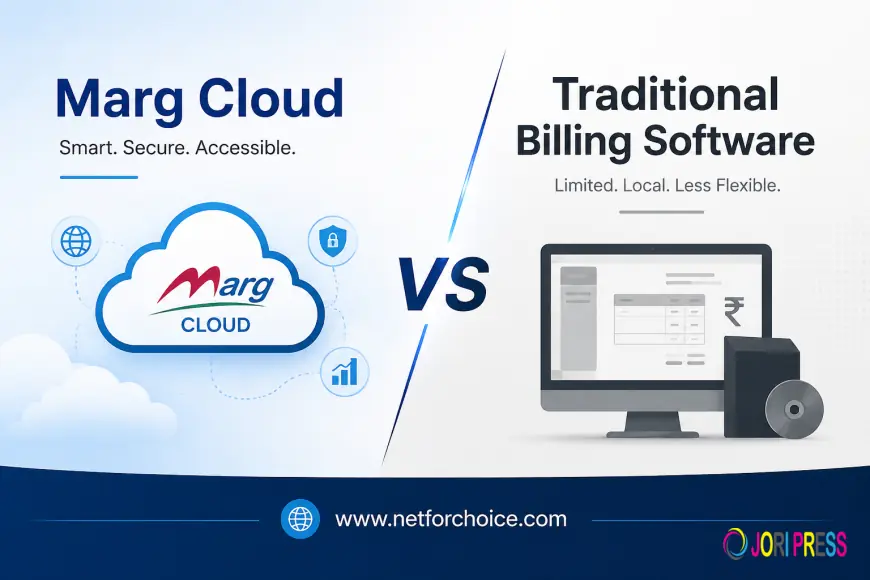
Businesses today require fast, secure, and flexible billing solutions to manage daily operations efficiently. With digital transformation becoming a priority, many organizations are moving away from outdated desktop billing systems and adopting cloud-based platforms. One of the most popular solutions in this space is marg cloud, which offers remote accessibility, data security, and seamless business management features. But how does it compare with traditional billing software? Let’s explore.
Understanding Traditional Billing Software
Traditional billing software is usually installed on a local computer or server within the office premises. These systems are widely used by retail stores, distributors, pharmacies, and wholesalers for billing, inventory management, and accounting tasks. While they perform essential functions effectively, they also come with limitations.
Traditional billing systems often require manual backups, hardware maintenance, software updates, and physical access to business data. If the system crashes or the local server fails, businesses may face data loss and operational downtime.
What Is Marg Cloud?
Marg cloud is a cloud-based hosting solution that allows businesses to access Marg ERP software remotely through the internet. Instead of being restricted to one desktop or office location, users can securely access their billing and accounting data from anywhere and at any time.
With marg cloud, businesses can manage invoices, inventory, reports, GST billing, and customer records without depending on physical office systems. It provides enhanced flexibility and supports remote work environments, making it an ideal solution for modern businesses.
Accessibility and Remote Access
One of the biggest differences between traditional software and marg cloud is accessibility. Traditional billing software can usually be accessed only from the installed device or local network. This creates challenges for businesses with multiple branches or remote teams.
On the other hand, marg cloud enables users to log in securely from laptops, tablets, or mobile devices from any location. Business owners can monitor operations, check sales reports, and manage billing activities even while traveling.
For companies looking for real-time business access, marg cloud offers a significant advantage.
Data Security and Backup
Data protection is a major concern for every business. Traditional billing software relies heavily on local storage, which increases the risk of hardware failure, theft, accidental deletion, or cyberattacks.
With marg cloud, data is stored on secure cloud servers with regular backups and advanced security measures. Most cloud environments also include data encryption, firewall protection, and disaster recovery systems.
This ensures that critical business information remains safe and accessible even during unexpected technical issues.
Cost and Infrastructure
Traditional billing systems require businesses to invest in local servers, hardware upgrades, maintenance, and IT support. These additional costs can become expensive over time.
In comparison, marg cloud reduces infrastructure dependency because the software runs on cloud servers. Businesses can save costs related to hardware maintenance, server management, and manual backups.
Additionally, cloud-based solutions are scalable, allowing businesses to expand operations without major infrastructure investments.
Performance and Collaboration
Businesses operating across multiple locations often face challenges with traditional billing software due to limited data synchronization and delayed reporting.
With marg cloud, multiple users can access the system simultaneously with real-time data updates. This improves team collaboration, inventory management, and decision-making.
Managers can instantly view reports, monitor stock levels, and analyze sales performance without waiting for manual updates.
Which Is Better?
Choosing between traditional billing software and marg cloud depends on business needs. Traditional systems may still work for small businesses operating from a single location with minimal remote access requirements.
However, for businesses seeking flexibility, secure data access, scalability, and remote operations, marg cloud is clearly the better option. Its cloud-based infrastructure supports modern business requirements while improving operational efficiency and business continuity.
Conclusion
As businesses continue adopting digital solutions, cloud technology is becoming essential for efficient operations. Compared to traditional billing software, marg cloud provides better accessibility, enhanced security, reduced infrastructure costs, and improved scalability.
For organizations aiming to modernize billing and business management processes, investing in marg cloud can deliver long-term operational benefits and help businesses stay competitive in a rapidly evolving market.
What's Your Reaction?
 Like
0
Like
0
 Dislike
0
Dislike
0
 Love
0
Love
0
 Funny
0
Funny
0
 Angry
0
Angry
0
 Sad
0
Sad
0
 Wow
0
Wow
0