




































How to Solve a Rubik’s Cube: Beginner Method That Actually Works
Learn how to solve a Rubik’s Cube step by step using an easy beginner method. Simple cube solver tips, 3×3 guide, and proven tricks that actually work.

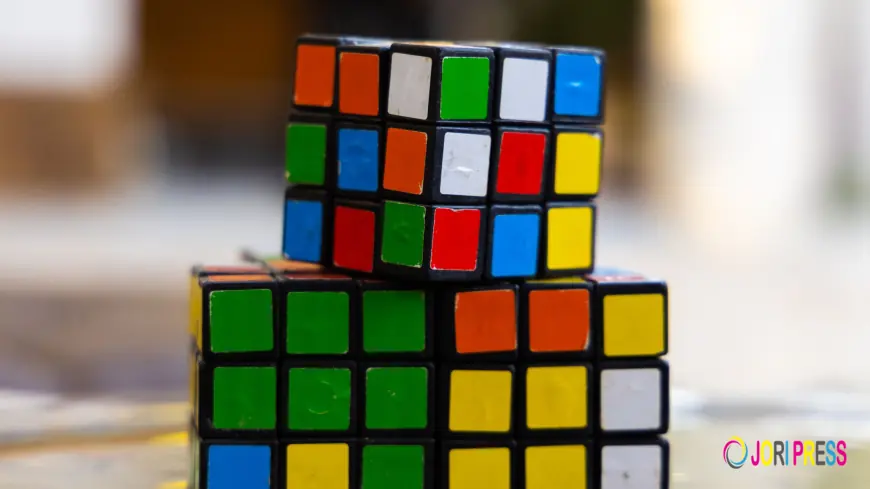
The Rubik’s Cube is one of the most iconic puzzles in the world and also one of the most misunderstood. Many people believe solving a cube requires advanced mathematics or exceptional intelligence. In reality, anyone can learn how to solve a Rubik’s Cube with the right guidance and a little practice. Even Ernő Rubik, the inventor himself, took weeks to solve it for the first time.
If you are searching for a cube solver 3×3 guide that is simple, logical, and beginner-friendly, you are in the right place. This guide explains the Beginner’s Method step by step and includes practical cube solver tips and tricks to help you avoid common mistakes and solve with confidence.
Understanding the Rubik’s Cube Basics
Before learning how to solve a Rubik’s Cube, it is essential to understand how the cube is structured.
Colours on a 3×3 Cube
A standard 3×3 Rubik’s Cube has six colours:
White, Yellow, Blue, Green, Red, and Orange.
Each colour belongs to one fixed centre piece, which never moves and determines where that colour should end up.
White, Yellow, Blue, Green, Red, and Orange.
Each colour belongs to one fixed centre piece, which never moves and determines where that colour should end up.
Types of Pieces
There are three types of pieces on a 3×3 cube solver:
- Centres: Fixed pieces that define each face’s colour.
- Edges: Pieces with two colours, located between corners.
- Corners: Pieces with three colours, located at the corners.
A key cube solver tip and trick to remember:
? Always solve relative to the centre pieces, not other colours.
? Always solve relative to the centre pieces, not other colours.
Cube Notation Made Easy
To follow any cube solver 3×3 tutorial, you must understand basic move notation:
- R / R’ – Right face clockwise / anticlockwise
- L / L’ – Left face clockwise / anticlockwise
- U / U’ – Top face clockwise / anticlockwise
- F / F’ – Front face clockwise / anticlockwise
These moves form algorithms—short sequences that reposition pieces without breaking solved parts of the cube.
How the Rubik’s Cube Is Solved (Beginner Method)
One of the biggest myths is that the cube is solved one colour at a time. In reality, every effective 3×3 cube solver approach uses a layer-by-layer method.
The beginner’s method consists of three layers and six steps:
- First Layer – White Cross and White Corners
- Second Layer – Non-yellow edges
- Last Layer – Yellow cross, edges, and corners
Step 1: First Layer (White)
Solving the White Cross
Start by forming a white cross on the bottom.
Cube solver tips and tricks:
- Focus on matching both colours of an edge, not just white.
- Do not worry about speed—accuracy matters more.
Steps:
- Find a white edge piece.
- Match its non-white colour with the correct centre.
- Rotate it down to align with the white centre.
- Repeat until the white cross is complete.
Solving White Corners
Now complete the entire white face.
Algorithm to learn:
R U R’ U’
R U R’ U’
Steps:
- Keep the white centre on the bottom.
- Locate a white corner in the top layer.
- Position it between the correct centres.
- Repeat the algorithm until it fits correctly.
- Solve all four corners.
At this stage, the first layer of your cube solver 3×3 is complete.
Step 2: Second Layer (Middle Layer)
This step positions the edges that do not contain yellow.
Algorithms used:
- Right insertion: U R U’ R’ U’ F’ U F
- Left insertion: U’ L’ U L U F U’ F’
Steps:
- Find a non-yellow edge in the top layer.
- Match its front colour with the centre.
- Identify whether the second colour belongs on the left or right.
- Apply the corresponding algorithm.
Cube solver tip:
If an edge is in the wrong place but correct layer, move it out first—then reinsert it correctly.
If an edge is in the wrong place but correct layer, move it out first—then reinsert it correctly.
Step 3: Last Layer (Yellow)
Yellow Cross
Algorithm:
F R U R’ U’ F’
F R U R’ U’ F’
Depending on your cube’s pattern, repeat this algorithm until a yellow cross appears.
Positioning Yellow Edges
Algorithm:
R U R’ U R U2 R’
R U R’ U R U2 R’
This step aligns the yellow edges with their respective centres.
Positioning Yellow Corners
Algorithm:
U R U’ L’ U R’ U’ L
U R U’ L’ U R’ U’ L
Find one correctly placed corner and keep it at the front-right before applying the algorithm.
Orienting the Final Corners
Final algorithm:
R’ D’ R D
R’ D’ R D
Rotate each unsolved corner individually until the cube is fully solved.
Final Cube Solver Tips and Tricks for Beginners
- Practice slow, controlled turns to avoid mistakes.
- Repeat algorithms until muscle memory develops.
- Use a smooth, beginner-friendly cube for better control.
- Expect improvement after 5–10 full solves.
Once you can consistently solve the cube, you can start timing yourself and exploring advanced cube solver 3×3 methods like CFOP.
You’ve Officially Solved the Rubik’s Cube
Congratulations on learning how to solve a Rubik’s Cube using a method that actually works. With patience and practice, solving becomes easier, and faster, every time.
Whether you are a student, parent, or first-time cuber, mastering this puzzle opens the door to logical thinking, focus, and even speedcubing. For quality cubes, learning resources, and expert guidance, is the perfect place to continue your cubing journey.
What's Your Reaction?
 Like
0
Like
0
 Dislike
0
Dislike
0
 Love
0
Love
0
 Funny
0
Funny
0
 Angry
0
Angry
0
 Sad
0
Sad
0
 Wow
0
Wow
0
\