









































Why Young Voters Are Changing the Future of UK Politics
why young voters matter in UK politics, how young voters are changing British politics, future of UK politics, political priorities of young people in Britain

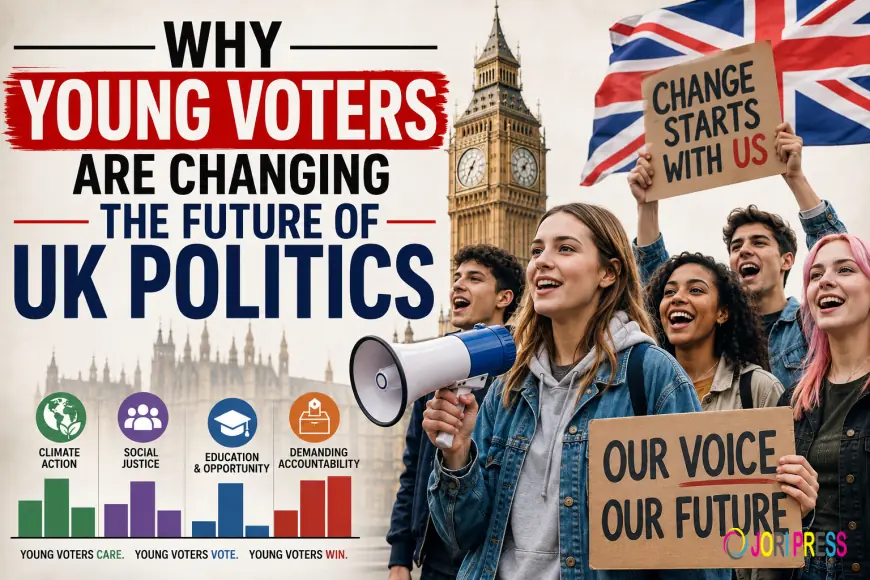
Why Young Voters Are Changing the Future of UK Politics
British politics has always been shaped by changing generations, but the political priorities of younger voters are becoming increasingly difficult to ignore.
For years, political discussion in the UK often focused on traditional voting patterns, established party loyalties and the differences between older and younger generations. Today, those patterns are becoming more complicated.
Young adults are entering politics in an environment shaped by housing pressures, changing employment patterns, social media, higher living costs and rapidly developing technology. Their experiences can be very different from those of previous generations, and those differences can influence the issues they care about most.
This does not mean that every young voter thinks alike. Far from it.
However, the concerns of younger voters are increasingly becoming an important part of the wider political conversation.
## Housing Has Become a Major Political Issue
For many younger adults, housing is more than an economic issue.
It can influence where they live, whether they can remain in their local area, when they start a family and how financially secure they feel.
High rents, limited housing supply and the difficulty of saving for a deposit can create a very different experience of adulthood compared with previous generations.
For politicians, this creates an important challenge.
Housing policy is not simply about building more properties. It also involves planning, infrastructure, rental conditions, employment opportunities and the relationship between housing costs and wages.
Young voters may therefore judge political parties not only by their general economic policies but by whether they believe those policies can realistically improve their ability to find secure and affordable housing.
## The Cost of Living Still Shapes Political Opinions
Financial pressure can strongly influence political priorities.
Young workers may face rent or mortgage costs, transport expenses, energy bills, food prices and other everyday costs while trying to establish careers.
Even when headline economic indicators improve, people can still feel financially stretched if their personal expenses remain high.
This creates an important distinction between national economic statistics and individual experience.
A government may point to economic growth or falling inflation, while voters may be more interested in whether their wages provide enough purchasing power to live comfortably.
For younger voters, that personal experience can influence how they evaluate political promises.
## Employment Is Changing Too
The traditional idea of a career has changed significantly.
Many younger workers enter employment through a mixture of permanent jobs, temporary positions, freelance work, contracts and digital platforms.
Remote and hybrid working have also changed expectations around where people can work.
Technology is contributing to this transformation.
Artificial intelligence and automation are already affecting how businesses think about productivity and employment. Some workers see new technology as an opportunity to improve their careers, while others are concerned about job security and the possibility that certain roles could eventually change or disappear.
Politics therefore has an important role in discussions about skills, education, employment protections and technological change.
Young voters are likely to have a particular interest in how policymakers prepare workers for an economy that may look very different in the future.
## Social Media Has Changed Political Communication
Previous generations primarily encountered political information through newspapers, television and radio.
Young people today are much more likely to encounter political content through social media platforms.
This has transformed political communication.
A political argument can now reach thousands or millions of people without passing through a traditional media organisation.
That can create opportunities for politicians, campaigners and independent commentators.
It also creates challenges.
Social media rewards content that attracts attention. Short videos, emotional arguments, controversial claims and highly simplified messages can spread quickly.
Political discussion can therefore become more immediate but also more polarised.
For young voters, social media is not simply a source of entertainment. It can be an important part of how they discover political ideas, candidates and current affairs.
## Political Information Is More Accessible Than Ever
The digital environment has also made political information easier to access.
A voter can watch a parliamentary debate, read a manifesto, follow a politician or compare different viewpoints without relying entirely on traditional media.
This can encourage greater political engagement.
At the same time, having more information does not automatically mean having better information.
The internet contains reliable journalism, official government information and expert analysis alongside misinformation, misleading claims and deliberately manipulated content.
Digital literacy has therefore become an increasingly important part of modern political participation.
Young voters are growing up in an environment where understanding how information is produced and distributed can be almost as important as the information itself.
## Traditional Party Loyalty May Be Changing
Political loyalty has never been completely fixed.
However, younger generations can be less attached to traditional political identities than previous generations were.
Some voters may support one party in a general election and a different candidate or party at a local election.
Others may decide their vote based primarily on one particular issue.
This creates a more competitive political environment.
Political parties cannot necessarily assume that younger voters will remain loyal simply because of family history or traditional political identity.
They may need to demonstrate how their policies relate directly to the concerns of younger citizens.
## Climate and the Environment Remain Important
Environmental policy is another area where younger voters can have strong opinions.
Climate change, energy policy, public transport, renewable energy and environmental protection all intersect with economic decisions.
The political challenge is balancing environmental objectives with affordability and economic practicality.
For example, policies designed to reduce emissions may require investment and changes in consumer behaviour.
Young voters may support ambitious environmental action while simultaneously worrying about energy bills, transport costs or employment.
This means environmental politics cannot always be separated from economic politics.
## Immigration Continues to Be a Major Political Debate
Immigration remains one of the most prominent issues in UK political discussion.
Different voters approach the subject from very different perspectives.
Some focus on pressures on public services, housing and infrastructure.
Others emphasise the contribution migrants make to the labour market, public services and the wider economy.
Young voters are not a single political group on immigration.
Their views can vary significantly depending on personal experience, location, education and political outlook.
What has changed is the speed at which immigration debates can spread through online platforms.
A single speech, video or social media post can quickly become part of a much wider national discussion.
This makes political communication around immigration particularly sensitive and important.
## Education and Skills Matter to the Next Generation
Education policy has a direct connection with the future of younger voters.
University remains an important route for many young people, but it is not the only route into a successful career.
Apprenticeships, vocational education, technical training and employer-led qualifications can all play important roles.
The political question is how to create an education system that prepares people for an economy that is changing rapidly.
Artificial intelligence, automation and digital technology mean that some of the skills demanded by employers today may not be identical to those required in the future.
Young voters therefore have a strong interest in whether education and training systems can keep pace with technological change.
## Trust in Politics Matters
Another major issue is trust.
Political institutions depend partly on public confidence.
When voters believe that politicians understand their problems and act responsibly, political participation can become stronger.
When people feel ignored or misrepresented, disengagement can increase.
For younger generations, trust can be particularly difficult to establish in an environment where political information is often highly fragmented.
A politician may communicate directly with supporters through social media, but direct communication does not automatically create trust.
Consistency, transparency and accountability remain important.
## Local Politics Can Be Just as Important
National politics receives most of the media attention, but local decisions can have a direct impact on people's lives.
Local authorities influence areas such as planning, transport, housing development, local services and community infrastructure.
For younger voters, local politics can therefore provide a practical connection between political decisions and everyday life.
A new housing development, changes to transport services or investment in local facilities may have an immediate impact that is easier to see than a national policy debate.
Greater awareness of local politics could therefore become an important part of future political engagement.
## Young Voters Are Not One Group
It is important not to treat young people as a single political bloc.
A 20-year-old university student in London may have completely different priorities from a 25-year-old tradesperson in northern England.
A young renter in a major city may have different concerns from someone living with their family in a rural community.
Economic circumstances, education, employment, location, family background and personal experience all influence political views.
Age is therefore only one part of a person's political identity.
The more useful question is not simply:
**“What do young people think?”**
It is:
**“What experiences are influencing different groups of young voters?”**
That distinction is important for anyone trying to understand the future of UK politics.
## Political Parties Face a Changing Audience
The rise of younger and more digitally engaged voters creates challenges for political parties.
Traditional campaign methods remain important, but political communication increasingly takes place across multiple platforms.
A party needs to communicate through television and newspapers while also competing for attention on social media.
It must explain complex policies in formats that can be understood quickly without reducing every issue to a slogan.
At the same time, voters increasingly have the ability to challenge political claims immediately.
This creates a more demanding environment for politicians.
## What Could Happen Next?
The future of UK politics will depend on many factors.
Economic conditions will matter.
Housing will matter.
Employment and wages will matter.
Immigration will remain an important issue.
Technology will continue changing the way people receive information.
Climate policy will remain part of political debate.
And public trust will continue to influence how voters engage with political institutions.
Young voters will experience all of these issues during an important stage of their lives.
As their share of the electorate and political influence develops, political parties will increasingly need to understand what younger citizens actually want rather than relying on assumptions about their priorities.
## The Future of British Politics Is Still Being Written
There is no single issue that will determine the future of UK politics.
Instead, it will be shaped by the interaction between economic conditions, social change, technology, housing, employment, public services and changing attitudes towards political institutions.
Young voters are important because they will live with the consequences of today's political decisions for decades.
Their priorities may change as they grow older, just as previous generations changed their political views over time.
But the political environment they are entering is already different.
They are more digitally connected, exposed to a wider range of information and facing economic and social challenges that may differ from those experienced by earlier generations.
For political parties, understanding that changing environment will be essential.
For voters, staying informed and evaluating political claims carefully will be equally important.
The future of UK politics will not simply be decided by politicians.
It will also be shaped by the expectations, concerns and choices of the generations that will define Britain's next chapter.
What's Your Reaction?
 Like
0
Like
0
 Dislike
0
Dislike
0
 Love
0
Love
0
 Funny
0
Funny
0
 Angry
0
Angry
0
 Sad
0
Sad
0
 Wow
0
Wow
0